
Investor Notes | Like-Kind Exchange
1031 Exchanges and the 200% Rule: When It Applies, When It Does Not, and What Investors Need to Know
_(800_x_150_px)_(2).gif)

There is a particular kind of Gulf Coast conversation that happens in quiet, practical tones, usually after somebody spots a property that feels like a smart hold. It is not flashy. It is strategic. “If I sell this, can I roll it into the next one and defer the tax.”
That is where a 1031 like-kind exchange comes in, and where the identification rules start to matter. The rule I see investors trip over most often is the “200% rule,” not because it is complicated, but because it shows up when you are trying to keep options open. :contentReference[oaicite:0]{index=0}
“The 45-day clock is not a suggestion. It is the spine of the whole exchange.”
A truth worth repeating before you start identifying properties
The timeline that controls everything
- 45 days: You must identify replacement property in writing by midnight of the 45th day after you transfer the relinquished property. :contentReference[oaicite:1]{index=1}
- 180 days (or earlier tax-return due date): You must receive the replacement property by midnight of the earlier of 180 days after transfer, or the due date (including extensions) of the return for that tax year. :contentReference[oaicite:2]{index=2}
The identification must be made in a written, signed document delivered to an appropriate party (often the qualified intermediary or a party to the exchange), before the end of the identification period. :contentReference[oaicite:3]{index=3}
What the “200% rule” is, in plain English
The 1031 regulations give you three main ways to stay compliant when identifying replacement properties:
| Identification Method | What it allows | When investors use it |
|---|---|---|
| 3-Property Rule | Identify up to three properties, any value. | When you have a short list and you want simplicity. |
| 200% Rule | Identify any number of properties, as long as the total fair market value of what you identify is not more than 200% of the total fair market value of what you sold (relinquished). :contentReference[oaicite:4]{index=4} | When you want more than three options, but you still want a value guardrail. |
| 95% Rule (Exception) | If you identify “too much” (more than allowed under the other rules), you can still be okay if you actually acquire at least 95% of the total value you identified by the end of the exchange period. :contentReference[oaicite:5]{index=5} | When you identified broadly and then closed on almost all of it. |
The 200% rule is not something you “elect” with a checkbox. It is the rule that keeps you compliant when you identify more than three replacement properties and you want to stay under a total-value ceiling. :contentReference[oaicite:6]{index=6}

When the 200% rule applies
The 200% rule is most relevant when you are identifying more than three potential replacement properties in a deferred exchange, and you want your identification list to remain valid based on aggregate value. :contentReference[oaicite:7]{index=7}
A common scenario I see on the Gulf Coast is an investor selling one larger property and considering a handful of smaller replacements, because the market is moving and availability is uneven. Instead of committing to only three addresses, you may identify five, seven, or ten to preserve choices. That is where the 200% rule becomes the guardrail.
When the 200% rule does not apply
- You identify three or fewer properties. If you stay within the 3-property rule, the 200% rule is irrelevant. :contentReference[oaicite:8]{index=8}
- You identify broadly but then meet the 95% rule. If your identifications exceed what the 3-property rule or 200% rule permits, the regulations provide a safety valve if you actually acquire at least 95% of the value you identified within the exchange period. :contentReference[oaicite:9]{index=9}
- You do not need a long list. If you already know the exact replacement you are buying, the practical focus is accuracy and timing, not which identification method you fit under. :contentReference[oaicite:10]{index=10}
The part investors need to take seriously
The regulations are clear about the consequence of identifying more properties than permitted as of the end of the identification period. If you are out of bounds and do not satisfy the exception, you can be treated as if you identified nothing. :contentReference[oaicite:11]{index=11}
“Your identification list is not a wish list. It is a compliance document.”
The mindset that prevents expensive mistakes
Simple examples (how investors actually think about it)
Example 1: The 200% rule fits nicely
You sell one relinquished property worth $1,000,000. Under the 200% rule, you can identify any number of replacement properties, as long as the total value of everything you identify is not more than $2,000,000. :contentReference[oaicite:12]{index=12}
Example 2: The 3-property rule makes the 200% rule irrelevant
You sell for $1,000,000 and identify three replacement options, even if each is $1,200,000. You are still within the 3-property rule, so the total value does not matter for identification compliance. :contentReference[oaicite:13]{index=13}
Example 3: Identified too much, so you would need the 95% rule to salvage
You sell for $1,000,000 and identify eight properties totaling $3,500,000. That exceeds 200%. Your identification can still be valid only if you actually acquire replacement property worth at least 95% of the value you identified by the end of the exchange period. :contentReference[oaicite:14]{index=14}
Investor checklist: how to use the rules without losing flexibility
- Start with a realistic short list. If three properties cover your plan, the 3-property rule is clean and forgiving. :contentReference[oaicite:15]{index=15}
- If you need more than three, stay disciplined on total value. Use the 200% rule to identify more options without turning your list into a compliance risk. :contentReference[oaicite:16]{index=16}
- Do not assume the 95% rule will save you. It can, but it requires you to close on nearly all the identified value, which is harder than it sounds in real life. :contentReference[oaicite:17]{index=17}
- Make the identification document precise and timely. It must be in writing, signed, and delivered properly before day 45. :contentReference[oaicite:18]{index=18}
- Coordinate early with your qualified intermediary and tax advisor. The rules are mechanical, and good planning keeps them from becoming stressful. :contentReference[oaicite:19]{index=19}
How this connects to Gulf Coast investing
Many investors browsing the Alabama coast are comparing different paths: single-family holds, condo ownership, and small multi-unit strategies. The exchange rules do not care about the view, but your underwriting should. HOA rules, rental restrictions, insurance costs, and maintenance reserves belong in the same conversation as 1031 timing.
If you want to explore inventory while you are building a 1031 plan, I keep live search tools on www.searchthegulf.com, including Orange Beach and Ono Island listings.
Want me to help you think through the real estate side of the exchange
I can help you compare replacement-property options, timing realities, and the practical due diligence that matters for Gulf Coast ownership. Call or Text:
Call or Text Meredith on her direct line. 970/389.2905
Important disclaimer: This is general information, not tax or legal advice. Meredith Folger Amon and Bellator Real Estate are not reliable for the content above and make no guarantees about tax outcomes. 1031 exchange results depend on facts, documentation, timing, and evolving guidance. Your qualified intermediary, CPA, and attorney should confirm your specific plan before you act. :contentReference[oaicite:20]{index=20}
Back to Top
Ono Island
Storm Prep on Ono Island — Watching Tropical Weather for Friday
A tropical system could reach the coast this Friday. Nothing is locked in yet—and on Ono, we do not wait for a last-minute scramble.
When it comes to finding the home of your dreams in a fast-paced market, knowing about new listings as soon as they are available is part of our competitive advantage.Sign up to see new listings in an area or specific community. Contact Meredith with any questions you may have.
#searchthegulf #meredithfolger #becausewelivehere
SEARCH ORANGE BEACH REAL ESTATE LISTINGS FOR SALE

.gif)


Storm Prep on Ono Island — Watching Tropical Weather for Friday | Search The Gulf
Ono Landing Launch vs Dock
On this page
Watching Friday’s weather
Boat launch…
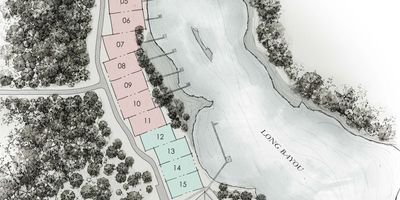
Long Bayou Preserve Orange Beach: New Site Plan & Update

Ask A Question or Sign Up To See New Real Estate Listings Before Your Competition





<!-- End Constant Contact Active Forms
Posted by Meredith Folger Amon onEnjoy this blog post? Click here to subscribe for updates
Leave A Comment