
Florida Home Insurance Premium Increases Explained
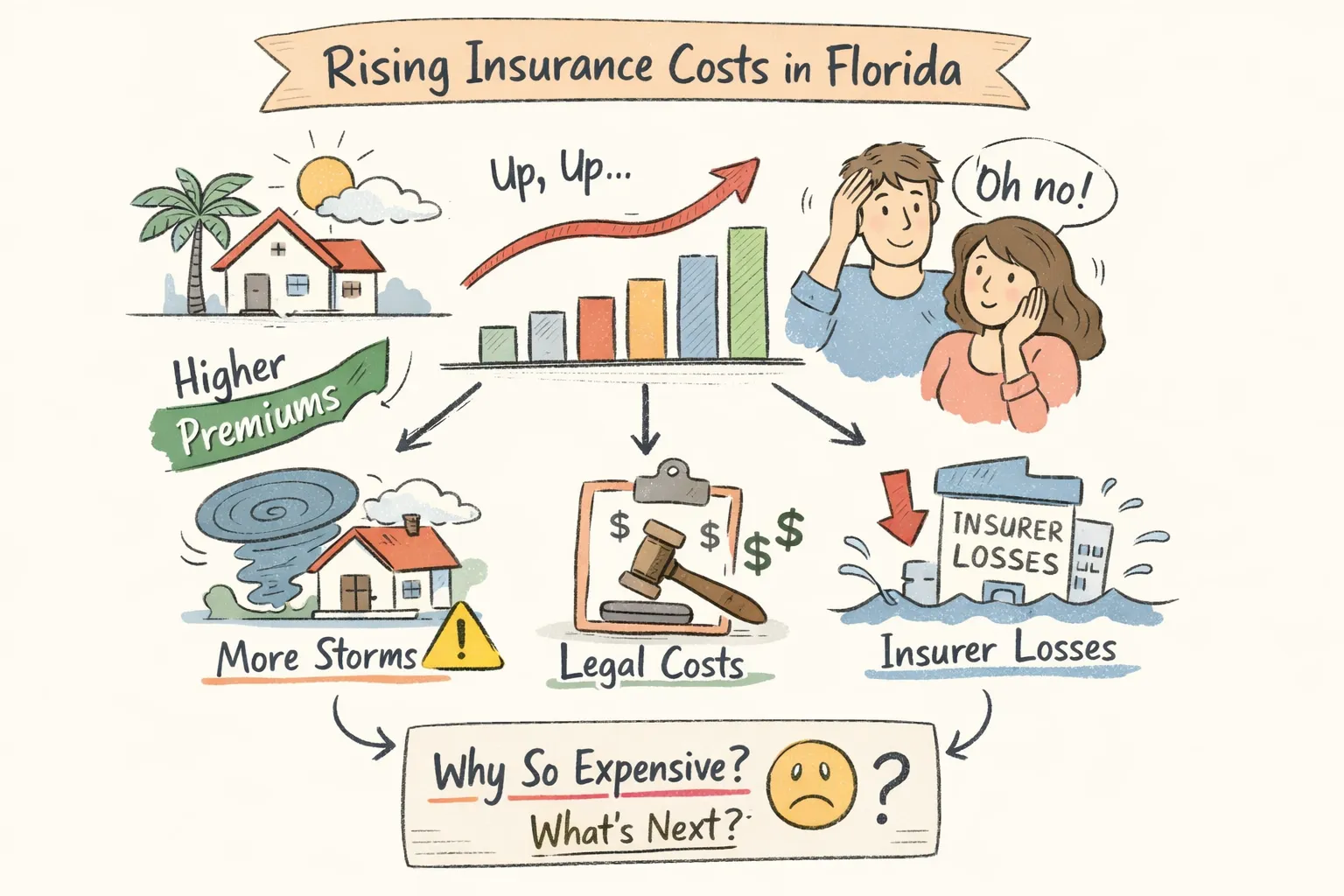
A clear Florida home insurance premium increases explanation starts with context rather than just headlines. Those headline figures hide large local differences: coastal counties and South Florida remain above the state mean while some inland areas saw smaller moves. Filings moderated in 2024 and 2025 and year-over-year growth slowed to the mid single digits as many insurers proposed smaller increases or freezes.
If you're asking "why did my homeowners insurance increase in Florida," the answer usually combines market-wide forces and property specifics. Larger storm losses, construction and materials inflation, higher reinsurance costs, litigation tied to assignment-of-benefits, and insurer exits that reduced competition have been the main contributors. Some elements, like reinsurance pricing and legislative changes, operate across the market, while features such as wind mitigation credits and a home's claims history affect individual premiums. Changes at Citizens Property Insurance and ongoing regulatory revisions also shift who pays more and why.
What you need to know
Before renewal, gather a roof inspection, a completed OIR wind-mitigation form, an elevation certificate, and a seven-year claims history to speed up quotes and capture available credits. Benchmark your premium, shop multiple carriers (including private flood providers as Citizens depopulates), and get a personalized insurance-impact review before you renew.
Quick data snapshot: the numbers behind the headlines
Statewide averages rose from about $1,988 in 2019 to roughly $3,748–$3,815 by late 2025, an 88–92 percent cumulative increase. Those statewide figures mask local differences: South Florida and many barrier islands are at the high end.
Use these baselines to benchmark your policy: 2019 about $1,988; May 2022 $2,798; January 2025 roughly $3,691; September 2025 $3,748; and late 2025 near $3,815. The January–September 2025 change was modest at about 1.5 percent, while the late-2025 year-over-year reading was near 6 percent versus 2024, showing moderation after earlier spikes.
Double-digit annual hikes dominated through 2022 and 2023, but reforms and some reinsurance relief led filings to slow to mostly single-digit requests and an increasing number of no-increase submissions. Many recent renewals show moderation, though properties with high exposure or weak mitigation will still face larger adjustments. Industry reports have noted a flattening of cost pressures as filings become more targeted and experience-driven; see coverage from state trade groups for more detail.
Systemic drivers: climate risk, replacement costs, and reinsurance cycles
Insurers set baseline rates using modeled storm losses, the estimated cost to rebuild after damage, and the price and availability of reinsurance that protects them from catastrophic layers. When catastrophe models show greater frequency or severity, expected losses rise and carriers raise rates, which is why Gulf Coast properties and barrier islands often face higher pressure.
Construction and materials inflation raises replacement-cost estimates inside every policy, since higher roof, labor, and material prices push up insured values and rates. Reinsurance treaty pricing also shapes what primary carriers can retain on their books; when treaty costs increase, insurers typically pass that expense to policyholders, and though treaty improvements have eased some pressure they have not removed it.
Discover NW Florida Homes For Sale | SearchTheGulf.com
- All Listings
No listings were found matching your search criteria.

Litigation, assignment-of-benefits, and why reform mattered
Between roughly 2018 and 2023 a surge in claims-related litigation added substantial costs for insurers. Under assignment-of-benefits, contractors or public adjusters could take control of claims and often trigger attorney-fee statutes, turning small repair disputes into high-cost, lawyer-led cases and driving up indemnity and loss-adjustment expenses.
Targeted reforms enacted in 2022 and follow-up rule changes reduced incentives for opportunistic suits and tightened roof-claim standards, which helped slow filings through late 2025. Many carriers submitted smaller or zero-increase requests after reform, and depopulation from Citizens advanced as private carriers wrote more coastal risk, though catastrophic storms, replacement-cost inflation, and reinsurance cycles continue to put pressure on rates. For official summaries of recent regulatory and property insurance changes, see the Florida CFO's resource on property insurance changes.
Market response: carriers, Citizens changes, and reinsurance easing
Market conditions shifted as new carriers entered Florida and some existing writers regained profitability, while reinsurance pricing and capacity softened between 2022 and 2026. That combination created more options and softer rate pressure for many policyholders, though outcomes still depend on property specifics and location.
Lower reinsurance costs improved treaty terms and predictable capacity, enabling some insurers to file smaller increases or even reductions. Regulators have seen filings move from broad across-the-board hikes to more targeted requests that reflect actual loss experience rather than a blanket industry premium. National reporting has noted trends toward stabilization in some markets as carriers pare risk and capacity returns.
As private carriers write more coastal risk and Citizens depopulation continues, competition can increase in areas with lower hurricane exposure or strong mitigation credits and push premiums down in those pockets. For your renewal, expect moderation in many cases but plan around micro-factors such as zip code, roof age and material, and whether you have documented wind mitigation credits.
What Perdido Key buyers must check: an insurance-ready property checklist
When you tour a Perdido Key property ask the seller for an insurance-ready packet so you can compare quotes quickly. At minimum request a current roof inspection or invoice, a completed OIR wind-mitigation form, an elevation certificate or survey, the seller's seven-year claims history, and documentation or photos for any impact-rated windows or doors. Bring this packet to your insurance agent during the sales process so they can provide a near-final premium estimate before you sign.
Use the packet to connect property features with likely price impacts: systemic forces drive statewide trends, while individual elements such as roof age, impact windows, and documented mitigation directly affect underwriting and discounts. Confirm roof age and material and verify impact-rated windows and doors with manufacturer tags or contractor invoices because those items reduce wind risk and improve quotes. If you plan repairs or upgrades, keep invoices and compliance certificates to support discounts at renewal. For guidance on wind mitigation and available credits, review official information about wind mitigation and practical summaries on wind mitigation credits and your home insurance.
Check elevation, flood zone, and flood policy options before making an offer because an elevation certificate or stamped survey can change flood quotes and improve access to private flood coverage. Private flood policies often offer better replacement-cost limits and faster service than NFIP in many cases. Also request the completed OIR wind-mitigation form and consider My Safe Florida Home inspections for grant-funded upgrades that may qualify for additional credits.
Eight prioritized steps to lower, contest, or shop your coverage
- Get a wind mitigation inspection and submit the OIR-B1-1802 form. Arrange a licensed inspector, obtain the report, and send it to your insurer because wind mitigation often unlocks the largest immediate wind premium credits.
- Document or replace the roof and keep proof of code compliance. If the roof meets current code or was recently replaced, collect contractor invoices and a compliance certificate since reroofing typically pays back through sustained discounts.
- Elevate utilities and secure an elevation certificate when feasible. Elevating utilities reduces flood premium exposure and supports private flood offers.
- Shop carriers and get multiple written quotes, including private flood providers. Use independent agents and local referrals to gather competing offers and compare coverages, hurricane deductibles, and exclusions.
- Adjust coverages and deductibles strategically. Raise hurricane or wind deductibles only after you understand the out-of-pocket exposure and the premium impact.
- Audit your claims history and request re-underwriting if needed. Pull the detailed claims printout, correct any errors, and involve your agent to avoid unnecessary disputes.
- Time a move out of Citizens when private options exist. Lock private written quotes before transferring policies and ask your agent about depopulation timing to avoid coverage gaps.
- Work with a local brokerage that pre-screens insurance-ready homes. A broker who coordinates insurer previews and local carrier introductions can keep premiums from being a surprise at closing.
Florida home insurance premium increases explanation: what you need now
Understanding Florida home insurance premium increases requires looking at both the numbers and the forces behind them: rising climate risk and replacement costs, cyclical reinsurance availability, and litigation dynamics such as assignment-of-benefits all push prices higher. Use baseline averages to benchmark your policy, focus on property-level levers to limit renewal increases, and shop aggressively when private options appear. For a free comparative market analysis and a personalized insurance-impact review for Gulf Coast properties in Orange Beach, Gulf Shores, Ono Island, or Perdido Key, contact Meredith Folger Gulf Coast Real Estate. We pre-screen listings for insurance readiness and help clients plan before they buy or renew so premiums are not a surprise at closing. Learn about our inventory and local listings, including New Construction Waterfront Homes and Condos in Orange Beach, Gulf Shores, Perdido Key, Gulf Breeze, and Pensacola.
When it comes to finding the home of your dreams in a fast-paced market, knowing about new listings as soon as they are available is part of our competitive advantage.Sign up to see new listings in an area or specific community. Contact Meredith with any questions you may have.

2026 MBGFC Labor Day Invitational | Orange Beach | Search The Gulf
Orange Beach · Boating Lifestyle
The 2026 MBGFC Labor Day Invitational: Celebrating Orange Beach’s Fishing and Boating Community
Thirty-eight teams, 222 anglers, 186 catches—and a Labor Day weekend that felt like one coastal family at the dock.
Explore Orange Beach Perdido Pass
On this…
Cotton Bayou Marina Boats | Orange Beach Near Terry Cove

Orange Beach and Ono Island Real Estate Update September
Ask A Question or Sign Up To See New Real Estate Listings Before Your Competition

.gif)
Posted by Meredith Folger Amon on
Enjoy this blog post? Click here to subscribe for updates
Leave A Comment