

TOP FEATURES TO LOOK FOR IN A GULF COAST HOME WITH CANAL BOAT ACCESS
_(800_x_150_px)_(2).gif)

Top features to look for in a Gulf Coast home with boat access often appear in the first few listing photos and in the MLS notes, so start your search by scanning images and descriptions with purpose. Look for dock type, visible pilings, any stated canal depth, seawall material, and whether a private dock or boat lift appears, since those clues indicate whether the property is boat-ready. Also read seller disclosures and HOA rules for riparian-rights or easement language that can restrict slips, dock repairs, or overnight mooring, and treat leaning pilings, missing permits, undocumented soundings, unusually high flood insurance premiums, or reports of shoaling at a canal mouth as red flags.
This guide focuses on five quick checks you can do in minutes: dock condition, lift type, seawall integrity and maintenance, canal approach depth and width, and permit and insurance notes. Use these checkpoints to narrow listings to those that actually fit your vessel. Later sections explain canal-front specifics, recommended depths for common boats, and considerations for hurricane-rated construction and flood insurance on the Gulf Coast.
Quick summary
- Scan photos first: Start every MLS search by noting dock type, visible pilings, lift presence, and any listed canal depth. These visual cues quickly rule properties in or out and save time on showings.
- Check marine infrastructure: Inspect seawall material, piling condition, and lift type, since construction choices determine maintenance needs and long-term costs. Favor durable materials to reduce surprise repairs and resale risk.
- Verify navigation depth: Confirm canal depth and width at mean low water and ask for recent soundings, matching minimum depths to your boat—typically 3 to 5 feet for many center consoles. Watch for shoaling at canal mouths and entrances.
- Confirm permits and insurance: Read riparian-rights language, permit history, and flood-insurance notes before you make an offer. Missing permits or unusually high premiums are negotiation points or deal breakers.
- Budget and inspect: Plan conservative costs for seawall and dock work, obtain formal soundings and a marine inspection, and get local contractor bids. Use verified listing tools and local agents to produce realistic repair estimates.
1. Quick screening checklist to spot boat-ready listings
Begin each listing review with five quick checks: dock type, visible pilings, listed canal depth, seawall material, and whether a lift is present. Also flag riparian-rights language, recorded easements, seller disclosures, and HOA rules that could limit dock use. This quick pass removes properties that are impractical for your boat and saves time on showings.
MLS images often reveal dock condition, lift presence, seawall appearance, and canal approach geometry; listings sometimes note permit or flood-insurance issues that signal restrictions. Confirm whether a dock or slip is owned, leased, shared, or subject to HOA limitations, since ownership affects access and maintenance responsibility. Treat these red flags as deal breakers or triggers for a formal inspection: leaning or rotted pilings, no documented soundings at mean low water, missing permits, unusually high flood-insurance premiums, and reported shoaling at canal mouths. If shoaling or beaching appears at a canal entrance, schedule a marine survey and recent soundings before making an offer.
2. Marine infrastructure: dock construction, seawalls and lifts
Material and construction choices for docks, seawalls, and lifts shape maintenance schedules and long-term costs. Vinyl and composite resist rot and corrosion far better than untreated timber in Gulf conditions, which shortens replacement cycles and lowers maintenance exposure. Durable materials also tend to improve resale appeal compared with timber that needs frequent repairs. For a practical rundown of options, consult a guide to the best dock materials.
Treated timber docks are affordable up front but require regular staining, fastener replacement, and rot checks. Steel or pipe pilings perform well but need splash-zone corrosion inspections and periodic coating, while concrete is durable and requires crack monitoring and spall repairs. Composite decking cuts down on sanding and staining, but inspect for fastener pull-through, pile-cap issues, and degraded connection hardware regardless of decking type.
Typical seawall lifespans vary by material: timber 15 to 30 years, steel 20 to 35 years, concrete 30 to 50 years, and vinyl or composite often 35 to 50 years or more. Look for bulging, spalling, rust streaks, sinkholes, or soft backfill behind the wall, since any of those signs merit a structural review before closing. For more detail on when to repair versus replace, review resources about the lifespan of a seawall. Boat lifts range from PWC units to heavy-duty hydraulics; all lifts need routine cable or belt replacement, motor servicing, and electrical checks, and installation depends on piling depth, dock layout, and permits.
.jpg)
3. Navigation, canal depth and maneuvering checks
Think about how you'll enter, navigate, and exit the canal, because access affects daily use more than dock aesthetics. For most 20 to 30-foot center consoles and cruisers, aim for a minimum of 3 to 5 feet at mean low water, plus 1 to 2 feet of under-keel clearance beyond your boat's draft. Canal widths around 50 to 90 feet, roughly 1.5 to 2 times your boat length, allow comfortable turning and reduce repeated backing maneuvers.
Shoaling near corners, entrances, and shallow bends is common, so do not rely solely on charted depths. Request recent soundings taken at mean low water and schedule an on-water marine survey to verify actual depths, since surveys reveal sediment build-up and seasonal changes that charts can miss. If possible, test the approach at low water before making an offer to confirm you can maneuver at idle speeds.
Luxury Waterfront Real Estate on the Gulf Coast


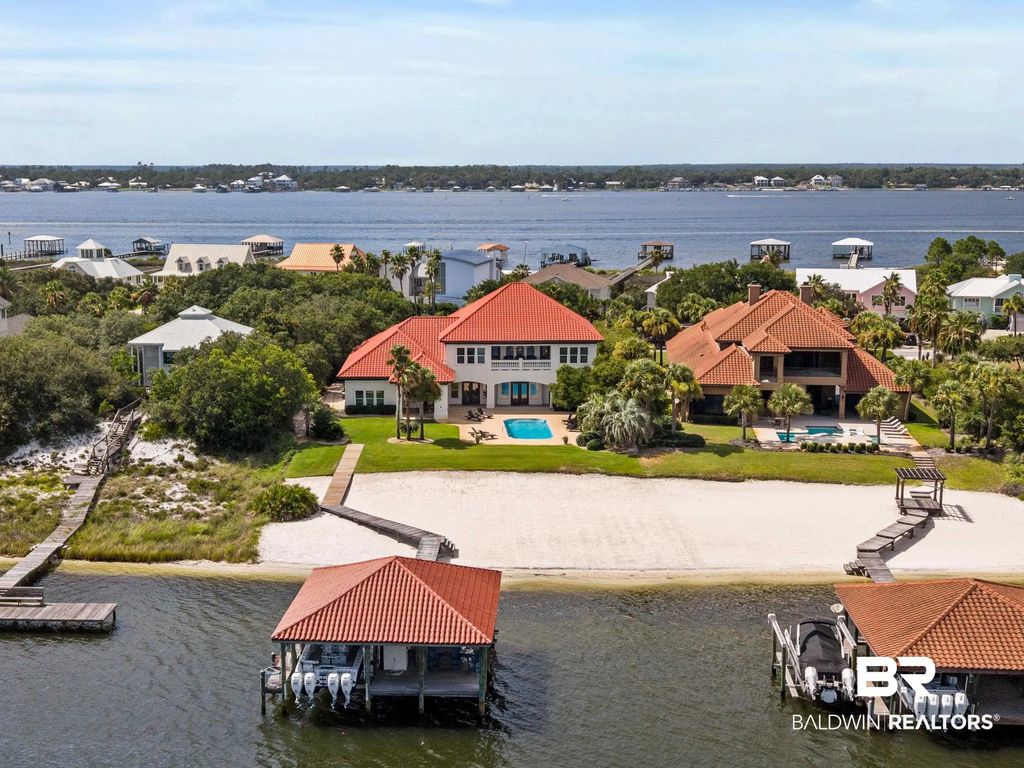


4. Permits, environmental rules and insurance to verify
Permits and environmental rules determine which upgrades are allowed and how a dock must be built. Buyers should check local city or county permits, state environmental agency approvals in Florida or Alabama, and whether U.S. Army Corps of Engineers involvement applies for dredging or backwater impacts. Protections for seagrass and mangroves, maximum terminal-platform sizes, setback rules, and preferences for light-permeable decking can limit usable dock area or require shared structures with neighbors. Florida provides detailed dock permitting guidance that is useful when reviewing local requirements: Florida dock permitting guidance.
Flood-insurance premiums vary widely by zone, elevation, and property details; on the Gulf Coast they can range from a few thousand dollars to well over $10,000 annually in higher-risk locations. Standard NFIP coverage caps commonly seen are $250,000 for the building and $100,000 for contents, and private flood options may be available. Verify current quotes and explore private carriers so you understand operating costs before making an offer. For regional context on flood insurance and coastal risk, see the NOAA overview of Gulf flood insurance.
5. Budgeting, inspections and negotiating marine issues
Marine repairs translate directly into dollars and timelines, so start with conservative ballpark ranges and collect three local bids. Seawall work is often the highest-ticket item: minor repairs might run $5,000 to $15,000, partial replacements $15,000 to $50,000, and full replacements can exceed $50,000 depending on length and engineering. Dock costs vary with footprint and materials, from simple floating systems to custom marina-grade builds, and boat lifts range from PWC units at a few thousand dollars to five-figure custom systems.
Give your agent and surveyor a clear inspection checklist so you can compare properties on equal terms. Ask for permit history and engineer reports, construction dates and age of seawalls, docks and lifts, recent repairs and known storm damage or insurance claims, plus vendor estimates. Require soundings at mean low water that show the target depth for your boat, and request any elevation certificates available for insurance purposes.
Match negotiation remedies to the level of risk and your timeline. Structural failure or a failing seawall typically requires seller remediation or a price credit tied to a contractor scope, while cosmetic dock wear may merit a smaller credit. Common approaches include price reductions, seller-paid repairs before closing, escrow holdbacks, or contractor-defined credits that clear at closing; credits often speed the transaction while repairs provide more certainty.
If contractor quotes show catastrophic failure or permitting obstacles that effectively prevent repair, be prepared to walk away rather than risk unexpected costs. Use inspection findings and vendor estimates to create exact credit calculations or work scopes that are acceptable to both parties. Keep this checklist handy as you evaluate properties and prepare offers.
6. How Meredith Folger Gulf Coast Real Estate and SearchTheGulf.com help you find boat-ready homes
Enhanced Listings on SearchTheGulf.com tag listings for private docks, lift sizes, seawall condition, and canal approach so you see homes that match your vessel. Verified listing fields, local contractor input, and fast filters let you eliminate unsuitable properties before you tour, saving time and reducing surprise costs. That filtering focuses showings on properties with realistic marine access.
Meredith Folger Gulf Coast Real Estate has dual-state licensing and hands-on permitting experience across Alabama and Florida. We coordinate with insured contractors and marine surveyors to produce realistic repair estimates and fold those numbers into a comparative market analysis so you can make offers with confidence. Local vendor access speeds approvals and clarifies insurance impacts prior to commitment.
Recommended due diligence is straightforward: pre-screen to your boat, submit a conditional offer with a marine contingency, order a marine survey and soundings, obtain contractor quotes and permit/document reviews, then clear contingencies to close. Expect about three to six weeks from offer to cleared contingencies in many cases: surveys and soundings often complete in seven to ten days and contractor quotes in one to two weeks, while permit checks can take longer depending on jurisdiction. Timing varies by county and scope, so plan accordingly.
Next steps for a Gulf Coast home with boat access
Follow the quick screening checklist, confirm long-term costs tied to marine infrastructure, and verify navigation, canal depth, and maneuvering space before you become attached to any property. The top features to look for in a Gulf Coast home with boat access are practical and measurable: photos and notes, dock and seawall construction, and actual waterway conditions separate smart buys from costly surprises. Keep those points front of mind during showings and inspections.
Save this checklist, pick one listing that interests you, and send the address to Meredith Folger Gulf Coast Real Estate so we can run a free comparative market analysis and a focused marine-access assessment. That step will reveal market value, likely maintenance considerations, and whether the property truly supports your boat plans, so you can move forward with confidence. Start at SearchTheGulf.com or contact Meredith Folger to get your shortlist underway. You can also review our Web Accessibility information while you're here.
_(800_x_150_px)_(3).gif)
_(800_x_150_px).gif)
_(800_x_150_px).gif)
.jpg)
| Waterway | Average Depth (ft / m) | Typical Draft Limit (ft / m) | Recommended Vessel Type | Notes / Navigational Observations |
|---|---|---|---|---|
| Bayou St. John | 6–10 ft (1.8–3.0 m) | Up to 5 ft (1.5 m) | Center Consoles, Express Cruisers, Sportfishing Yachts | Stable depth; deeper pockets (10–12 ft / 3.0–3.7 m) near docks. Ideal for deep-water mooring on streets such as Shoalwater Drive, Marlin Key Drive, Turtle Key, and Sandy Key. |
| Old River (South Ono Island) | 7–18 ft (2.1–5.5 m) | Up to 6 ft (1.8 m) | Offshore Sportfish, Large Center Consoles, Dual Consoles | Main channel consistently 10–18 ft (3.0–5.5 m). Watch for seasonal sandbar migration near Alabama–Florida line. Deepest water along Ono’s southern canal homes and west end toward Ono Blvd. |
| Terry Cove | 6–8 ft (1.8–2.4 m) | Up to 4.5 ft (1.4 m) | Cruisers, Bay Boats, Pontoons | Dredged channel; ideal approach to Orange Beach marinas. Sandbar formations occur near Robinson Island and Alabama Point. Popular anchorage during calm conditions. |
| Bellville Bay | 6–8 ft (1.8–2.4 m) | Up to 4 ft (1.2 m) | Bay Boats, Deck Boats, Small Center Consoles | Sheltered; soft sandy bottom. Slight siltation near canal mouths. Calm anchorage suitable for day boating. |
| Goat Bayou | 3–5 ft (0.9–1.5 m) | Up to 2 ft (0.6 m) | Flats Skiffs, Jon Boats, Kayaks, Personal Watercraft | Extremely shallow at low tide; avoid with deep drafts. Access limited to small craft or high-tide conditions. Excellent wildlife area. |
| Interior Canals (Ono Island) | 4–6 ft (1.2–1.8 m) | Up to 3 ft (0.9 m) | Bay Boats, Pontoons, Small Center Consoles | Depth varies by tide; dredged sections maintained. No-wake zones throughout. Calm, protected waters for dockage and easy lift installation. |
| Perdido Pass & Alabama Point | 14–45 ft (4.3–13.7 m) | No restriction (deep draft) | Large Sportfish, Cruisers, Catamarans, Sailboats | Primary Gulf access route; follow ICW channel buoys. Strong tidal current; exercise caution during ebb tide. Bridge clearance 54 ft (16.5 m). |
Posted by Meredith Folger Amon on
Enjoy this blog post? Click here to subscribe for updates
Leave A Comment