

The Gulf Coast Condo Buyer Guide
Insurance, assessments, reserves, financing, and the documents to read before you buy a condominium in Orange Beach or Gulf Shores.
With Meredith. I created this guide as a thoughtful starting point. It is general information, not insurance or legal advice, and the property-specific decisions belong in conversation with your insurance agent, attorney, and lender.

A Gulf Coast condo is really two purchases: the unit, and the financial health of the building around it.
When a buyer asks me where to begin with a condo, I do not start with the view. I start with the building’s insurance, its reserves, and what the association plans to spend in the next few years. The view is wonderful. The numbers behind the view decide what the condo costs to own.
On the Alabama Gulf Coast, insurance sits underneath almost every condo conversation: what the association’s master policy covers, what your own policy has to cover, what the storm deductible is, whether flood is carried, and how a rising premium or a large deductible can turn into higher dues or a special assessment. I created this guide as a thoughtful starting point so you can ask better questions before you write an offer.
It is written for buyers looking at Orange Beach and Gulf Shores condominiums, with a short note near the end for anyone cross-shopping Perdido Key, Florida. If you are also weighing a home on the water, I wrote about how Ono Island is a different market.
Read the building
The declaration, budget, reserve study, minutes, and master insurance policy tell you more about your future costs than the listing photos.
Price the whole year
Dues, your own condo policy, flood, wind, and any planned assessment all belong in one carrying-cost number, not just the mortgage payment.
Confirm the financing
Lenders review the building, not just you. Ask early whether the building works for the loan type you plan to use.
A note from me
I am a real estate professional, not an insurance agent or an attorney. This guide is general information to help you ask good questions. Policy terms, deductibles, and association documents differ from building to building, so confirm the specifics with your insurance agent and your attorney before you rely on them.
Condominium, townhome, or townhome-style condominium: what you own changes who insures what.
Look at the deed, not the brochure. In a condominium you own the interior of your unit plus an undivided share of the common elements, which usually means the structure, roof, walkways, pool, elevators, and grounds. The association manages those shared pieces, and every owner pays toward them through dues and assessments.
A townhome can be one of two very different things. Some townhomes are fee simple: you own the building and the land beneath it, and a neighborhood association handles shared amenities. Others are townhome-style buildings that were declared as condominiums, so the roof and exterior may be an association responsibility and the master policy conversation applies. They can look the same from the street and carry different insurance and different risk.
Alabama’s Uniform Condominium Act generally governs condominiums created after January 1, 1991, while older buildings may fall under the earlier Alabama condominium law, with some newer provisions reaching them too. The declaration your building recorded is what spells out the rules, so ask your attorney which law and which declaration terms apply to the unit you are considering.
Questions to settle early
- Is the property a condominium unit, a fee-simple townhome, or a townhome-style condominium?
- Who owns and insures the roof, exterior walls, windows, and balcony?
- Is parking, storage, or a boat slip deeded, assigned, or just permitted?
- Which declaration, amendments, and rules govern the building today?
Why it matters for insurance
- A condominium owner usually carries a condo (HO-6) policy; a fee-simple townhome owner often insures the whole building.
- A master policy exists only where an association is responsible for the building.
- Flood coverage works differently for a condominium unit than for a stand-alone building.
- Lenders review condominium projects; they do not review fee-simple townhomes the same way.

What does the building’s insurance actually cover?
This is the single biggest question I ask on a condo. The association carries a master (sometimes called blanket) property policy on the common elements. What that policy covers inside your unit decides how much insurance you have to buy yourself, and how large your exposure is after a storm.
The association insures the structure; you insure what is inside
In a bare-walls arrangement the master policy covers the building’s structure and common elements. You are generally responsible for the drywall, flooring, cabinets, countertops, fixtures, appliances, and upgrades inside the unit, plus your belongings. This arrangement puts the most weight on your own policy.
The association insures more of the interior, usually as originally built
Some master policies also cover interior finishes and fixtures as they were originally installed. Upgrades you or a prior owner made may still be yours to insure.
The association insures the interior, including some improvements
An all-in master policy is the broadest of the three, but the term is used loosely. Agents do not all use these labels the same way, so ask for the exact list: drywall, flooring, cabinets, fixtures, windows, sliding doors, balcony doors, and in-unit air conditioning.
Do not rely on a label. Ask your insurance agent to read the declaration and the master policy together and tell you in writing what you are responsible for insuring inside the unit.
How to read the master policy and the certificate of insurance
A certificate of insurance is a short summary that shows a policy exists. It is not the policy, and it does not change what the policy says. Under Alabama’s condominium act, the insurer is to provide certificates of insurance to the association and, on written request, to a unit owner, so you can ask the association or its management company for one. For a serious condo, I also ask for the declarations pages of the master policy itself, and I ask your insurance agent to review them.
On the declarations page, look for
- Named insured, policy period, and renewal date
- Building limit of insurance, and whether it is replacement cost or actual cash value
- Any coinsurance clause, and any agreed-value or guaranteed replacement cost terms
- Deductibles: the all-other-perils deductible and the separate wind or named-storm deductible
- Exclusions and sublimits that could surprise an owner after a storm
- Endorsements, including ordinance or law coverage
Also ask about
- Whether wind is on the main policy or a separate policy, and whether the state wind pool is involved
- Whether the building carries flood insurance, and at what limit
- General liability, directors and officers, and fidelity (crime) coverage
- Any recent cancellation or non-renewal notice, or a change in carrier
- Whether the insured value reflects a recent replacement-cost appraisal
- Claims history on the building (ask for loss runs)
A word on the legal floor: Alabama’s act asks the association to maintain property insurance on the common elements to the extent reasonably available, at a minimum of 80% of actual cash value, or more where needed to avoid coinsurance. A floor is not a measure of quality, and a lender will usually expect more. Confirm the details with your attorney.
Your HO-6 condo policy and loss assessment coverage
An HO-6 is the policy you buy for yourself as a condo owner. It generally includes some combination of coverage for the parts of the unit you are responsible for, your belongings, personal liability, loss of use, and loss assessment. The right mix depends on what your declaration and the master policy leave to you.
What to line up
- Dwelling (interior) coverage sized to the parts the master policy does not insure
- Personal property coverage, with replacement cost if you want it
- Liability coverage, and whether an umbrella makes sense
- Loss of use: living expenses while your unit is being repaired (more on this below)
- Whether wind and named-storm damage is included, excluded, or limited on the policy
Loss assessment, the part buyers miss
- Loss assessment coverage helps pay your share when the association charges owners for a covered loss
- Ask for the limit, and ask whether a lower sublimit applies to assessments caused by the master policy’s deductible
- Ask whether named-storm assessments are included
- Compare the limit to what a plausible assessment could be (see the deductible example in the next section)
If you are financing, your lender may require an HO-6 policy, especially when the master policy does not cover interior finishes or carries a per-unit deductible. Ask your lender what they need on the first call so there are no surprises at closing.

Gulf Coast Condos For Sale in Orange Beach, Gulf Shores, Perdido Key
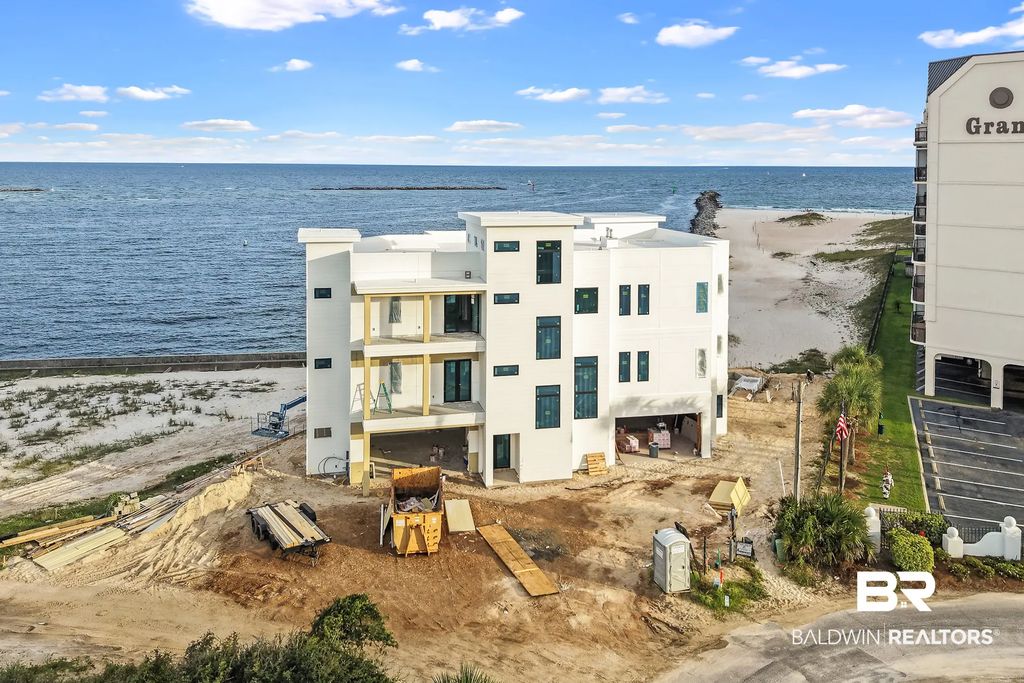


Hurricane deductibles: the number that decides your worst-case storm bill.
Along the Alabama Gulf Coast, the deductible for a hurricane or named storm is usually its own deductible, separate from the one that applies to fire or a plumbing leak. It is often a percentage rather than a fixed dollar amount.
The Alabama Department of Insurance has long cautioned coastal homeowners in Baldwin and Mobile Counties to check this, noting that many insurers moved wind and hurricane deductibles from a flat dollar amount to a percentage of the insured value, commonly in the 1% to 5% range. A percentage deductible grows with the insured value, so the same percentage means a larger dollar figure on a larger building.
Percent of what, exactly?
Ask whether the percentage applies to the building’s total insured value, to the value per building, per unit, or per occurrence. A 2% deductible on a large insured building is a very large number, and the association has to find that money somewhere.
Which building, and how many?
In a community with several buildings, ask whether the deductible applies per building. A storm can trigger more than one deductible at once.
How the deductible reaches you
If the master policy’s deductible is large, the association may collect it from owners through a special assessment, usually divided by each unit’s percentage interest in the declaration. That is why loss assessment coverage on your own policy matters.
How a percentage deductible can become your share
Imagine a building insured for $40,000,000 with a 2% named-storm deductible. That deductible is $800,000. If the building has 100 equal units and the association collected the whole deductible by assessment, each owner’s share would be about $8,000. A larger building, a higher percentage, or a unit with a bigger share of the building changes the number.
I use numbers like these only to show how the math works. Your building’s actual deductible, insured value, and percentage interests are in the documents. Ask for them.
The state wind pool
When private wind coverage is not available for a coastal building or home, some owners and associations turn to the Alabama Insurance Underwriting Association, the state’s wind and hail pool for eligible coastal property in Baldwin and Mobile Counties. Ask whether any part of the building’s wind coverage comes from that pool, and ask your agent how that affects limits, cost, and timing when a storm is approaching.
Wind mitigation and FORTIFIED
Roof age and type, how the roof deck is attached, impact-rated windows and doors, and shutters can influence what coverage an insurer will offer and what it costs. FORTIFIED is a voluntary construction and retrofit standard from the Insurance Institute for Business & Home Safety, and a designation can matter to insurers. Ask whether the building has a wind-mitigation inspection report, any FORTIFIED designation, and what credits, if any, the master policy receives. Ask your agent whether anything about the unit itself changes your own premium.
Flood: who covers the building, who covers your things, and where the gap can be.
Flood is separate from wind, separate from your HO-6, and separate from the master policy’s wind coverage. A standard condo policy generally does not cover flood, so ask the association and your agent exactly what flood coverage exists.
Association flood policy
Many Gulf Coast associations carry a flood policy on the building. It may be a National Flood Insurance Program Residential Condominium Building Association Policy (RCBAP) or a private flood policy. Some associations describe this as group flood or master flood coverage. Ask what it is, who carries it, and its limits.
Your own flood policy
You can buy flood coverage for your own unit. NFIP unit-owner (Dwelling Form) policies are available for building elements and for contents. Private flood policies are also an option and can offer different limits and terms.
Contents and improvements
Your belongings are not covered by the association’s building policy. Contents coverage is yours to buy. An RCBAP covers only contents the association owns in common.
NFIP vs private flood: the numbers I can stand behind
Under the National Flood Insurance Program’s rules, an association’s RCBAP can insure the building up to the lesser of its replacement cost or $250,000 times the number of units, with commonly owned contents limited to $100,000 per building. A unit owner can also buy a Dwelling Form policy: up to $250,000 of building coverage and $100,000 of contents coverage. Where both policies apply to the same unit, the combined building benefit for that unit is capped at $250,000, and the same damage is paid only once. Because the cap is per unit, an association’s NFIP limit can be lower than the building’s full cost to rebuild, so ask whether excess flood coverage is carried. NFIP rules and limits can change, so confirm the current terms with your flood agent.
Questions about the association’s flood policy
- Is flood carried on the building? NFIP or private? At what limit?
- What is the deductible, and who pays it if there is a loss?
- Does the coverage meet the replacement-cost standard your lender expects?
- Is the building in a high-risk flood zone? Is there an elevation certificate?
Questions for your flood agent
- What contents coverage can I buy, and is my interior covered under the building policy?
- Does my policy include condominium loss assessment coverage for flood?
- How does coverage change if the association carries an RCBAP?
- What would a private flood quote look like compared to NFIP?
A note on flood loss assessments: the NFIP Dwelling Form includes condominium loss assessment coverage for your share of an association assessment tied to flood damage to the common property, up to your building coverage limit and subject to the policy’s exclusions. It does not pay an assessment that results from the association’s deductible or from a loss to contents. This is exactly the kind of fine print to review with your agent. For more on how flood zones and elevation certificates work, see my guide to flood zones and elevation certificates.
Two coverages buyers rarely ask about until they need them.
These two are quiet, and they matter after a big storm.
Ordinance or law
When a damaged building is repaired, local codes may require it to be rebuilt to current standards, which can cost more than putting it back the way it was. Ordinance or law coverage helps with those added costs. Ask whether the master policy includes it, and at what limit. Your own HO-6 may include some, and flood policies handle code-compliance costs differently: the NFIP Dwelling Form has Increased Cost of Compliance coverage of up to $30,000 for qualifying claims. Ask your agent for the current details.
Loss of use and rental income
If you live in the condo or use it personally, loss of use helps with living expenses when a covered loss makes the unit unlivable. If you rent it, a standard owner-occupied HO-6 may not be the right fit. Ask about a condo landlord (rental) policy and whether rent-loss coverage is available, and tell the agent honestly how many weeks you rent. Short-term rental use can change what an insurer will write.
How rising insurance costs show up in your dues and your assessments.
Gulf Coast property insurance premiums have risen in many places in recent years, and the master policy is one of the largest lines in most condo budgets. I will not quote a percentage, because it varies by building, carrier, and year. What I can tell you is how the chain usually works:
The master policy renews at a higher premium or a higher deductible
Insurers reprice coastal buildings at renewal. Ask for the renewal date and how the last renewal compared to the one before it.
The board has to respond
Options include raising dues, adopting a special assessment, raising the deductible (which shifts storm risk onto owners), changing coverage, or drawing on reserves.
The cost reaches the owner
As higher monthly dues, a one-time assessment, or a larger loss-assessment exposure after the next storm.
Where special assessments come from
After a storm
- The master policy’s wind or named-storm deductible
- Damage the policy does not cover, or covers only partly
- Uninsured or underinsured common elements
- Debris removal and emergency repairs before claim money arrives
Deferred maintenance and aging buildings
- Roof replacement
- Concrete restoration and balcony or railing repair
- Structural repairs identified by an engineer
- Windows, doors, sealants, waterproofing, elevators, plumbing risers
Has the board approved, discussed, or been advised of any special assessment, loan, or major project in the last two years or the next two? The meeting minutes and the reserve study usually tell the story before anyone says it out loud.
What HOA dues usually include, and what they do not
Often included
- The master insurance policy
- Exterior maintenance, roof, and structure
- Elevators, pool, fitness room, and common areas
- Landscaping, trash, and building management
- Water and sewer in some buildings; cable or internet in some
- Contributions to the reserve fund
Often not included
- Your HO-6 policy and your flood policy
- Your electric bill and, in many buildings, interior upkeep
- Special assessments
- Rental management or rental program fees
- Move-in, transfer, or capital contribution fees at purchase
For my take on how assessments work in Orange Beach, see understanding condo assessments in Orange Beach and condo insurance assessments on the Gulf Coast.

A healthy reserve fund is the best defense against a surprise assessment.
A reserve fund is money the association sets aside for big, predictable replacements, such as the roof, elevators, paint and sealants, pool, and balcony repair. A reserve study is a professional’s forecast of what those components will cost and when they will be due, with a recommended funding plan.
What I like to see
- A reserve study that is recent and prepared by a qualified professional
- A budget that actually funds what the study recommends
- Major components (roof, elevators, concrete, waterproofing) with realistic remaining life
- Recent engineering or structural reports and a plan for anything they flag
What gives me pause
- No reserve study, or one that is several years old
- Reserve funding that is minimal compared with the work coming due
- A history of assessments instead of funding reserves
- Deferred work that has not been scheduled or paid for
Florida has written specific reserve-study and inspection rules into its condominium law (more on that in the Perdido Key note). Do not assume Alabama works the same way. Ask your attorney how your building’s declaration and Alabama law handle reserves, and rely on the documents.
Why the master policy and the reserves can decide whether your loan gets approved.
If you are financing, the lender is approving the building as well as you. A strong buyer can still be turned down because the condominium project does not meet the lender’s standards. That is a common reason a condo is called “non-warrantable,” which I explain in my guide to non-warrantable condos in Orange Beach.
What lenders commonly look at
- Master policy: coverage sufficiency, deductibles, and whether it meets the lender’s rules
- Budget and reserve funding
- Special assessments, pending or planned, and unfunded critical repairs
- Pending litigation involving the association
- The share of owners who are delinquent on dues
- Owner-occupancy and investor concentration, depending on loan type
A few specifics from Fannie Mae’s published guidance
- Projects with unaddressed critical repairs, or with an “Unavailable” status, are ineligible
- A Full Review looks at replacement-reserve funding in the budget: at least 10% of budgeted assessment income today
- Fannie Mae has announced that minimum rises to 15% for Full Review applications dated on or after January 4, 2027
- Master policy deductibles, and the need for a unit-owner policy, are part of the review
FHA and VA each have their own condominium approval processes, and a building may be approved, not approved, or reviewable on a single-unit basis. Whether a particular building works for FHA, VA, conventional, or portfolio financing changes over time, so ask your lender early and confirm the current requirements with the loan officer. For a longer look at financing, see can you finance a condo in Orange Beach.
Cash buyers, please do the same homework
A cash purchase skips the lender’s approval, but it does not skip the building’s risks. The insurance, reserve, and assessment questions in this guide are still yours to ask. A building that is hard for a lender to approve can also be harder to sell later.
What happens to unpaid assessments when the condo sells?
In Alabama, the association generally has a lien on a unit for unpaid assessments, special assessments, and certain charges, so it matters what is owed on the unit when it changes hands. The title company or closing attorney will ask the association for the payoff figure and handle it at closing.
How I think about it
- Ask for the resale certificate early, not the week before closing
- As I read the Alabama act, a buyer’s written request for the documents is tied to a short window after the contract is signed, so ask your attorney or closing agent to make the request right away
- Read the insurance statement against the actual master policy, and read the litigation line carefully
- Compare the certificate to what the listing and the seller told you
What gets settled at closing
- Past-due dues and any lien payoff, paid from the seller’s proceeds
- Proration of current dues between buyer and seller
- Who pays the remaining installments of a special assessment already levied
- Transfer, application, or capital contribution fees, if the building has them
Special assessments that have been announced but not yet billed are a place where contracts differ. Who pays what, and when, belongs in the written offer, and your attorney should review it. To see what a buyer typically pays at closing in Baldwin County, I outlined it in typical buyer closing costs in Baldwin County.
The documents I would ask for before I got attached to a condo.
A good Gulf Coast condo file is a stack of documents, and the stack is where surprises show up first. Ask for these through the listing agent, the seller, the association, or the management company, and give yourself time to read them. If you hire an insurance agent or attorney to review, send them these too.
The core file
- Declaration, bylaws, rules and regulations, and any amendments
- Current-year budget and the prior year’s actual results
- Most recent balance sheet and income-and-expense statement
- Reserve study (and the most recent update)
- Board and owner meeting minutes for the last couple of years
- Resale or estoppel certificate
- Management agreement, if the building uses a management company
The insurance and risk file
- Master policy declarations pages and the certificate of insurance
- Wind, named-storm, flood, and liability coverage details
- Insurance claims history or loss runs for the building
- Roof reports, wind-mitigation inspection, any FORTIFIED paperwork
- Engineering or structural reports, concrete and balcony inspection reports
- Pending or threatened litigation, including insurance disputes
- Any planned, approved, or recently billed special assessments or association loans
Read the minutes first. They are the closest thing you will get to a running diary of the building: deductibles discussed, contractors bid, engineers hired, owners concerned, and projects postponed.
A Simple Way to Connect
Text or Call Meredith
Have a question or need more information? Texting is often the easiest way to reach me, or you are always welcome to call. I am happy to help.
Gulf Coast real estate guidance | SearchTheGulf.com
Questions to ask the association and your insurance agent.
Questions to ask the association
- What is the current master insurance coverage, and who is the carrier?
- What are the all-other-perils and the named-storm deductibles, and applied to what?
- When does the master policy renew, and how did the last renewal change?
- Is flood insurance carried on the building, and at what limit?
- Has the building had insurance claims in the last five years, and are any open?
- Is any special assessment approved, proposed, or being discussed?
- Is there a current reserve study, and is the budget funded to it?
- Are major projects scheduled (roof, concrete, balconies, windows, elevators)?
- Is there any pending litigation?
- What share of owners are delinquent on dues?
- What are the rental rules, minimum stays, and any rental program?
Questions to ask your insurance agent
- Please read the declaration and master policy: what must my HO-6 cover?
- How much dwelling coverage should I carry for the interior I am responsible for?
- What is my loss assessment limit, and is there a sublimit for the master deductible?
- Does my policy cover wind and named storms, and what is the deductible?
- How would my policy respond if the association assessed me after a hurricane?
- What flood options do I have (NFIP and private), and what do they cost?
- Does my policy have ordinance or law coverage, and at what limit?
- If I rent the unit, what policy do I need, and does it include rent loss?
- How do roof age, windows, and the building’s construction affect my premium?
- Can I get a quote before I make an offer?
If you would like an introduction to a local insurance agent or flood specialist, call or text me. I am glad to point you to the right professional, and I will not guess at coverage that belongs to them.
Can you rent it, and how often?
If you plan to rent the condo, read the rental rules before you read the listing. Associations differ widely on whether short-term rentals are allowed, minimum stay lengths, required management or rental programs, rental caps, registration, and fees. A building can be a wonderful personal-use condo and a poor rental, or the reverse.
Ask the association
- Are short-term (vacation) rentals allowed? What is the minimum stay?
- Is a rental program or on-site management required?
- Is there a cap on the number of rental units or on rental days?
- Are there registration, guest, or parking fees?
- Do the rules change after a sale?
Ask the city and your tax professional
- Is a business license or lodging tax registration required?
- How will rental income be reported for taxes?
- Does your insurance carrier know the unit is rented?
- Does the lender treat the unit as an investment property?
For my full take on rental use, see Orange Beach condo for investment and personal use. I will not hand anyone a rental-income promise, because the numbers move with the building, the season, and the rules. I would rather walk through your goals and the building’s documents with you.
What actually comes with the unit?
Parking
- How many spaces come with the unit?
- Deeded, assigned, or first-come?
- Guest, trailer, and boat-trailer rules
Storage
- Is a storage unit deeded, assigned, or leased?
- Does it transfer with the unit?
- Is it insured, and by whom?
Beach access
- Gulf-front, deeded access, or an easement?
- Who maintains the walkover or boardwalk?
- Are access rights recorded in the declaration?
Beach access is one of the most misunderstood parts of a Gulf Coast condo purchase. Ask where the access is recorded and who maintains it. I wrote about this in Orange Beach deeded beach access for non-Gulf-front homes and condos.
If you are looking at a new building or pre-construction, the questions shift toward the developer’s documents, the initial budget, how reserves begin, and how insurance is handled during the turnover to the owners. See Phoenix Key Tower for one pre-construction opportunity.
Investment, second home, or primary residence: how the loan changes.
How you plan to use the condo changes the financing. Lenders typically treat a primary residence, a second home, and an investment property differently in the down payment they require, the interest rate, and the documentation. Terms change often, so I treat any number you hear online as a starting point and ask you to get a Loan Estimate from a lender who knows the Gulf Coast.
Primary residence
Usually the most flexible loan terms. The lender will want confirmation that you will live in the unit.
Second home
Typically requires a larger down payment than a primary residence, and the unit generally needs to be suitable for personal use rather than full-time rental.
Investment property
Typically the largest down payment and highest rate of the three, with added documentation about rental income. Ask how the lender counts that income.
The condo questionnaire and your timeline
For a financed condo purchase, the lender sends a condo questionnaire to the association or its management company. Turnaround time varies by building, and the management company may charge a fee. Ask for the questionnaire on the first day of the contract, and ask your lender what else the building will need to provide. A slow questionnaire is a common reason a closing date slips.
Beyond the down payment, plan for closing costs, prepaid insurance, and any association transfer or capital contribution fees. My guide to typical buyer closing costs in Baldwin County is the place to start. The arrangement for my professional real estate fee is set out in your buyer agreement with me, up front.
A condo closing checklist.
The order can vary by contract, lender, and building, but this is the sequence I walk buyers through on a condo.
1. Get insurance quotes before you commit
Ask your agent for HO-6, wind, and flood quotes, using the master policy and declaration. Know the monthly and annual cost.
2. Request the association documents
Declaration, budget, reserve study, minutes, master policy, claims history, and the resale certificate.
3. Start the lender’s condo review
Request the condo questionnaire right away, and ask the lender whether the building works for your loan type.
4. Review the file with your agent and attorney
Look for assessments, deferred work, litigation, deductibles, and reserve gaps. Negotiate what the contract allows.
5. Complete inspection and appraisal
Inspection of the unit, any specialist review, and the lender’s appraisal.
6. Bind your insurance for the closing date
Confirm start dates, escrow amounts, and any named-storm timing issues with your agent.
7. Review the Closing Disclosure
Compare it to the Loan Estimate. Confirm prorated dues, transfer fees, and any assessment lines.
8. Close and take possession
Verify wire instructions through a trusted contact. Get keys, parking and gate access, storage access, and the association contact information.
Protect your funds. Treat wiring instructions and last-minute changes with care, and confirm them through an independently verified phone number before you send money.
Cross-shopping across the state line.
Many Gulf Coast buyers look at both sides of the state line. If you are cross-shopping Perdido Key, Florida, know that Florida condominiums are governed by Florida law, not Alabama law, and the disclosure and reserve rules differ.
Florida requires many residential condominium buildings of three or more habitable stories to have a milestone inspection when the building reaches a certain age, and a structural integrity reserve study (SIRS) at regular intervals. Florida also limits an owner-controlled association’s ability to waive the required structural reserves. These are Florida statutes that have been amended in recent years, so confirm the current rules with a Florida attorney or your title professional.
Ask for the SIRS, the milestone inspection report, the master policy, and the reserve and assessment details, just as you would in Alabama. Florida’s insurance market has its own structure, so get Florida-specific quotes from an agent who works there.
The sources behind the general statements.
I like to point buyers to the primary text when I can. These are the pages I used to check the general statements in this guide. Laws, program rules, and lender policies change, so use them as a starting point and confirm with your attorney, insurance agent, and lender.
- Alabama Code § 35-8A-102: Applicability of the Uniform Condominium Act
- Alabama Code § 35-8A-313: Association insurance
- Alabama Code § 35-8A-316: Lien for assessments
- Alabama Code § 35-8A-409: Resales of units
- NFIP Standard Flood Insurance Policy, Dwelling Form (44 CFR Part 61, App. A(3))
- FloodSmart.gov (NFIP)
- Alabama Department of Insurance: percentage hurricane deductibles
- Alabama Insurance Underwriting Association
- Fannie Mae Selling Guide: Full Review process
- Fannie Mae Lender Letter LL-2026-03: project standards and property insurance
- HUD: FHA condominiums
- Florida Division of Condominiums: milestone inspections and SIRS
“A condo is only as sound as the building around it. Read the building first, and the view will still be there.”
The questions
Gulf Coast condo buyer FAQ
Click a question to open the answer.
What is the difference between the master policy and my HO-6?
The master policy is bought by the association and covers the building’s structure and common elements, and sometimes part of the interior. Your HO-6 is the policy you buy for yourself. It covers what the master policy leaves to you, such as interior finishes and fixtures, your belongings, personal liability, loss of use, and loss assessment.
The declaration decides which pieces belong to which policy, so have your insurance agent compare the declaration and the master policy before you write an offer.
What does “bare walls” or “walls-out” mean on a condo master policy?
It generally means the association insures the structure and common elements, and the owner insures what is inside the unit: drywall, flooring, cabinets, fixtures, and upgrades. Other policies are broader, sometimes called single entity or all-in. Agents do not all use the words the same way, so ask for the actual list of what the master policy covers, and confirm with your insurance agent.
What is a named-storm or hurricane deductible?
It is a separate deductible that applies when damage comes from a storm the policy defines as a named storm. It is often a percentage of the insured value rather than a flat dollar amount. The Alabama Department of Insurance has noted that many insurers use percentage deductibles in the range of 1% to 5% for hurricane and wind damage in coastal counties.
Read the definition and the percentage in the policy, and ask your insurance agent how it would apply to your unit and to the building.
Can I be assessed after a hurricane even if I have insurance?
Yes, it is possible. If the master policy has a large deductible or leaves part of a loss uncovered, the association may charge owners. Loss assessment coverage on your own policy can help, but it has limits and sometimes sublimits. Ask your insurance agent how your policy responds, and confirm the association’s deductible.
Does the association’s flood policy cover my belongings?
Generally no. An association’s building policy covers the building and commonly owned items. Your personal belongings are covered only if you buy contents flood coverage yourself. Confirm the details with your flood agent.
How do rising insurance premiums affect HOA dues?
The master policy is one of the largest items in a condo budget. When the premium or deductible rises at renewal, the board can raise dues, levy a special assessment, adjust coverage, or use reserves. Ask for the renewal date, the last renewal’s change, and the budget.
What is a special assessment, and who pays it at closing?
A special assessment is a charge on top of regular dues for a specific cost, such as a storm deductible, a roof, or concrete repair. Who pays an assessment that has been levied or announced at closing is a contract and attorney question, so get the resale certificate early and put the terms in writing.
What is an estoppel or resale certificate?
It is a statement from the association about the unit, including regular dues, any amounts past due, special assessments, financial statements, the budget, pending suits, and insurance information. Alabama’s condominium act describes a resale certificate with those items. Ask your attorney or closing agent to request it promptly.
Why does my lender care about the building’s reserves and insurance?
A lender is financing a unit in a shared building, so the building’s financial health affects the loan. Fannie Mae’s guidance reviews reserves, critical repairs, special assessments, and master insurance. The reserve minimum is currently 10% of budgeted assessment income for a Full Review, with an increase to 15% announced for applications dated on or after January 4, 2027. Confirm the current requirements with your lender.
Are short-term rentals allowed in Gulf Coast condos?
It depends on the building. Some allow nightly rentals, some require a minimum stay or a rental program, and some restrict rentals altogether. Read the declaration and the rules before you offer. See my guide to Orange Beach condos for investment and personal use.
Is a condo different from a townhome for insurance?
Often, yes. A condominium owner usually carries an HO-6 policy and relies on an association master policy for the building. A fee-simple townhome owner often insures the whole building. Some townhome-style buildings are actually declared as condominiums, so confirm how yours is set up.
Are you an insurance agent or an attorney?
No. I am a real estate professional. I can help you know which questions to ask and which documents to request, and I can introduce you to professionals. Coverage, legal, and tax decisions belong to your insurance agent, attorney, and tax professional.
About me and this guide: I am a real estate professional, not an insurance agent or an attorney. This guide is general educational information, not legal, tax, insurance, lending, engineering, inspection, or financial advice. Insurance policy terms, deductibles, association documents, laws, and lender requirements vary by property, carrier, association, and time, and they change. Please confirm the specifics with your insurance agent, attorney, lender, and other qualified professionals before you rely on them. Housing opportunities discussed here are available without regard to any characteristic protected by federal, state, or local fair housing law.
Listing and market information is generated from Baldwin County MLS and may not be Meredith’s or Bellator Real Estate’s listing.
— With Meredith
A Personal Note from Meredith
Questions About This Topic?
If you would like to understand how the details in this article may relate to your property, your plans, or a Gulf Coast real estate decision, I would be glad to help.
Get in Touch with Meredith
Clear Answers Are Only a Text or Call Away
Texting is often the easiest way to reach me. You are also welcome to call whenever it is convenient. I am always happy to help you find the information you need.
Gulf Coast real estate guidance | SearchTheGulf.com
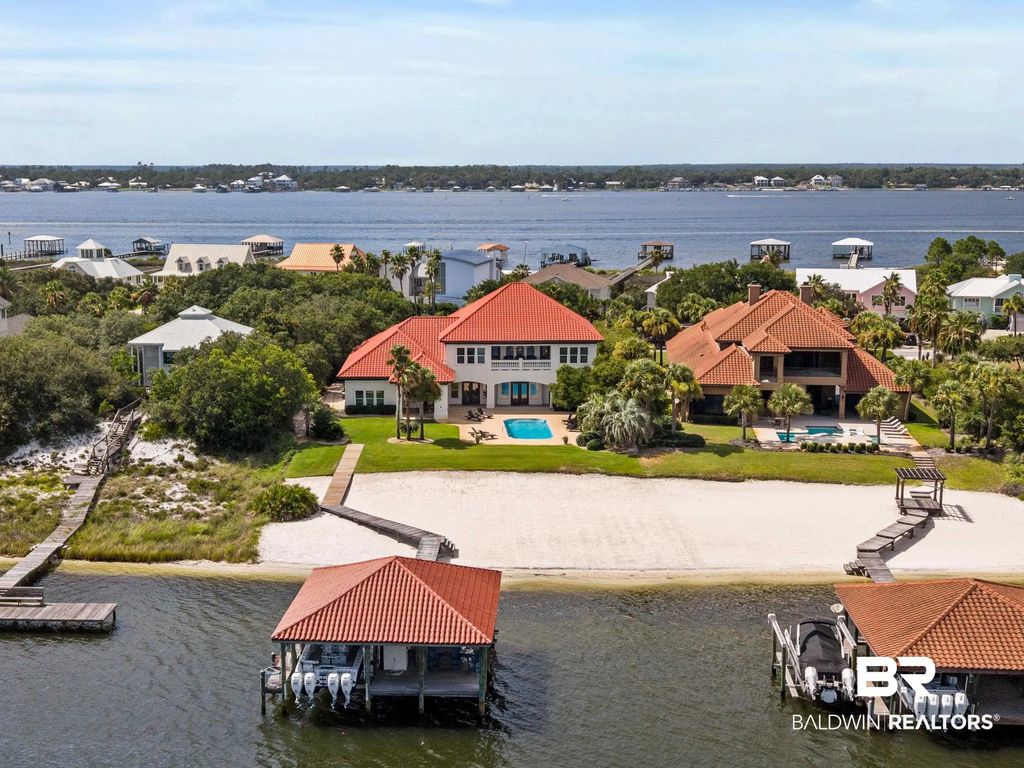
Ono Island Homes & Land for Sale – Luxury Waterfront Real Estate in Orange Beach Alabama




SEARCH ORANGE BEACH REAL ESTATE LISTINGS FOR SALE



.gif)
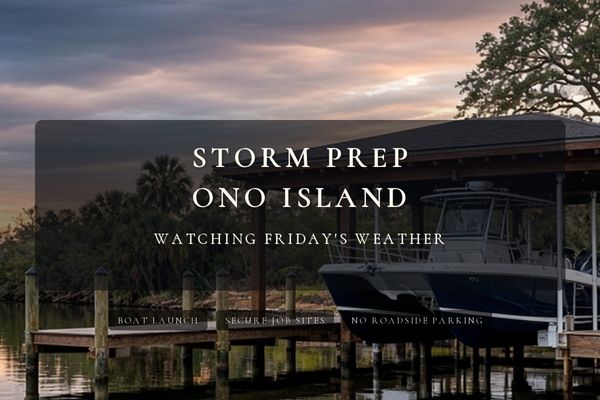

Storm Prep on Ono Island — Watching Tropical Weather for Friday | Search The Gulf
Ono Island
Storm Prep on Ono Island — Watching Tropical Weather for Friday
A tropical system could reach the coast this Friday. Nothing is locked in yet—and on Ono, we do not wait for a last-minute scramble.
Ono Landing Launch vs Dock
On this page
Watching Friday’s weather
Boat launch…

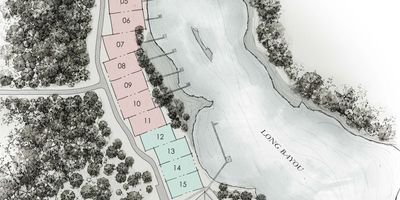
Long Bayou Preserve Orange Beach: New Site Plan & Update
Ask A Question or Sign Up To See New Real Estate Listings Before Your Competition
When it comes to finding the home of your dreams in a fast-paced market, knowing about new listings as soon as they are available is part of our competitive advantage.Sign up to see new listings in an area or specific community. Contact Meredith with any questions you may have.