
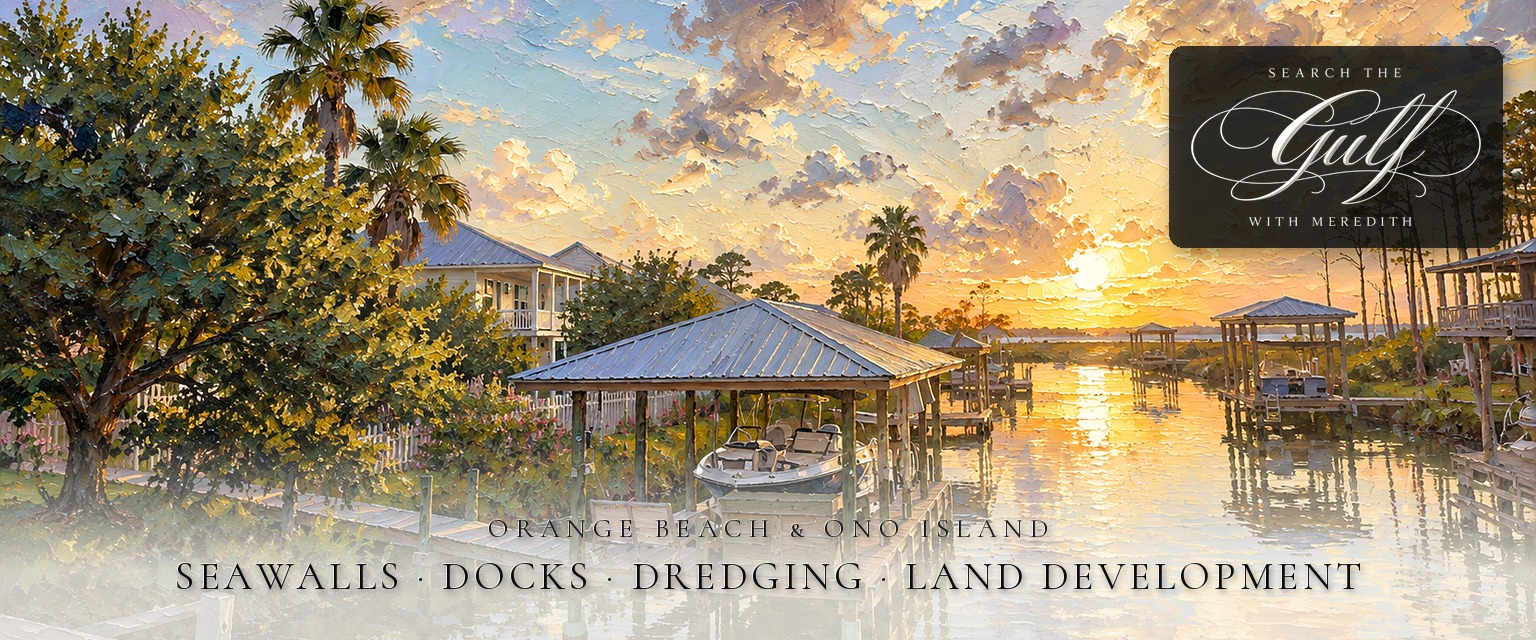
Orange Beach & Ono Island Marine Construction: Seawalls, Docks, Dredging, Land Development & More
On the water, the lot is only half the story. The seawall, the dock, the lift, the grade, and the depth at the end of the pier shape how a property lives, insures, and sells. Here is how I think about the marine and site work behind a waterfront home.
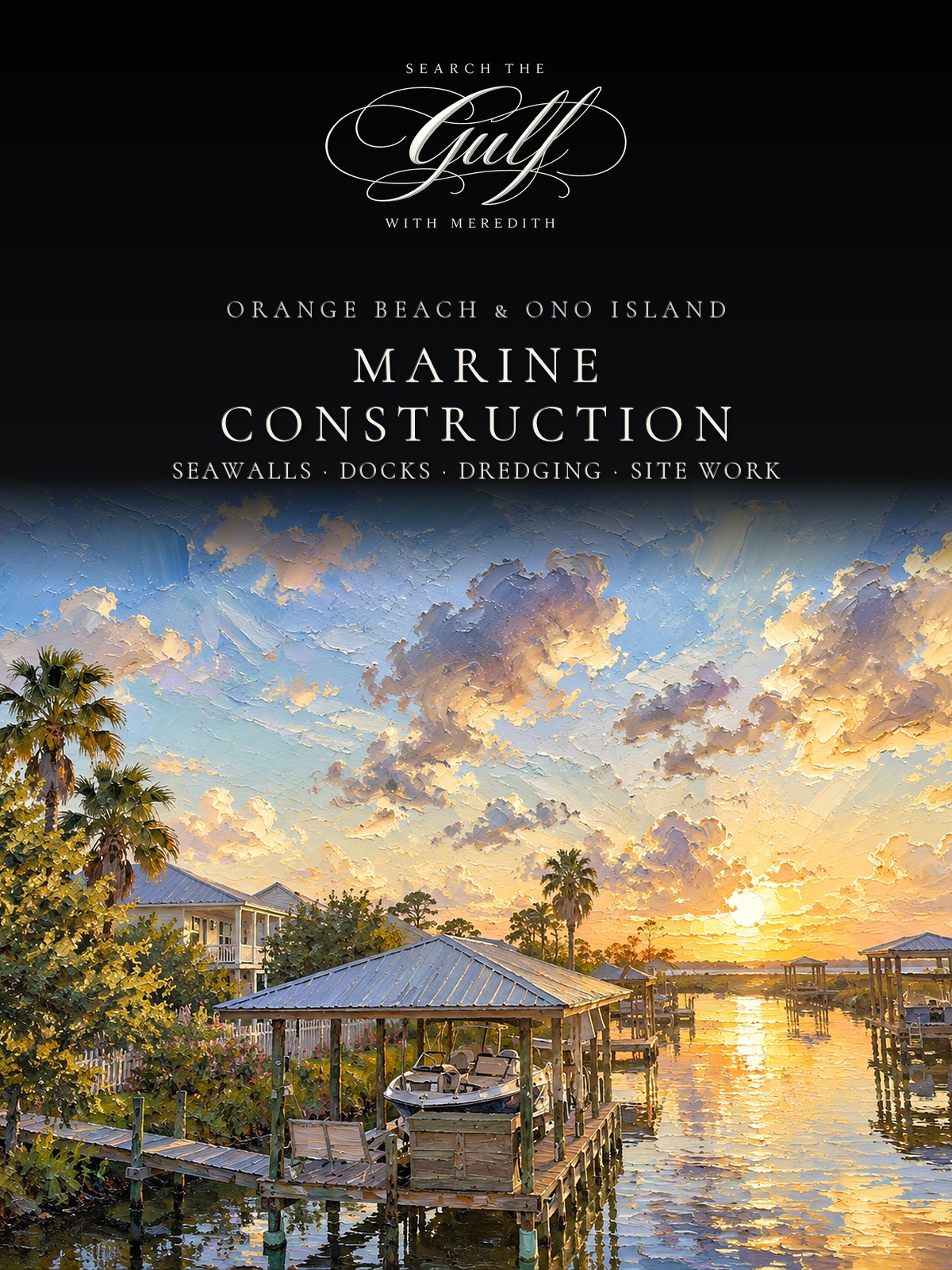
When a buyer walks a waterfront property with me, I usually end up at the edge of the water before we ever talk about the kitchen. I look at the seawall, the dock, the boat lift, how the yard drains, and how the water looks at the end of the pier.
Those pieces are built and cared for by a particular group of trades: marine contractors, dredging crews, site and dirt work contractors, demolition crews, salvage operators, and coastal landscapers. Their work is quiet when it is done well, and very expensive to ignore when it is not.
I created this guide as a thoughtful starting point for owners, buyers, and builders in Orange Beach and on Ono Island. For each service, I share what it is, when you are likely to need it, what I pay attention to, the questions I would ask a contractor, and how it can affect a sale or a purchase. For the broader list of trades on the island, my guide to Ono Island contractors and home services is the hub.
On the water, the improvements at the shoreline are part of what you are buying, not an afterthought to the house.
A tired seawall, a dock past its prime, or a lift with no paperwork can change an inspection, an insurance conversation, and a negotiation. A well-documented one can do the opposite. I would much rather we know which one we are looking at early.
Survey to final inspection
Most shoreline and site projects follow a similar shape. The order can shift, steps often overlap, and smaller jobs may skip a box or two, but this is the path I like to see a client and contractor walk together.
On Ono Island, the community’s architectural control committee rules for piers and boathouses call for the required state and federal approvals before ACC approval is requested for that work, which is why the agency box sits ahead of the POA box here. Your contractor will confirm the order for your project.
Six kinds of work behind a waterfront property
Each service below opens with the basics, then what I watch for and how it touches a sale or purchase. Click the card in each section for the questions I would ask a contractor.
Land development, site prep, and fill
Before a house can rise on a waterfront lot, the ground has to be ready for it. That can mean clearing, bringing in fill, setting the grade, planning drainage, and running utilities to the pad.
Fill: sand or soil brought onto a lot to raise or level it. Clean, suitable fill matters, and so does where it is allowed to go.
Grade: the shape and slope of the ground. Good grading moves water away from the house and keeps it from sheeting onto the lot next door.
What it is
Site work that turns a raw or cleared lot into a buildable one: clearing and grubbing, hauling in fill sand, compacting and grading, shaping drainage so water moves away from the house and neighbors, and preparing for driveways and utility runs. Lighter clearing of overgrowth is its own conversation, and my guide to bush hogging and lot clearing covers that side.
When you need it
Most often before new construction, after a demolition, or when a lot sits lower than you would like for the house you have in mind. Fill and grade decisions are tied to your survey, your flood zone, your builder’s plan, and the rules of the community. I walk through the sand side of this in detail in my guide to bringing in sand, fill, and grade on Ono Island.
What I pay attention to
I look at how the lot sits against its neighbors, where water wants to go in a hard rain, and whether there are trees worth saving before a machine ever arrives. On Ono Island, I also think about access early, because every truckload of fill comes across the bridge and through the gate. Ono Island is served by Orange Beach sewer, but I always confirm the connection and its location for each lot before a site plan is drawn.
How it affects a sale or purchase
A buyer of vacant land is really buying what can be built. A current boundary and topographic survey, an understanding of the flood zone, and a realistic idea of fill and drainage help us price a lot honestly. For a seller, records of past site work, compaction testing, and permits make a lot easier to understand.
Questions I would ask the contractor
- What permits does this site work need here, and who pulls them?
- Where will the fill come from, and is it clean, suitable material?
- How will drainage be handled so water does not move onto a neighbor’s lot?
- Will you protect any trees we want to keep, and how?
- On Ono Island, how will you schedule trucks and equipment with the gate and work hours?
- Will compaction be tested, and will I receive the results?
Dredging canals, slips, and the water at your dock
Depth is one of the quiet values of a waterfront lot. If the water at the end of the pier will not float the boat you hope to keep, that matters, and dredging is how depth is restored or created.
Dredge spoil: the sand and sediment that comes up out of the water during dredging. It has to go somewhere approved, and that plan is part of the permit conversation.
Submerged lands: the bottom beneath tidal waters. In Alabama, state-owned submerged lands are managed by the Department of Conservation and Natural Resources, which is why the state is involved when work reaches out over or into the water.
What it is
Removing sediment from the bottom of a canal, boat slip, or basin to restore or increase depth. Maintenance dredging restores depth that has silted in over time. New dredging creates depth that was not there before, and the two are treated differently by the agencies involved.
When you need it
When a slip or canal has filled in, when a boat is touching bottom at low tide, or when an owner wants a deeper berth for a larger boat. In a canal community, dredging is sometimes a shared or association conversation rather than a single-lot one.
What I pay attention to
I like to see the water at low tide. A dock that looks perfect at high tide can tell a very different story a few hours later, so I time showings and contractor visits with my Ono Island and Orange Beach tide guide. I also ask where the dredged material would go, because that is often the harder question.
How it affects a sale or purchase
For a buyer with a particular boat in mind, depth at the dock can be as important as the dock itself. I encourage buyers to have depth checked at low tide during the inspection period and to ask whether any dredging has been permitted or done. Sellers who have dredging permits and records on file give buyers real confidence.
Questions I would ask the contractor
- Is this maintenance dredging or new dredging, and what permits apply?
- Where will the dredged material be placed or hauled?
- Will you sound the depth before and after, and can I have those readings?
- Are there seagrass beds or wetlands nearby that change the approach?
- Does this need to be coordinated with neighbors or the association?
- How do tides and weather affect the schedule?
“I always want to see the water at the end of the pier at low tide. Depth is one of the quiet values of a waterfront lot.”
Demolition: clearing the way for what comes next
Sometimes the best thing on a waterfront lot is the lot. When a buyer is purchasing for the land and the water, a careful demolition is the first chapter of the new house.
What it is
Taking down an existing house or structure, removing the foundation and debris, capping utilities, and leaving the site ready for site work. On the water it can also include an old dock, boathouse, or deck.
When you need it
When a home is past saving, when the plan is a new build, or when storm damage leaves more to remove than to repair. It can also be part of a larger renovation.
What I pay attention to
I think about what should stay. A seawall, a dock, a mature live oak, or a utility connection may be worth protecting while the house comes down. I also ask how debris will leave the property, especially on Ono Island, where heavy trucks and equipment need to be coordinated with the gate and the community’s work hours.
How it affects a sale or purchase
A house priced for its land is often valued very differently from a house priced as a home, and I help buyers think through that early. If you are buying with a tear-down in mind, plan your survey, permits, and builder conversations before closing, and read my under-contract next steps guide for the due diligence calendar. In Orange Beach, the city’s building permit covers demolition of structures, and your contractor will know what applies to your lot.
Questions I would ask the contractor
- What permits does this demolition need, and who will pull them?
- How will utilities be disconnected and capped, and who coordinates that?
- Given the age of the house, will you test for materials such as asbestos before demolition?
- What will be protected: the seawall, the dock, trees, neighboring property?
- Where will debris be taken, and how many truckloads should we expect?
- Will the site be left graded and stabilized when you leave?
Boat salvage: when a boat or lift goes down
No one plans for a boat to sink at the dock, but storms, failed lifts, and simple accidents happen on the water. Salvage crews are the people who bring it back up and get it out safely.
What it is
Raising, refloating, or removing a sunken, damaged, or abandoned boat, along with debris from a damaged dock or lift. It often includes controlling any fuel or oil on the water.
When you need it
After a storm, when a lift fails, when a boat breaks loose, or when a vessel has been left behind at a property. Alabama has a derelict and abandoned vessel law, and the Alabama State Law Enforcement Agency, through its Marine Patrol, administers that program.
What I pay attention to
When I see a boat sitting low, a lift cable frayed, or a hull resting on the bottom, I take note right away. If there is any sheen of fuel on the water, it should be reported promptly, and a salvage contractor and the boat’s insurer will know the calls to make.
How it affects a sale or purchase
A boat or lift problem at the dock can delay a closing, raise questions in an inspection, and need to be settled before the keys change hands. If a boat is conveying with the property, or one is being left behind, we want that in writing in the contract.
Questions I would ask the contractor
- Do you handle fuel and oil containment, and who reports a spill?
- Can you protect the dock, the seawall, and the lift while you work?
- Will you coordinate with the boat’s insurer?
- Where will the boat and debris be taken?
- Do you need marine access, land access, or both on this lot?
- On Ono Island, what do you need from me for gate access?
Tree and sod installation for coastal lots
Landscaping on the coast is part beauty and part engineering. The right trees, grass, and planting beds help hold soil in place, slow runoff, and soften a new build so it feels settled.
What it is
Installing sod, trees, palms, and planting beds after site work or construction, and replacing landscaping after a storm or a demolition. On a waterfront lot it often goes hand in hand with drainage and erosion control.
When you need it
After a new build or a renovation, after a seawall or dock project disturbs the yard, after storm damage, or when bare sand is washing toward the water.
What I pay attention to
I like to see plants chosen for salt air, sun, and sandy soil, and irrigation planned before the sod goes down. A mature live oak is precious on this coast, and I pay attention to whether site work has respected its roots. Orange Beach has tree protection and landscaping rules, and the city’s site permit covers tree removal and landscaping, so I ask before a tree comes down there.
How it affects a sale or purchase
Landscaping is a first impression, and healthy, established grounds help a home feel cared for. It can also tell a buyer about drainage. Patches that never stay green or sand washing toward the seawall are worth a closer look.
Questions I would ask the contractor
- Which trees, palms, and grasses do you recommend for salt air and this soil?
- Is a permit or tree survey needed before any tree is removed?
- How will irrigation be designed, and what water source will it use?
- How will you protect the seawall and any wetlands from runoff during installation?
- What care will the sod and trees need in the first season?
- On Ono Island, does the plan need ACC review?
I know the marine contractors, dredging and site crews, salvage operators, and coastal landscapers who work these waters, and I would love to introduce you.
A name is helpful. Context makes it useful. I do not publish names, because the right contractor depends on the job: a canal seawall on Ono Island, a new dock and lift in Orange Beach, a fill-and-grade lot ready for a builder, or a storm cleanup. Call or text me, tell me about your property, and I will tell you who I would call first and why.
A Simple Way to Connect
Text or Call Meredith
Have a question or need more information? Texting is often the easiest way to reach me, or you are always welcome to call. I am happy to help.
Gulf Coast real estate guidance | SearchTheGulf.com

Seawalls, bulkheads, riprap, docks, piers, and boat lifts
The seawall is the backbone of a waterfront lot. It holds the yard in place, protects the house behind it, and anchors the dock, pier, and lift that make the water part of daily life.
Bulkhead vs. seawall: people use the words almost interchangeably here. A bulkhead is usually a vertical wall that holds the soil of the lot in place along calmer water, and a seawall is built to hold back the water and wave action itself. Either way, I want to know its material, its age, and its paperwork.
Riprap: large rock placed along the shoreline or at the foot of a wall to absorb wave energy and protect against erosion. A living shoreline uses plants, oyster shell, or other natural materials to do similar work more softly.
Mean high water line: the average height of high tide, which you will see written as the mean high tide line in Alabama’s rules. It matters because it helps mark where state submerged lands begin and where a wall is allowed to sit.
What it is
Building, repairing, or replacing the wall or armoring that separates the lot from the water, along with the structures that connect to it. That includes seawalls and bulkheads, riprap rock, living shoreline approaches that use plants and natural materials, and the docks, piers, boathouses, and boat lifts built off the shoreline.
When you need it
When a wall is leaning, cracking, or letting sand escape behind it, when the yard behind it is settling, after storm damage, or when an owner wants a new dock or lift. Replacement is often done in front of a failing wall, and the rules limit how far waterward a replacement can go.
What I pay attention to
I walk the full length of the wall. I look for leaning, gaps, cracked caps, rust at tie-backs, sinkholes or low spots in the lawn behind it, and sand where it should not be. On the dock, I look at pilings, decking, rails, electrical, and the lift’s motor, cables, and cradle. I like to see it at low tide, when more of the structure shows.
Context worth knowing
Alabama’s coastal rules ask that shoreline armoring like bulkheads and riprap only be approved when there are no feasible non-structural alternatives, and that new walls sit at or above the mean high tide line and landward of wetlands. The state’s submerged lands rules allow replacement walls within two feet waterward of the mean high tide line, and the Corps of Engineers’ Alabama general permit for bulkheads limits replacements to 24 inches waterward of a failed wall. That same Corps general permit specifically excludes bulkhead installation fronting Ono Island’s man-made canals, so canal-front work on the island deserves an early conversation with your contractor about the right permit path.
How it affects a sale or purchase
This is where I see the biggest surprises. A failing seawall can be one of the more significant repairs on a waterfront property, and it can shape an inspection, an appraisal, and a negotiation. Insurance matters too: the National Flood Insurance Program’s standard policy does not cover seawalls, bulkheads, piers, or docks, so ask your agent how any coverage for them would work. Sellers who can show permits, contractor invoices, warranty terms, and the age of the wall, dock, and lift give buyers something solid to stand on.
Questions I would ask the contractor
- Is this a repair, a replacement, or new construction, and how does that change the permits?
- Will an engineer be involved in the design?
- What material do you recommend for this shoreline, and why?
- Will the new wall go in front of the old one, and how far?
- Is riprap or a living shoreline an option here?
- What warranty comes with the work, and does it transfer to a new owner?
- How will you protect the lawn, landscaping, and neighboring walls during construction?
- For the dock and lift: what are the load rating, motor, and cable replacement schedule?
“I walk the full length of the seawall on every waterfront showing. The house gets my attention, but the wall tells me how the lot has been cared for.”
A general map of the permit conversation
Work in or near the water here usually involves more than one agency, and which ones depends on the project and where the lot sits. This is a general map, not a rulebook. Your contractor is the one who pulls the permits, and I always encourage owners to confirm the current requirements with each agency directly.
U.S. Army Corps of Engineers, Mobile District
The Corps regulates work in navigable and tidal waters and the placement of fill in waters and wetlands. Many minor residential projects, such as piers, can fall under a general or nationwide permit, while larger shoreline and dredging projects may need an individual permit.
Alabama Department of Environmental Management (ADEM) Coastal Program
ADEM reviews projects that touch water bottoms and wetlands for consistency with Alabama’s coastal program. That review usually begins when the owner applies to the Corps, using a joint application, and shoreline stabilization such as seawalls and bulkheads is one of the project types ADEM lists.
Alabama Department of Conservation and Natural Resources, State Lands Division
The state manages its submerged lands. Docks, piers, boathouses, and seawall replacements that reach over or into state water bottoms generally call for a request to the State Lands Division, and dredging state water bottoms calls for a dredge permit.
City of Orange Beach
Inside city limits, the city’s permit portal handles building permits, including demolition, and site permits for land disturbance, which include excavation, dredging, site clearing, tree removal, landscaping, retaining walls, and seawalls and bulkheads. Gulf-front work near the construction control line also runs through the city’s coastal program.
Baldwin County, for Ono Island
Ono Island sits outside Orange Beach city limits, in unincorporated Baldwin County, so county permits apply there. The county’s permit checklist includes flood permits for marine accessories such as piers, docks, boat lifts, bulkheads, and seawalls in flood hazard areas.
Ono Island POA and the ACC
On Ono Island, the architectural control committee reviews exterior work, docks, piers, and boathouses, and its rules call for state and federal approvals before ACC approval for pier and boathouse work. Contractors enter through the contractor lane with a current work authorization, work only during the community’s designated days and hours, and coordinate heavy equipment and deliveries with the POA because everything crosses the bridge. Some projects also involve road and bridge impact fees, and the current rules come from the POA office.
Requirements vary from lot to lot.
Permits depend on the exact location, the type of work, wetlands and seagrass nearby, the flood zone, and whether the lot is in Orange Beach, on Ono Island, or elsewhere in Baldwin County. Rules also change.
Please confirm what your project needs with the agencies and your contractor before work begins. I am a real estate advisor, not an engineer, a permitting consultant, or an attorney, and I am always glad to help you find the right ones.
The waterfront buyer and seller checklist
These are the items I like to see on the table before a waterfront property goes under contract, or before the inspection period ends. Not every line applies to every lot. For the full due diligence calendar, see my under-contract next steps guide.
For buyers
For sellers
When the shoreline work is part of a new house
Advising clients on building on Ono Island is one of my favorite parts of the job, and the shoreline is part of that plan from the very first survey. Site work, the seawall, the dock, and the house all affect one another, and the best projects plan them together. If you are thinking about the house itself, my guide to Ono Island ICF home building and construction is a lovely place to begin.
If a boat slip matters more than a private dock, my guide to Orange Beach condos and communities with boat slips that allow rentals may help, and you can find more on life on the water under Ono Island boating.
“A well-documented seawall and dock are a gift to the next owner. I love seeing a seller hand over that folder at closing.”
The questions
Frequently asked questions
Click a question to open the answer.
Do I need a permit to repair my seawall in Orange Beach or on Ono Island?
Often, yes. Seawall and bulkhead work near the water usually involves some mix of the Corps of Engineers, ADEM, the state’s State Lands Division, and the City of Orange Beach or Baldwin County, plus the ACC on Ono Island. What applies depends on the project and the lot, so confirm with your contractor and the agencies before work begins.
Call or text me if you want to talk this through.
What is the difference between a bulkhead and a seawall?
Locally, the words are used almost interchangeably. A bulkhead is usually a vertical wall that holds the soil of the lot in place along calmer water, and a seawall is built to hold back the water and wave action itself. For a buyer, the material, age, condition, and permits matter more than the name.
Call or text me if you want to talk this through.
Does flood insurance cover my seawall or dock?
The National Flood Insurance Program’s standard policy does not cover seawalls, bulkheads, piers, or docks. Ask your insurance agent how, or whether, other coverage might apply to them.
Call or text me if you want to talk this through.
Should I have the seawall and dock inspected before I buy?
I encourage it on nearly every waterfront purchase. A marine contractor can look at the wall, pilings, decking, electrical, and the lift’s motor and cables. I like to schedule it near low tide, when more of the structure is visible, and inside your inspection period.
Call or text me if you want to talk this through.
Can I dredge the canal behind my house?
Possibly, but dredging is one of the more involved permit conversations. The Corps of Engineers, ADEM, and the State Lands Division may all be part of it, the dredged material needs an approved place to go, and in a canal community it may be a shared project. Start with a contractor who does this work locally.
Call or text me if you want to talk this through.
How do contractors get onto Ono Island with heavy equipment?
Ono Island is a gated community reached by a bridge. Contractors use the contractor lane with a current work authorization, work during the community’s designated days and hours, and coordinate heavy equipment and deliveries with the POA. The rules can change, so confirm the current requirements with the POA office.
Call or text me if you want to talk this through.
Is Ono Island in the City of Orange Beach for permits?
No. Ono Island has an Orange Beach address, but it sits in unincorporated Baldwin County, so county permits apply, along with the POA and ACC. Ono Island is served by Orange Beach sewer, and I always confirm the connection for each lot.
Call or text me if you want to talk this through.
Can you recommend a marine contractor?
Yes, and I would love to. I know the marine contractors, dredging and site crews, salvage operators, and coastal landscapers who work these waters. I keep that list close rather than publishing it, so call or text me and tell me about your project.
Call or text me if you want to talk this through.
The right contractor, the right order, and a folder worth keeping.
Whether you are buying a waterfront home, selling one, or preparing a lot for a builder, I am glad to walk the shoreline with you and talk through what I see. I know the marine contractors and trades who do this work well, and I would love to make the introduction.
Call or text me, and we will start with the water.
A Personal Note from Meredith
Questions About This Topic?
If you would like to understand how the details in this article may relate to your property, your plans, or a Gulf Coast real estate decision, I would be glad to help.
Get in Touch with Meredith
Clear Answers Are Only a Text or Call Away
Texting is often the easiest way to reach me. You are also welcome to call whenever it is convenient. I am always happy to help you find the information you need.
Gulf Coast real estate guidance | SearchTheGulf.com
SEARCH ORANGE BEACH REAL ESTATE LISTINGS FOR SALE
- All Listings
- $100,000 - $200,000
- $200,000 - $300,000
- $300,000 - $400,000
- $400,000 - $500,000
- $500,000 - $600,000
- $600,000 - $700,000
- $700,000 - $800,000
- $800,000 - $900,000
- $900,000 - $1,000,000
- Over $1,000,000
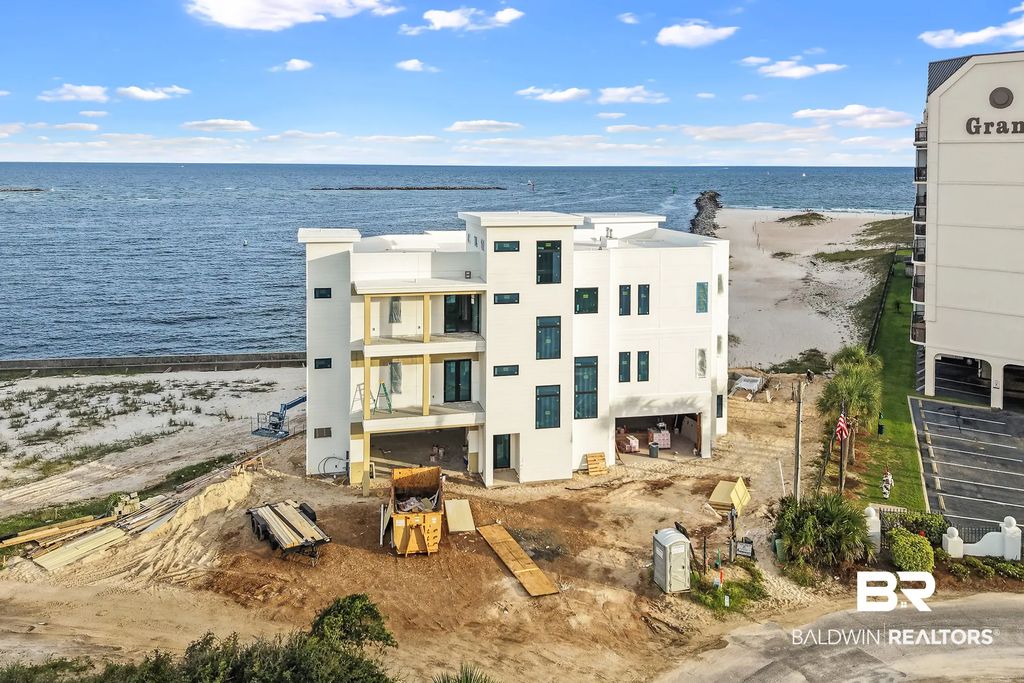
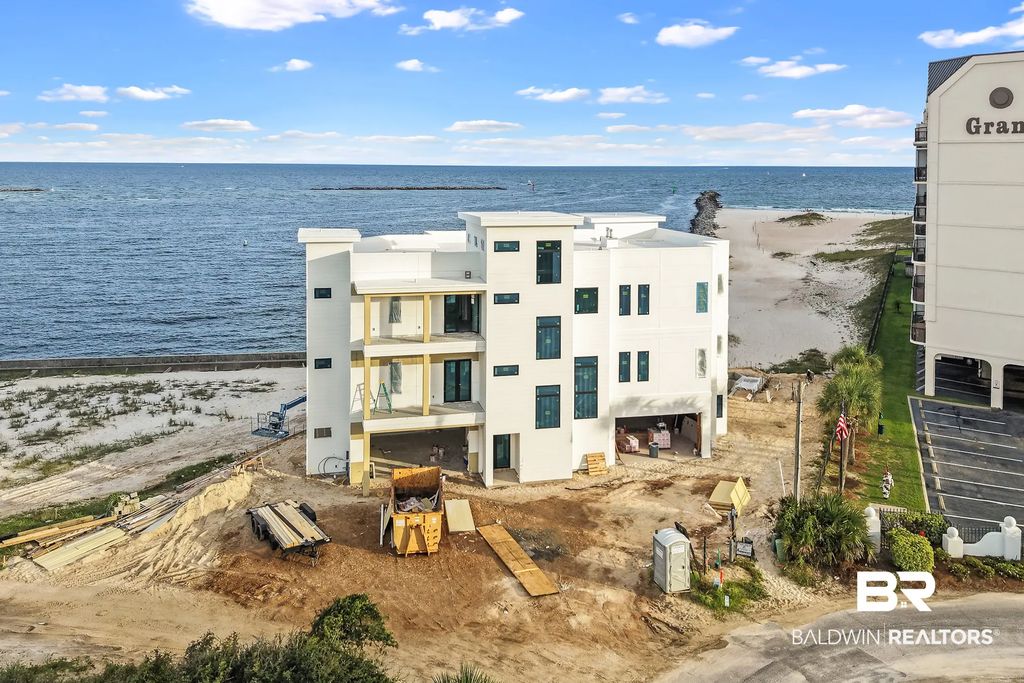


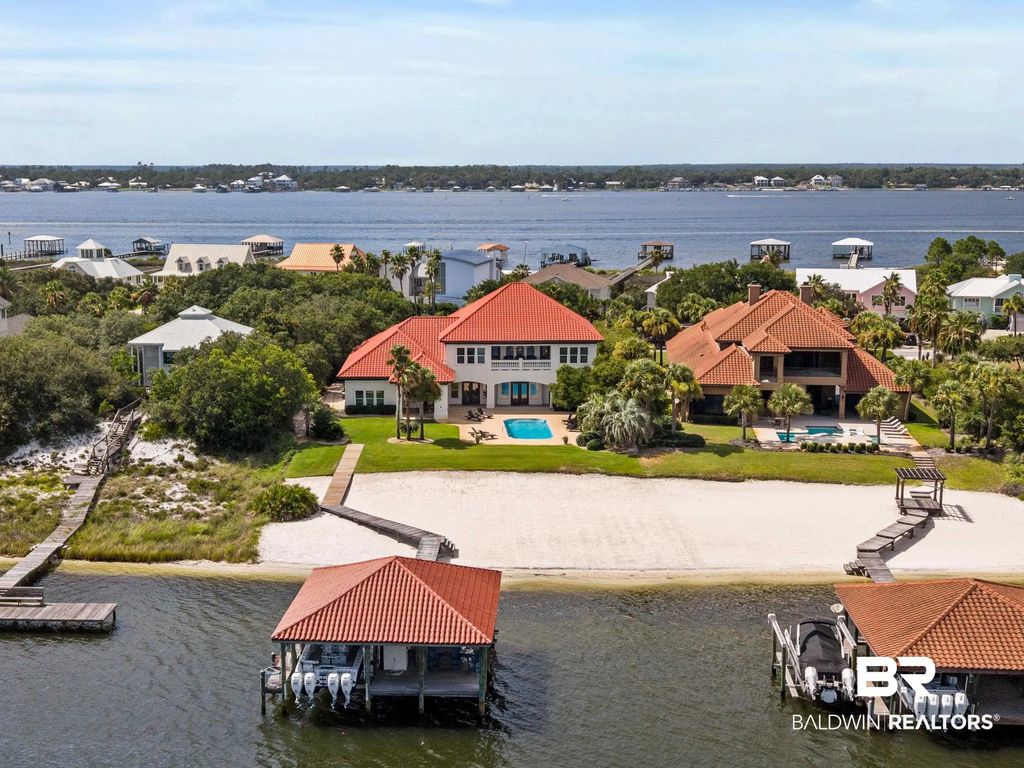


Ono Island Homes & Land for Sale – Luxury Waterfront Real Estate in Orange Beach Alabama



.gif)
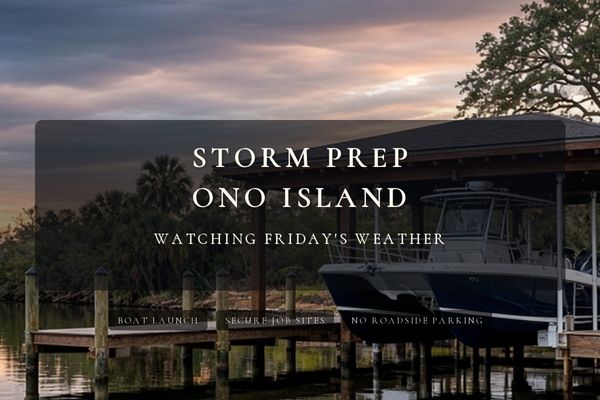

Storm Prep on Ono Island — Watching Tropical Weather for Friday | Search The Gulf
Ono Island
Storm Prep on Ono Island — Watching Tropical Weather for Friday
A tropical system could reach the coast this Friday. Nothing is locked in yet—and on Ono, we do not wait for a last-minute scramble.
Ono Landing Launch vs Dock
On this page
Watching Friday’s weather
Boat launch…

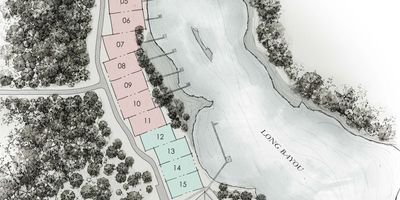
Long Bayou Preserve Orange Beach: New Site Plan & Update
Ask A Question or Sign Up To See New Real Estate Listings Before Your Competition
When it comes to finding the home of your dreams in a fast-paced market, knowing about new listings as soon as they are available is part of our competitive advantage.Sign up to see new listings in an area or specific community. Contact Meredith with any questions you may have.