
Ono Island New Construction Guide
The Hidden Cost
Beneath the Build
What sand, elevation and expert guidance really mean when building a new home on Ono Island
By Meredith | Ono Island Homeowner & Real Estate Advisor
_(800_x_150_px)_(2).gif)
When most people dream about building a new home on Ono Island, they picture the finished details: graceful coastal architecture, wide porches, beautiful windows, a silver metal roof and perhaps a boat dock waiting just beyond the backyard.

What they may not picture are the truckloads of sand and fill that can arrive before the foundation ever takes shape.
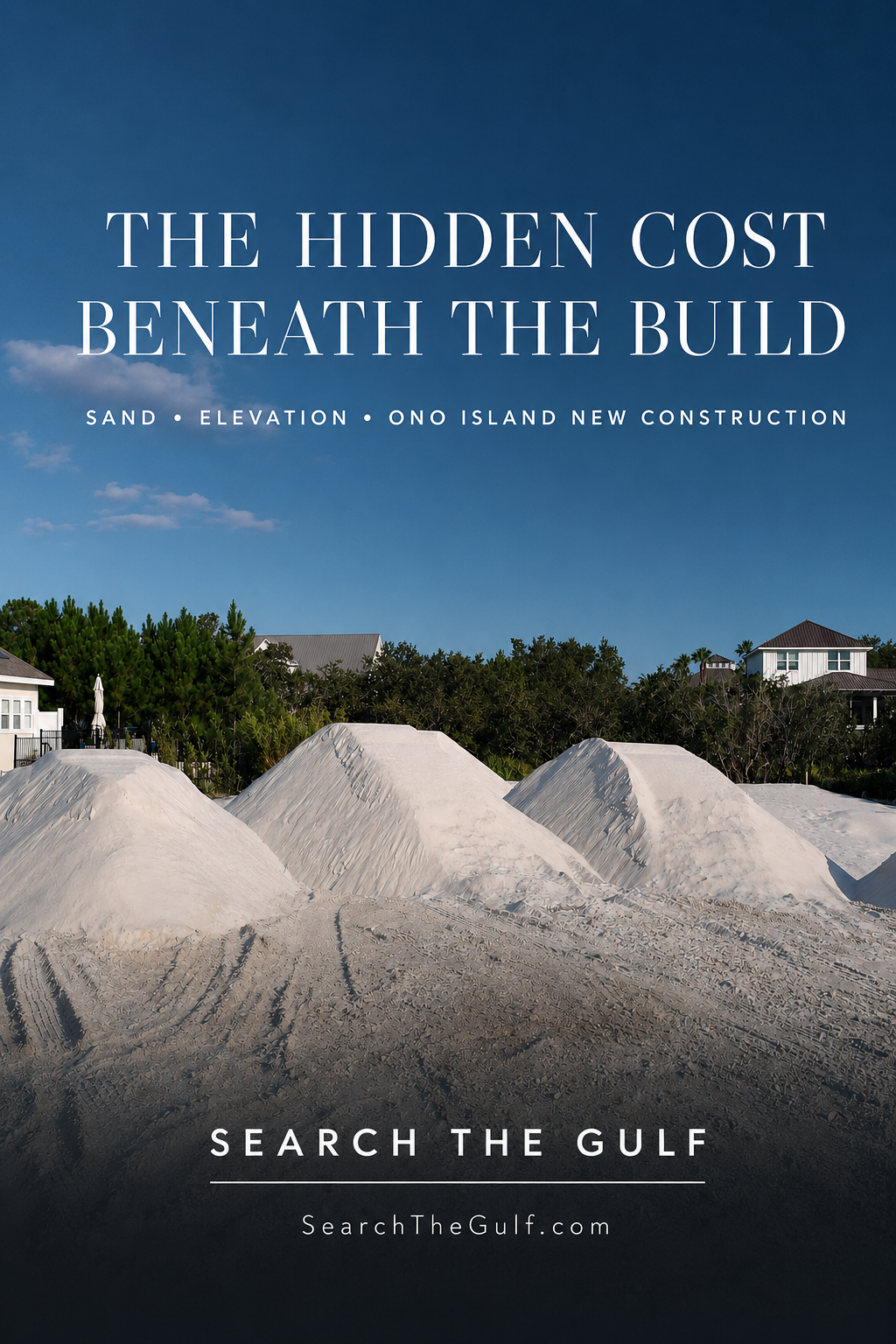
I recently passed an Ono Island construction site where enormous piles of bright white sand covered much of the property. It was quite a sight—almost as though a small dune system had appeared overnight.
To someone unfamiliar with coastal construction, the amount of material might seem excessive. To an experienced local builder, however, those piles tell a much more complicated story about elevation, soil preparation, drainage, compaction and the realities of building on an island.
They may also represent one of the most frequently underestimated portions of a new-construction budget.
Understanding the Site
Why Does an Ono Island Homesite Need So Much Sand?
Every Ono Island lot is different.
Two homesites may appear nearly identical from the road, yet their natural elevations, contours, soils, trees, drainage patterns and construction requirements can be remarkably different. One lot may need relatively modest preparation, while another may require a significant amount of imported material before construction can properly begin.
What we casually refer to as “sand” may be brought onto a property for several purposes:
- Establishing or raising the building pad
- Achieving the elevations shown on the approved site plan
- Preparing areas beneath foundations, slabs and driveways
- Creating positive drainage away from the house
- Transitioning between the home, driveway and surrounding yard
- Replacing unsuitable material when required
- Preparing areas for pools, patios and outdoor living spaces
- Supporting the final grading and landscape plan
The amount required depends upon far more than the size of the house. The home’s footprint, foundation design, garage placement, driveway, porches, pool, existing grade and drainage plan can all affect the volume of material and the cost of preparing the site.
This is why I encourage buyers to evaluate the lot and the proposed home together. A house plan that fits beautifully within the setbacks may still require extensive site work to function properly on that particular property.
The Real Expense
The Hidden Cost Is Not Simply the Price of Sand
A pile of sand may look wonderfully straightforward. The invoice behind it usually is not.
The cost of site preparation may include:
A quote that simply lists an allowance for “sand” may not reveal the entire expense. The price per load matters, but so do the number and capacity of the trucks, the suitability of the material and the work required after it arrives.
As we sometimes say in the South, what looks simple from the front porch may be an entirely different matter once you walk around back.
Sand and Structural Fill Are Not Necessarily the Same Thing
One distinction deserves special attention: a large amount of loose sand spread across a property is not automatically the same thing as a properly prepared building pad.
The appropriate material and installation method depend upon the site conditions, foundation design, engineering, flood-zone requirements and approved construction plans. When structural support is involved, the fill may need to satisfy particular specifications and be placed and compacted according to professional recommendations.
Simply adding more material does not necessarily create a better or safer homesite.
Compaction, moisture, permeability, drainage and the condition of the underlying native soil can all influence performance. Depending upon the project, the builder may coordinate with a civil engineer, structural engineer, geotechnical professional, surveyor or testing company. Ono Island building is not the ideal setting for guesswork, shortcuts or generalized advice borrowed from a very different market.
Elevation Is More Than Making the Yard Higher
The word “elevation” may refer to several related—but distinctly different—measurements:
• Existing natural ground elevation
• Proposed finished grade
• Building-pad elevation
• Foundation or slab elevation
• Lowest-floor elevation
• Applicable Base Flood Elevation
• Additional elevation or freeboard
• Street and driveway elevations
These elevations influence how the home sits on the property, how the driveway meets the street and how water moves around the house. They may also affect stairs, porches, garages, landscaping, pools and outdoor living spaces.
A licensed surveyor and the appropriate design and construction professionals should establish and verify these measurements. Current flood maps, surveys, elevation data and applicable requirements should always be reviewed for the individual property.
The City of Orange Beach currently reviews building and site-permit applications together for new one- and two-family dwellings. The site permit incorporates stormwater, tree-removal and driveway considerations—an important reminder that the home, land, drainage and access plan must work together.
Review the City of Orange Beach New-Construction Checklist | Review FEMA Technical Bulletin 10
Drainage May Be the Most Important Part of the Conversation
Adding fill to one portion of a lot changes how water behaves across the remainder of the property. Water must have an appropriate place to go. The final grade should work with the house, driveway, patios, pool, landscaping and neighboring properties—not against them.
Questions I Would Ask
- How will water drain away from the house?
- Where will roof runoff be directed?
- Will swales, drains, piping or other measures be required?
- How will the driveway elevation transition to the street?
- What happens during an intense Gulf Coast rain?
- Could the proposed grade redirect water toward neighboring property?
- How will a future pool or outdoor living area affect drainage?
- Will changes in grade affect trees being preserved?
- How will the waterfront or canal side of the lot be treated?
Here along the Gulf Coast, rain does not always arrive with good manners. It can come down in sheets, and it can expose a poorly considered drainage plan very quickly. Drainage should be treated as essential infrastructure—not a landscaping detail to be figured out near the end.
Truck Access, Trees and Site Logistics Matter
A substantial amount of imported material requires a substantial number of truck movements. On a private island with neighborhood roads, mature vegetation and established homes, construction access and material staging deserve careful thought.
A builder may need to consider the safest construction entrance, road-edge protection, utility locations, mature trees and root zones, erosion control, weather interruptions, material storage, drainage during construction and applicable Ono Island procedures. These details rarely appear in an architectural rendering, but they can affect the budget, schedule and overall experience.
Before Purchasing the Lot
How Can You Estimate the Site-Preparation Cost?
This is one of the most important questions a buyer can ask—and ideally, it should be asked before purchasing the lot.
A meaningful estimate usually requires more than driving by the property or walking it for a few minutes. Depending upon the site and proposed home, the evaluation may involve:
- A current boundary and topographic survey
- Flood-zone and elevation information
- A preliminary site plan and home footprint
- Foundation and elevation assumptions
- Preliminary cut-and-fill calculations
- Soil or geotechnical evaluation when recommended
- Drainage and stormwater planning
- Tree, driveway and setback considerations
- Consideration of garages, pools, porches and outdoor spaces
Without this information, a builder may offer general observations—but not the dependable number a buyer may be hoping to receive. A confident-sounding answer is not necessarily an accurate answer.
Respecting Professional Expertise
Why a Qualified Builder’s Time Should Be Respected
This is an important conversation, and I want to approach it with both honesty and grace.
The most experienced Ono Island builders are extraordinarily busy. Their days are spent overseeing active construction, coordinating subcontractors, meeting inspectors, reviewing plans, managing material deliveries and solving the countless details involved in producing a high-quality coastal home.
Their time is valuable because their knowledge is valuable.
A reputable builder may be happy to help a serious prospective client evaluate a lot. However, it is not always reasonable to expect a highly qualified builder to repeatedly leave an active jobsite, walk an undeveloped property, study its conditions and prepare meaningful preliminary pricing without compensation or a defined path toward a construction relationship.
A proper site consultation is professional work. It draws upon years of experience, local knowledge, trusted relationships and an understanding of costly issues that may not be visible to an untrained eye.
If a buyer wants thoughtful, property-specific guidance from one of the best builders available, I believe that professional should be compensated for the time required to provide it.
The Best Builders Do Not Need to Chase Every Opportunity
There are many people who can call themselves builders. There are far fewer whom I would personally feel comfortable recommending for a significant new home on Ono Island.
The best coastal builders often have established reputations, active projects and carefully managed schedules. They do not need to pursue every possible job, and they may be selective about the projects and clients they accept.
That selectivity should not be interpreted as unhelpfulness. In many cases, it reflects the discipline required to protect quality and give existing clients the attention their homes deserve.
The lowest price or quickest answer is not always the safest answer. Poor early advice can lead to inadequate allowances, drainage problems, foundation changes, costly plan revisions, permitting delays, unexpected change orders and compromises in construction quality.
A builder who presents a careful, qualified answer may initially appear more expensive than someone offering an immediate estimate. In reality, the experienced builder may be protecting the homeowner from far greater expenses later.
A Builder Is Not a Complimentary Lot-Inspection Service
I often receive requests to “have a builder run out and look at the lot” before a buyer has completed surveys, selected a home concept or demonstrated serious intent.
I understand the request. Buyers want reassurance before making an important decision, and I want them to be well informed.
At the same time, I am careful not to treat my trusted builders as an unlimited source of complimentary opinions. The relationships I have established are valuable, and I respect the demands on these professionals’ time.
When I introduce a buyer to a builder, I want the conversation to be productive. That generally means the buyer is prepared to discuss:
- Whether the lot is already under contract
- The intended size and style of the home
- A realistic construction budget
- The desired timeline
- Available surveys and elevation information
- Waterfront and boating requirements
- Pools, garages and outdoor-living expectations
- Willingness to engage the builder for a paid consultation or preliminary study
Preparation communicates seriousness. Southern hospitality is a beautiful thing, but professional expertise should not be mistaken for an open-ended favor.
What Might a Paid Preconstruction Consultation Include?
The scope will vary by builder and property, but a formal preliminary consultation could potentially include:
A scheduled site visit
Review of surveys and elevation information
Observations about access and constructability
Discussion of fill, grading and drainage
Review of the proposed home footprint
Preliminary foundation considerations
Identification of additional professionals needed
Recommendations for the next due-diligence steps
A site visit should not be confused with an engineered evaluation or guaranteed construction price. The scope, fee and expected deliverable should be established before the consultation begins. That protects both the buyer and the builder.
Search The Gulf Checklist
Questions to Ask About a Site-Work or Fill Allowance
- What quantity of imported material is included?
- What type or specification of material is assumed?
- Are hauling, delivery and fuel-related charges included?
- Does the allowance include spreading, grading and compaction?
- Is compaction testing included if required?
- Is unsuitable-soil removal included or excluded?
- Who determines the final quantity of fill?
- What happens if the project requires more material than estimated?
- Are surveying and elevation certifications included elsewhere?
- Does the allowance include final grading and landscape-ready soil?
- Are drainage and erosion-control measures included?
- Is the driveway base part of the same allowance?
- How may weather or wet site conditions affect the cost?
- Is there a contingency for unknown site conditions?
My Search The Gulf Approach to Builder Introductions
I value the relationships I have built with respected Ono Island home builders, architects, contractors, engineers, surveyors and other coastal professionals.
Because I live here, I see homes taking shape over time. I observe the construction sites, materials, attention to detail and the ways different professionals manage their projects. That local perspective is difficult to replicate through an online search or a simple list of names.
When I make an introduction, I want it to be a thoughtful match—not merely a referral passed along without context. I consider the scale of the home, the complexity of the site, waterfront requirements, budget, timeline, design preferences and the builder’s current workload.
There are only a limited number of builders I personally trust for certain Ono Island projects. Access to their expertise should be approached with preparation, respect and a willingness to compensate them for meaningful preliminary work. That protects the relationship, but more importantly, it helps protect the homeowner.
Meredith’s Perspective
My Search The Gulf Take
Those beautiful white piles of sand represent much more than material waiting to be moved.
They represent elevation, engineering, drainage, hauling, equipment, labor and the preparation of the ground that will support a home for years to come. They remind us that some of the most important investments in coastal construction may eventually disappear beneath the finished house.
When purchasing an Ono Island lot, I encourage buyers to look beyond location, price and appearance. Ask how the land will receive the home you envision. Consider the relationship between the street, driveway, house, pool, outdoor spaces, drainage and waterfront.
Most importantly, budget for qualified advice before you budget for surprises.
A paid consultation with the right professional may feel like an additional expense during due diligence. In the context of a custom-home project, it can be a remarkably small investment—especially if it identifies a costly concern before the lot is purchased or the plans are finalized.
Begin With the Right People
Let Me Help You Take the Right Next Step
As an Ono Island homeowner and local real estate advisor, I understand that choosing the property is only the beginning. The people surrounding the project can influence the quality of the home, the accuracy of the budget and the entire building experience.
I have established relationships with Ono Island builders, architects, contractors, engineers, surveyors and other professionals who understand the particular considerations of coastal construction.
If you are considering buying a lot or building a new home on Ono Island, please call me to discuss your plans. I would be delighted to help you ask better questions, evaluate the real estate considerations and connect you with the right professionals when appropriate.
Explore Ono Island Real EstateSearchTheGulf.com is the Gulf Coast’s premier website for searching all real estate listings on the Gulf Coast.
Important: Construction costs, fill requirements, soil conditions, flood-zone information, engineering, elevation and drainage requirements are property-specific. Buyers and homeowners should consult the City of Orange Beach, applicable Ono Island governing entities and appropriately licensed builders, architects, engineers, surveyors, contractors and insurance professionals before making purchasing or construction decisions.