
Water Tables, Fill, and Foundations on Ono Island: How Coastal New Construction Gets Elevation Right
_(800_x_150_px)_(2).gif)

If you’ve ever stood on a vacant lot on Ono Island and heard a builder say, “We need to look at the water table and the elevations before we talk foundation,” you were hearing coastal construction wisdom in plain language. On barrier and bay-adjacent terrain, the most expensive surprises often start below grade.
“In coastal construction, elevation is not a detail. It’s the beginning of every smart decision.”
Meredith Folger Amon is an expert real estate advisor on Ono Island in Orange Beach, Alabama, and I spend a lot of time translating builder and engineer language for buyers who want clarity before they commit. This article is a practical guide to the key “elevation words” you’ll hear, what they mean, and how they connect to fill planning and foundation choice.
Ono Island homes and lifestyle: https://www.searchthegulf.com/ono-island/
Ono Island blog articles: https://www.searchthegulf.com/blog/category/ono-island/
1) The term you were reaching for: Water Table and Seasonal High Water Table (SHWT)
The phrase you described is almost always the water table, and more specifically the Seasonal High Water Table (SHWT). In simple terms, SHWT is the highest level groundwater tends to reach during the wet season. The closer that wet-season groundwater sits to the surface, the more carefully a project must plan:
- How much fill is needed to create a stable building pad
- How water moves across the lot after rain events
- How the foundation is designed to avoid long-term settlement and moisture issues
- How utilities are routed and protected
In a coastal environment, the “lower” the lot sits relative to groundwater and drainage conditions, the more you’ll hear about engineered fill, compaction requirements, and elevating the pad.
2) The road reference words: Grade, Finished Grade, and “How High the Lot Sits”
Builders and surveyors typically describe “how high the lot sits at the road” with a few related terms:
- Existing grade: current ground height before fill and site work
- Finished grade: final ground height after fill, compaction, and shaping
- Top of curb (TOC) / Top of pavement (TOP): the road reference elevation used to compare the lot to the street
- Crown of road: the high point of the roadway (important for drainage and how water sheds)
- Benchmark (BM): the survey reference point used to establish all elevations on the site
When someone says, “This lot is low,” what they usually mean is: the existing grade and drainage conditions will require more work to reach a stable building pad elevation and a finished floor elevation that performs well over time.
3) Flood language vs groundwater language: FFE and BFE
Two acronyms show up constantly in coastal construction discussions:
- FFE (Finished Floor Elevation): the elevation of the home’s finished floor (what you live on)
- BFE (Base Flood Elevation): a floodplain reference elevation used for flood risk management and (often) insurance discussions
Here’s the key: the water table (groundwater) is not the same as BFE (floodwater). They are different “water problems” that can influence the same decision: how high the structure and pad should be built, and which foundation makes the most sense.
If a lot is low and the seasonal groundwater runs high, you plan for moisture and stability. If flood elevations are a factor, you plan for elevation and risk management. Good builds address both.
4) Fill, backfill, and compaction: what “doing it right” looks like
On many coastal lots, fill is not just “more dirt.” Builders will often specify engineered fill and require compaction testing so the pad does not settle unevenly later. That planning typically includes:
- Geotechnical/soils input to confirm soil type, bearing capacity, and groundwater behavior
- Compaction standards so the pad performs over time (not just on closing day)
- Drainage shaping so water moves away from the structure and does not pond
- Backfill details around stem walls, grade beams, and utility trenches
When you hear a builder talk about “pad height” or “how much fill we need,” that’s typically tied to the combined reality of grade, drainage, and the seasonal high water table.

5) The coastal construction line: what it is called (Alabama vs Florida)
Along the Gulf-front, you may hear people say “coastal construction line,” “control line,” or “that line we can’t cross without extra permitting.” The formal term differs by state.
- Alabama: You may hear “Construction Control Line (CCL)” or “ADEM construction control line” in Gulf-fronting contexts.
- Florida: You’ll commonly hear “Coastal Construction Control Line (CCCL)” on sandy beaches.
Ono Island is not Gulf-front beach and dune, but many of my buyers shop both sides of the state line and ask why rules feel different. Knowing the vocabulary helps you ask better questions early, especially if your search spans Orange Beach, Ono Island, and nearby Florida markets.
6) Foundation options you’ll hear in coastal builds (and why builders choose them)
Foundation choice is never one-size-fits-all on the coast. Soil, groundwater, elevation targets, and the intended design all influence the decision. Here are the foundation types you mentioned, plus how they typically show up in coastal conversations.
Floating Slab
A floating slab is designed to “float” on prepared soil, often with thicker edges or reinforced areas depending on engineering. In practice, coastal performance depends heavily on soil prep and compaction. If the pad is not engineered and compacted correctly, settlement risk rises.
Monolithic Slab (Monolithic Pour)
A monolithic slab is poured as one continuous placement, often integrating thickened edges. Monolithic slabs = efficiency. Coastal success hinges on the same non-negotiables: pad prep, drainage, reinforcement schedule, and moisture management.
Stem Wall Foundation
A stem wall foundation typically includes perimeter walls (often concrete or masonry) supporting the structure above. This can allow for a raised slab or crawl configuration depending on design. Stem walls are frequently paired with careful backfill and drainage details, especially where groundwater and saturation are concerns.
Pilings / Pylons (Raised Coastal Foundations)
Pilings (sometimes casually called pylons) are common when elevation requirements, soil conditions, or flood concerns push the structure higher. They can help reduce risk from floodwater and allow water to pass under the structure. These systems are heavily engineered and can involve pile caps and grade beams.
Pier-and-Beam (Raised Framing Systems)
Pier-and-beam foundations elevate the structure above grade and can be useful in certain coastal scenarios. The details matter, including bracing, connections, and how the system is protected from moisture, wind loads, and long-term corrosion.
“The foundation is not just what the home sits on. It’s how the home negotiates water, wind, and time.”
7) The questions I recommend asking early
If you are evaluating a lot or a to-be-built plan on Ono Island, these questions cut through confusion quickly:
- What does the survey show for benchmark, grade, and road reference points
- What does the soils/geotech indicate about seasonal groundwater behavior
- What is the target pad elevation and the target finished floor elevation
- Which foundation type is proposed and why that choice fits the site
- How will drainage be handled after fill is placed and shaped
- How will utilities be routed and protected
8) A practical next step for Ono Island buyers
If you share the lot address, I can help you build a smart question list and compare nearby Ono Island options. The goal is simple: reduce surprises and keep the build conversation grounded in the right site data.
If it did, kindly send me a quick note with what you’re building (home or land), your timeline, and what matters most to you, and I’ll point you toward the best next step.
Call or Text Meredith on her direct line. 970/389.2905
Friendly note: This is general education, not engineering or legal advice. Your builder, surveyor, geotechnical engineer, structural engineer, and local permitting offices are the right sources for project-specific requirements.
Back to Top
#searchthegulf #meredithfolger #becausewelivehere
Ono Island Homes & Land for Sale – Luxury Waterfront Real Estate in Orange Beach Alabama
- All Listings
- $100,000 - $200,000
- $200,000 - $300,000
- $300,000 - $400,000
- $400,000 - $500,000
- $500,000 - $600,000
- $600,000 - $700,000
- $700,000 - $800,000
- $800,000 - $900,000
- $900,000 - $1,000,000
- Over $1,000,000



.gif)
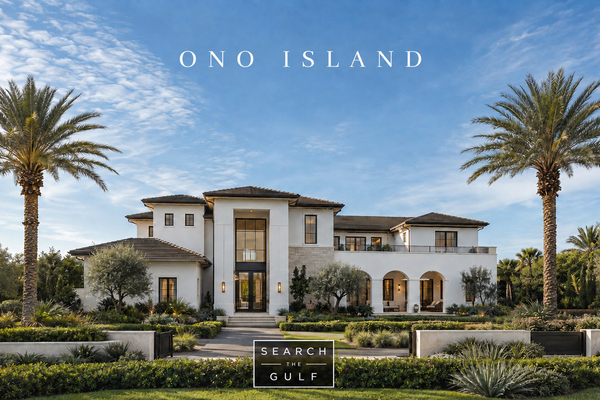

Ono Island Homes For Sale and Market Update
The Ono Watch · September 1, 2026
What I Am Watching on Ono Island This Morning
33 active homes. 24 active lots. About 4.1 months of home supply. New construction is still thin, and my listing at 30532 Ono North Loop West remains a real way onto a new house.
Search Ono Island The Ono…
Can I Buy a House on Ono Island Under $1 Million? | SearchTheGulf
The Ono Watch | Ono Island Market Update | August 31, 2026

Ask A Question or Sign Up To See New Real Estate Listings Before Your Competition
When it comes to finding the home of your dreams in a fast-paced market, knowing about new listings as soon as they are available is part of our competitive advantage.Sign up to see new listings in an area or specific community. Contact Meredith with any questions you may have.
Enjoy this blog post? Click here to subscribe for updates
Leave A Comment