
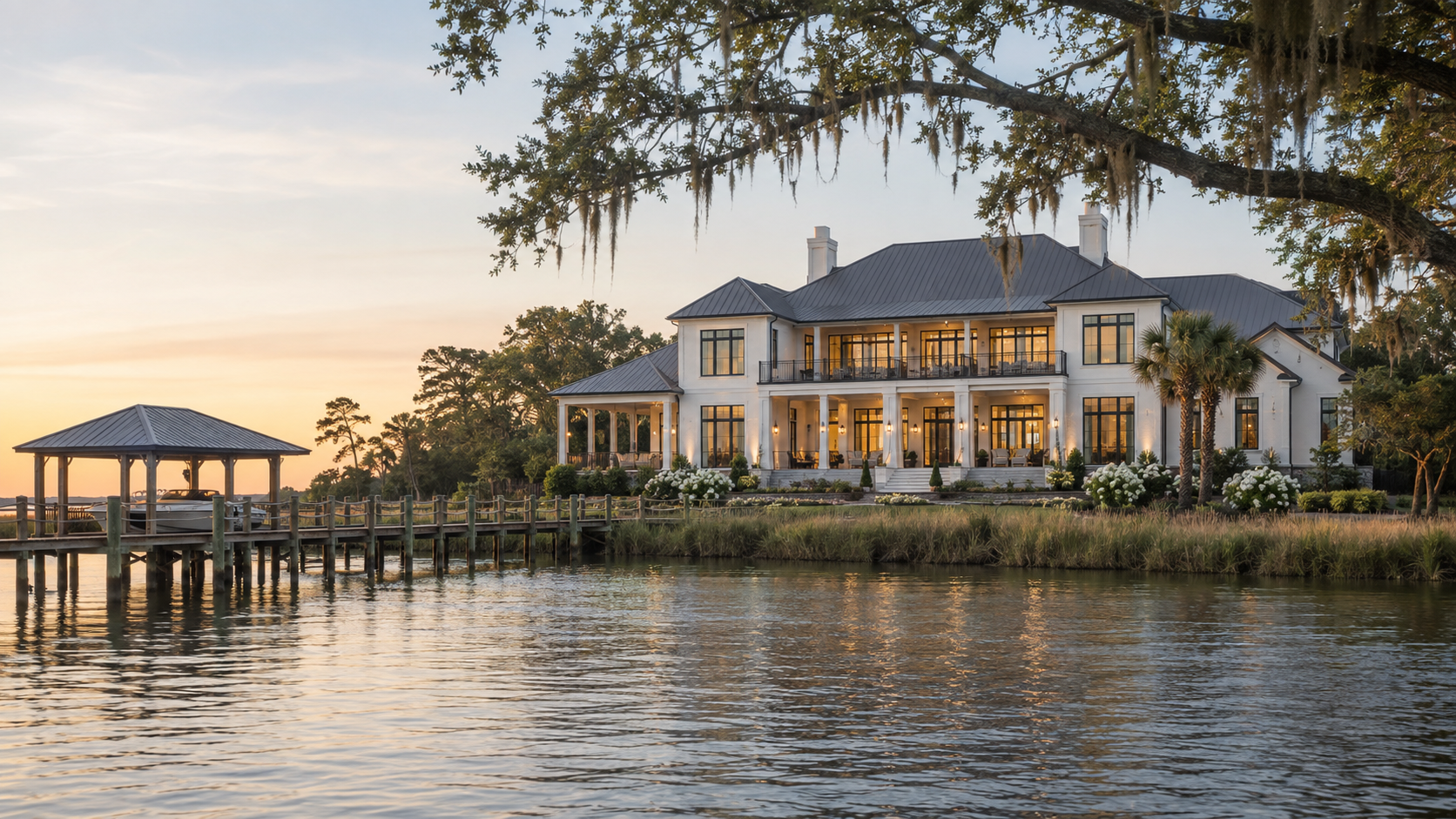
The Ono Island Architectural & Waterfront Collection
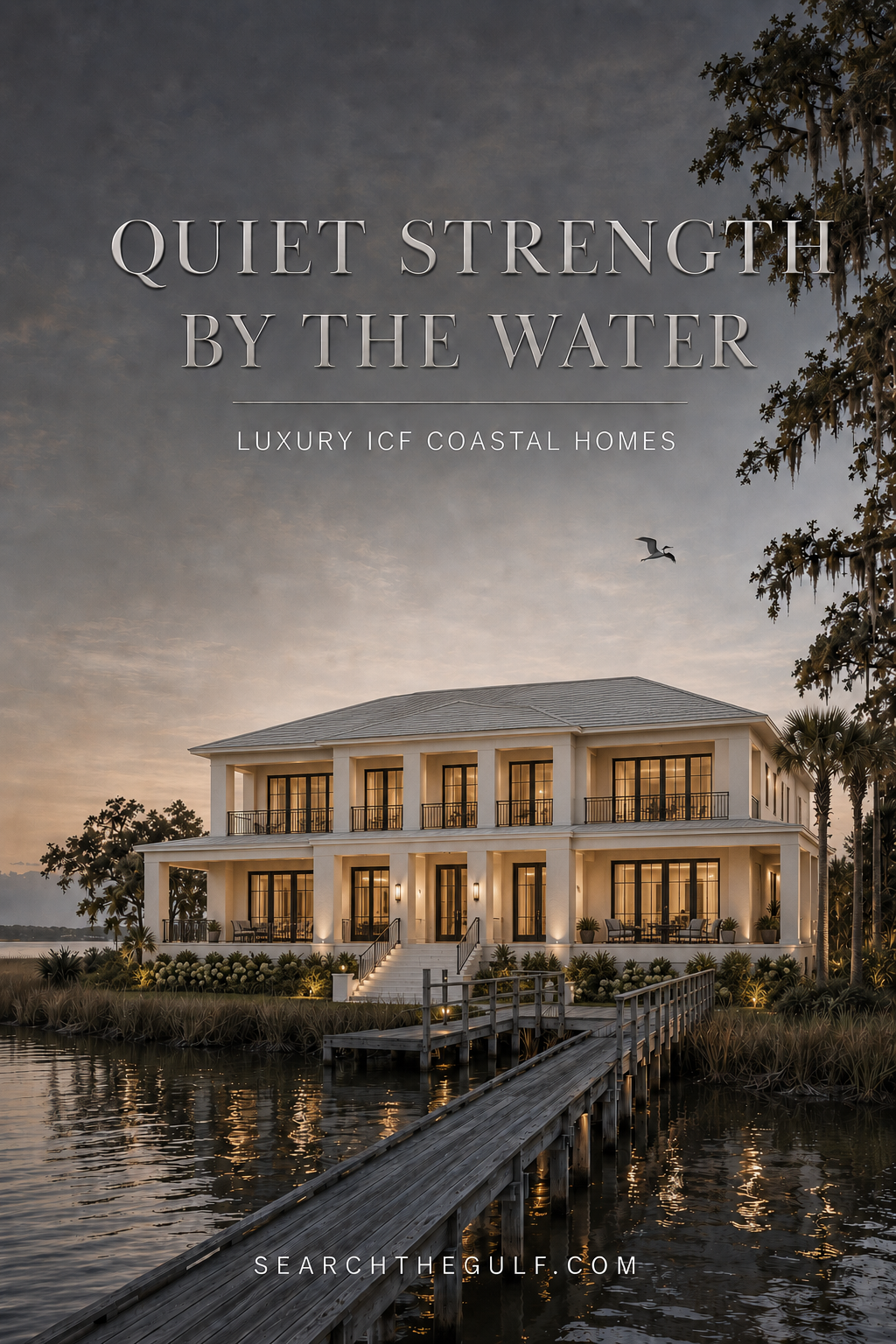
Quiet Strength by the Water
Why ICF construction, thoughtful technology and refined outdoor living are reshaping the luxury coastal home
Written by Meredith Folger Amon | Gulf Coast Real Estate Advisor | Licensed in Alabama and Florida
_(800_x_150_px)_(2).gif)
There is a certain kind of quiet inside a well-built coastal home. The air feels steady. Doors close with substance. Afternoon heat stays on the other side of the glass, and the room remains calm even when a south wind gathers over the water. To me, that quiet is one of the truest forms of luxury.
On Ono Island and throughout Orange Beach, buyers are looking beyond beautiful finishes. They want homes designed for the realities of salt air, wind-driven rain, intense sun, humidity and hurricane exposure—without giving up gracious architecture, generous glass, a beautiful kitchen or an easy relationship with the outdoors.
That is why Insulated Concrete Form construction, commonly called ICF, belongs in today’s conversation about luxury coastal building. It can create a strong, continuously insulated wall system, but it is not a magic word and it is not a complete hurricane strategy by itself. The finest coastal homes are designed as integrated systems: foundation, walls, roof, openings, drainage, mechanical equipment, power and outdoor structures must all work together.
“A luxury coastal home should not merely look composed. It should remain composed when the weather is not.”
The Structure
What Is an ICF Home?
ICF walls begin with hollow foam forms stacked much like oversized building blocks. Reinforcing steel is placed within the forms, and concrete is poured into the center. The forms remain in place, leaving a reinforced concrete core between continuous layers of insulation.
The result can offer several qualities that feel particularly appropriate at the coast: structural strength, continuous insulation, reduced air leakage potential, thermal mass, sound control and a solid interior atmosphere. A 2025 peer-reviewed comparison reported lower modeled and measured energy use for ICF homes than comparable wood-framed homes, although actual performance still depends on climate, design, orientation, windows, mechanical systems and workmanship. The American Cement Association also explains how concrete’s thermal mass slows heat transfer and how a tighter wall envelope can reduce drafts and hot spots.
My Coastal Perspective
ICF is most compelling when the owner values more than a single line on a construction budget. Comfort, quiet, durability, storm planning and long-term operating costs all belong in the equation.
Does ICF Make a Home Hurricane-Proof?
No building system should be described as hurricane-proof. ICF can be an excellent wall strategy, but a resilient home also needs site-specific engineering and a continuous load path connecting the roof to the walls and the walls to the foundation. Openings, garage doors, porches, roof edges, roof decking and penetrations remain critical.
This is where FORTIFIED Gold becomes especially meaningful. The voluntary, beyond-code program addresses the whole house, including an engineered continuous load path, a sealed roof deck, enhanced roof attachment, protected openings and strengthened vulnerable components. ICF and FORTIFIED are not competing ideas: one is a wall construction method; the other is a verified resilience standard for the building as a system.
The Cost Question
Does ICF Cost More Than Wood Framing?
It often carries a higher initial wall-system cost, but there is no honest universal percentage for a custom coastal home. The answer changes with concrete and steel pricing, crew experience, wall height, number and size of openings, architectural complexity, engineering, finishes, access to the site and the distance materials must travel.
A frequently cited HUD field study found an ICF premium equal to roughly 3 to 3.5 percent of the builder’s sales price in the small homes it examined. I view that as historical context—not a 2026 coastal estimate. Luxury homes with wide openings, tall walls, elevated foundations and complex rooflines require current, local, line-item bids.
| Budget Question | What I Would Compare |
|---|---|
| Initial construction | ICF forms, concrete, reinforcing steel, bracing, pumps, labor, engineering, window and door bucks, attachment details and mobilization. |
| Mechanical system | A proper Manual J load calculation; possible changes in equipment size; ventilation and dedicated humidity control. |
| Operating costs | Modeled annual energy use based on the actual plans, glass package, orientation, occupancy and thermostat assumptions. |
| Risk and durability | Maintenance expectations, storm resilience, insurance conversations, moisture strategy and long-term ownership plans. |
| Construction team | Local ICF experience, completed homes, references, pour-day procedures, quality control and subcontractor familiarity. |
My recommendation: ask for two comparable pricing exercises based on the same plans and performance target. A low wood-framing bid and a fully developed ICF bid rarely tell the truth if the scopes, window specifications, HVAC assumptions and resilience details are different.
Comfort & Efficiency
How Can an ICF Design Become Even More Energy Efficient?
A high-performance wall deserves an equally disciplined plan everywhere else. Otherwise, the house can have excellent ICF walls and still lose comfort through the roof, glass, ducts, uncontrolled humidity or air leakage at penetrations.
The Openings
Which Windows and Doors Belong on the Shortlist?
I would never name one “best” coastal window without seeing the plans and engineering. The exact unit—not merely the brand—must satisfy the required size, design pressure, impact standard, water performance, installation method and architectural intent.
Current premium and performance-oriented lines worth discussing include Andersen A-Series with Stormwatch protection, PGT WinGuard vinyl or aluminum, and impact-certified options from Kolbe’s Ultra, VistaLuxe and Forgent collections. Product availability and approvals change, so the architect, engineer, builder and local official should verify the exact model, size and test documentation before ordering.
Ask for: the product approval, ASTM E1886/E1996 impact documentation where applicable, performance grade or design-pressure data, water test rating, glass makeup, frame material, finish warranty, hardware composition, fastening schedule, buck detail, sealant specification and installer qualifications. At the Gulf, installation is every bit as important as the label on the glass.
Above It All
Which Roof Feels Right for a Luxury Coastal Home?
I love the tailored profile of a standing-seam metal roof on coastal architecture, particularly when the roof geometry is simple and the flashings are beautifully resolved. Yet the metal itself does not make the roof storm-ready. Panel testing for the project’s design pressures, attachment, clips, edge details, underlayment, penetrations and corrosion compatibility all matter.
| Roofing Direction | Luxury & Coastal Considerations |
|---|---|
| Standing-seam metal | Crisp appearance and long service potential; confirm tested assembly, concealed fasteners, metal type, coating, salt exposure, flashing and attachment. |
| High-wind asphalt shingles | Broad aesthetic and budget range; confirm wind classification, starter strip, edge metal, nailing and sealed deck requirements. |
| Tile | Substantial Mediterranean or resort character; weight, attachment, tested assembly and replacement logistics require early coordination. |
The IBHS FORTIFIED Roof standard focuses on the system beneath and around the visible roof covering: enhanced deck attachment, a sealed roof deck and locked-down edges. IBHS reports that sealing the deck can reduce water intrusion through it by as much as 95 percent if the roof covering is lost.
Invisible Luxury
What Smart-Home Technology Is Worth Planning Now?
The most elegant smart home is not a wall full of blinking gadgets. It is a home that quietly anticipates ordinary life: a single button closes shades, softens the lights and secures the doors; a leak sensor closes a valve; a power system protects essential loads; and owners can check the house when they are away.
For a new luxury build, I would bring the technology integrator into the design process before electrical rough-in. Platforms to evaluate include Control4 for integrated lighting, climate, security and entertainment; Savant for whole-home control and energy management; Lutron HomeWorks for architectural lighting and automated shades; and Josh.ai where privacy-conscious natural voice control and local processing are priorities.
My smart-coastal priority list
- Whole-home surge protection, robust network equipment and battery backup for the network and control processor.
- Generator, battery and load-management coordination—with essential circuits identified before construction.
- Automatic water shutoff, leak detection at mechanical rooms, kitchens, laundry rooms, wet bars and upper-level bathrooms.
- Humidity, temperature and indoor-air-quality monitoring with meaningful alerts.
- Motorized shades to manage glare, solar gain, privacy and fading of interiors.
- Exterior cameras, gate and door control, landscape lighting and storm-preparation scenes.
- Conduit, spare wiring pathways and accessible equipment racks so the home can evolve.
- Manual controls that still make sense when the internet is down or a future owner chooses a different platform.
How Luxury Lives
The Features Coastal Buyers Are Asking For
Luxury is becoming more personal and less ceremonial. Buyers still notice stone, millwork and beautiful appliances, but they also notice whether the house makes daily life feel easy.
Wellness
Spa baths, steam showers, saunas, cold-plunge spaces, discreet fitness rooms, circadian-aware lighting, filtered water, controlled humidity and quieter bedrooms.
Resilient Convenience
Whole-home generators or integrated battery systems, protected mechanical equipment, impact-rated openings, oversized conditioned storage and places for storm panels or outdoor furnishings.
Flexible Living
A private office, secondary gathering room, elevator planning, discreet bunk accommodations, dog-wash or beach-rinse areas and garages designed for vehicles, boating gear and the realities of coastal recreation.
Outdoor Rooms
Where the House Meets the Water
On Ono Island, outdoor living is not an afterthought. It is where coffee is carried in the morning, where the grill warms at dusk and where everyone pauses when a heron glides low over the marsh. The best outdoor rooms feel like a natural continuation of the architecture.
I look for deep covered porches, protected summer kitchens, durable ceiling and wall finishes, motorized screens, thoughtful shade, comfortable air movement, subtle lighting, excellent drainage and an easy path toward the pier or pool. Fasteners, hardware, fixtures, fans, grills and cabinetry should be selected with salt exposure in mind.
Large porches, balconies and outdoor kitchens also create real wind loads and water-management details. Their roofs, columns, railings and connections should be engineered as seriously as the main house. Beauty and resilience should arrive together.
Before the First Pour
What Codes, Permits and Approvals Must Be Considered?
Coastal construction begins with the exact address. Flood zone, elevation, wind exposure, zoning, setbacks, soil conditions, wetlands, utilities, drainage, association rules and water-access improvements can all influence design and cost.
As of this writing, Baldwin County lists the 2024 International Residential and Building Codes, the 2018 International Energy Conservation Code and the 2023 National Electrical Code among its adopted codes, with local amendments. The County also states that new residential construction requires structural plans sealed by an Alabama-licensed design professional.
Depending on the parcel, flood-related submittals may include Coastal A or V Zone certification and elevation certificates. Baldwin County’s current permit checklist also states that proposed fill material must be submitted for review for property anywhere on Ono Island. In addition to governmental requirements, an Ono Island project may require Property Owners Association and Architectural Control Committee review.
Questions I would ask before approving a coastal luxury design:
- Who is engineering the complete load path, and which FORTIFIED designation is being pursued?
- Has the ICF installer completed comparable multistory coastal homes?
- What is the design pressure for every opening, including the largest doors and garage doors?
- How will the window and door bucks, flashing and waterproofing integrate with the ICF wall?
- Where will HVAC equipment, electrical equipment and the generator be located relative to flood requirements?
- How will the home control humidity during mild, wet weather and periods of low occupancy?
- Which exterior metals are compatible, and what is the maintenance plan for salt exposure?
- Have the survey, geotechnical findings, wetland conditions, drainage, setbacks and association approvals been reconciled with the architectural plans?
The Takeaway
Strength Can Be Beautiful
The coastal home I admire most does not announce how hard it is working. Its strength is tucked behind plaster and millwork. Its technology is quiet. Its windows frame water and sky. Its porches are gracious. Its rooms remain cool and calm while the marsh grasses bend outside.
ICF can be a meaningful part of that story, especially when it is paired with experienced coastal design, verified roof and opening systems, disciplined moisture control and careful construction oversight. The goal is not concrete for concrete’s sake. The goal is a home that feels enduring, comfortable and beautifully suited to its place.
If you are comparing a homesite, an existing luxury property or a custom-building opportunity, I would be delighted to help you study the real estate side of the decision and assemble the right questions for your architect, engineer, builder and insurance professional.
Search. Study. Build Wisely.
Explore Coastal Homes and Homesites with Meredith
Visit SearchTheGulf.com, the Gulf Coast’s premier website for searching all real estate listings on the Gulf Coast, or email meredith@searchthegulf.com.
Important notice: This article is for general real estate and educational purposes only. It is not architectural, structural-engineering, construction, legal, insurance or code advice. Costs, product lines, approvals, codes and association requirements can change. Information is deemed reliable but is subject to errors and omissions. Owners and buyers should confirm all requirements and specifications with Baldwin County, the applicable municipality or authority, the Ono Island POA and Architectural Control Committee when relevant, and appropriately licensed professionals before designing, purchasing or building.
Select one or more listings to compare
Through Meredith’s Lens · Fort Morgan, Alabama
When it comes to finding the home of your dreams in a fast-paced market, knowing about new listings as soon as they are available is part of our competitive advantage.Sign up to see new listings in an area or specific community. Contact Meredith with any questions you may have.
#searchthegulf #meredithamon #becausewelivehereOno Island Homes & Land for Sale – Luxury Waterfront Real Estate in Orange Beach Alabama, $500,000 - $600,000
Compare Listings

.gif)
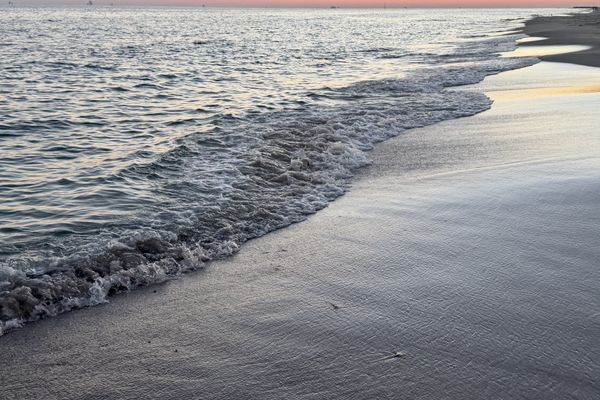

Fort Morgan Sunset: A Peaceful October Evening | Meredith
An October Sunset at the End of Fort Morgan Road
By Meredith · October 13, 2026
Tonight, I stood at the end of Fort Morgan Road and watched a perfect October sky settle over the Gulf. Pale blue gave way to apricot and rose, with a ribbon of gold…
Long Bayou Preserve Orange Beach: New Site Plan & Update
Ask A Question or Sign Up To See New Real Estate Listings Before Your Competition


Enjoy this blog post? Click here to subscribe for updates
Leave A Comment