_(800_x_150_px)_(2).gif)

I receive some version of this question almost every week:
“I want a weekend getaway that I can rent when I am not using it. What can I buy, how much will it rent for, and will the income cover the cost?”
It is a reasonable question. It is also much more personal—and much more property-specific—than it first appears.
A buyer may be looking for a family retreat that earns enough to offset HOA dues and insurance. Another buyer may want to maximize annual cash flow. Someone else may be focused on long-term appreciation and is comfortable carrying more of the annual expense. A buyer purchasing through a business entity may have a completely different tax or accounting objective that should be discussed with a qualified CPA or tax advisor.
Those are not variations of the same goal. They are entirely different investment strategies.
That is why there is no responsible one-line answer to, “Which $500,000 condo has the best rental income?” Before the numbers have meaning, the buyer must first define what success looks like.
Begin With Your Goal—not Someone Else’s Rental Statement
The first question is not simply how much a condo rented last year. The first question is what you want the property to accomplish for you.
Consider which of these descriptions comes closest to your goal:
- A weekend and vacation home that generates occasional income when you are not using it
- A property that helps offset HOA dues, insurance, taxes, maintenance and financing costs
- A heavily marketed short-term rental intended to maximize gross revenue
- A long-term real estate holding purchased partly for potential appreciation
- A property you plan to manage personally
- A more passive investment operated by a professional rental-management company
- A purchase with specific business, estate-planning or tax objectives
Your intended personal-use dates matter, too. If you reserve the most desirable spring-break weeks, summer weeks and holiday weekends for yourself, that may be exactly the right lifestyle decision—but it will affect rental performance. There is nothing wrong with that. It simply needs to be reflected honestly in your expectations.
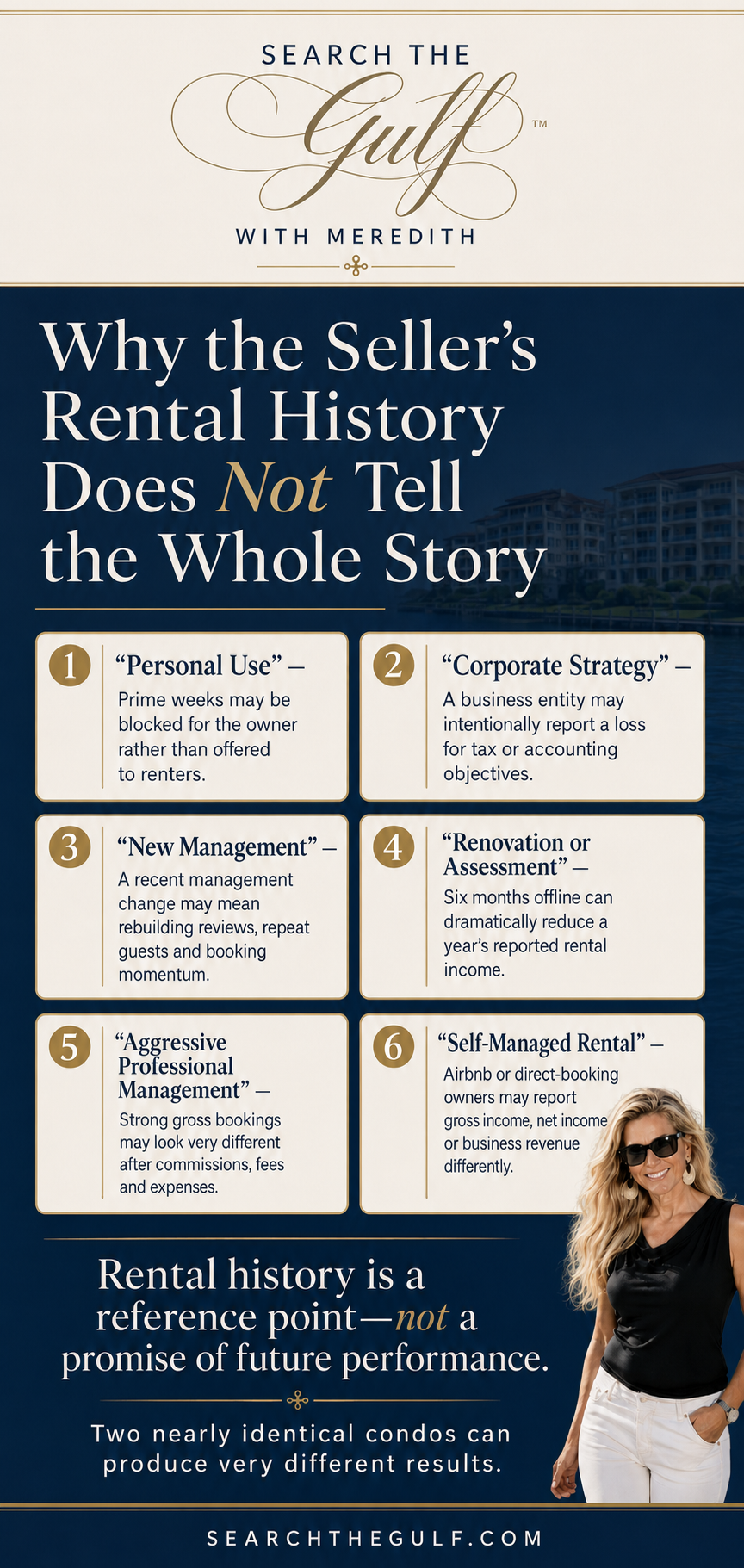
Why the Seller’s Rental History Does Not Tell the Whole Story
When rental information is available in an MLS listing or supplied by a seller, I treat it as a useful reference point—not a promise of future performance.
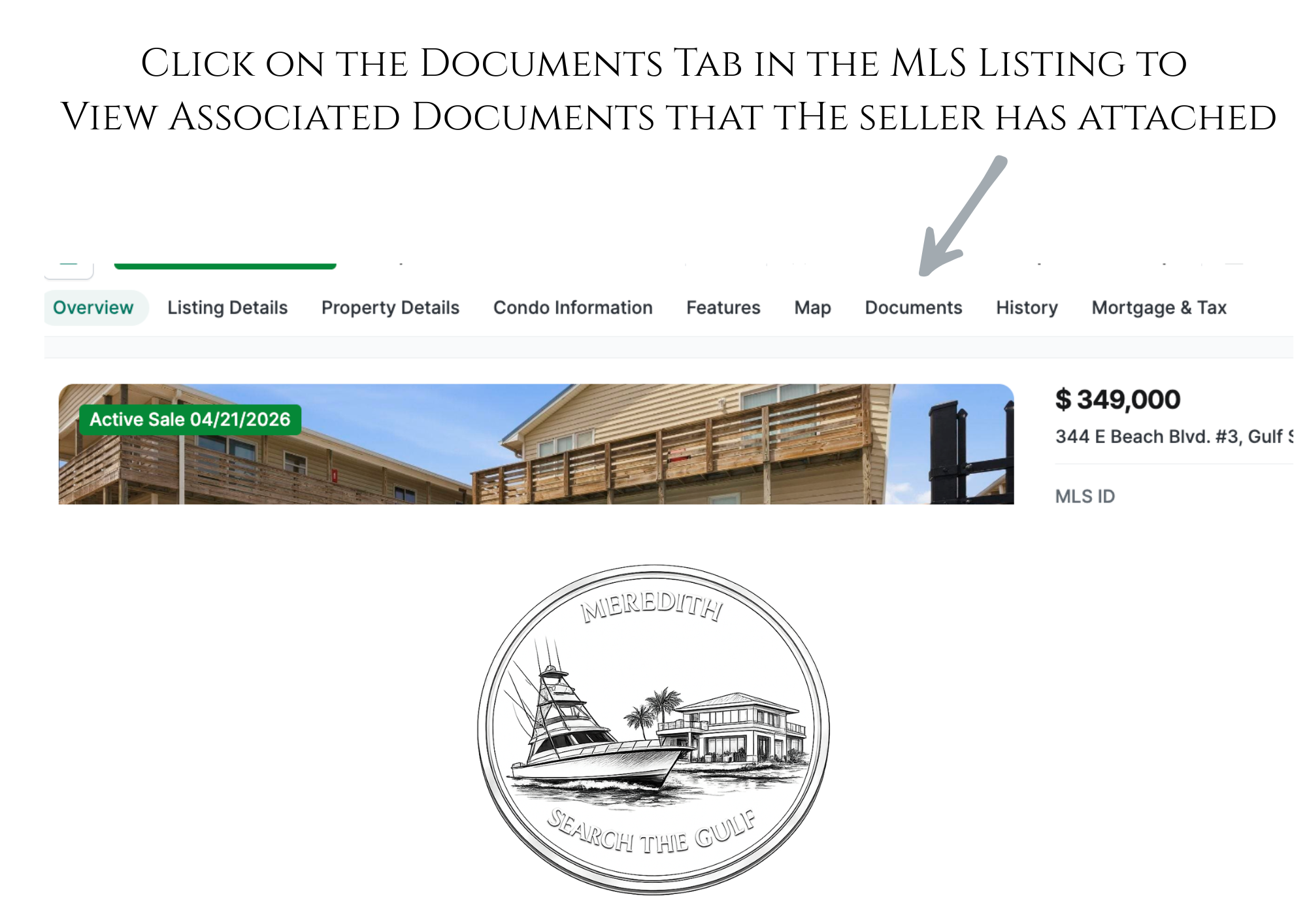
We often do not know the full story behind a prior year’s income. The owner may have used the condo personally for weeks or months. The unit may have been taken out of service for renovations. A storm, building repair, amenity closure or construction project may have affected reservations. The owner may have changed management companies, limited bookings, priced conservatively or marketed the property very aggressively.
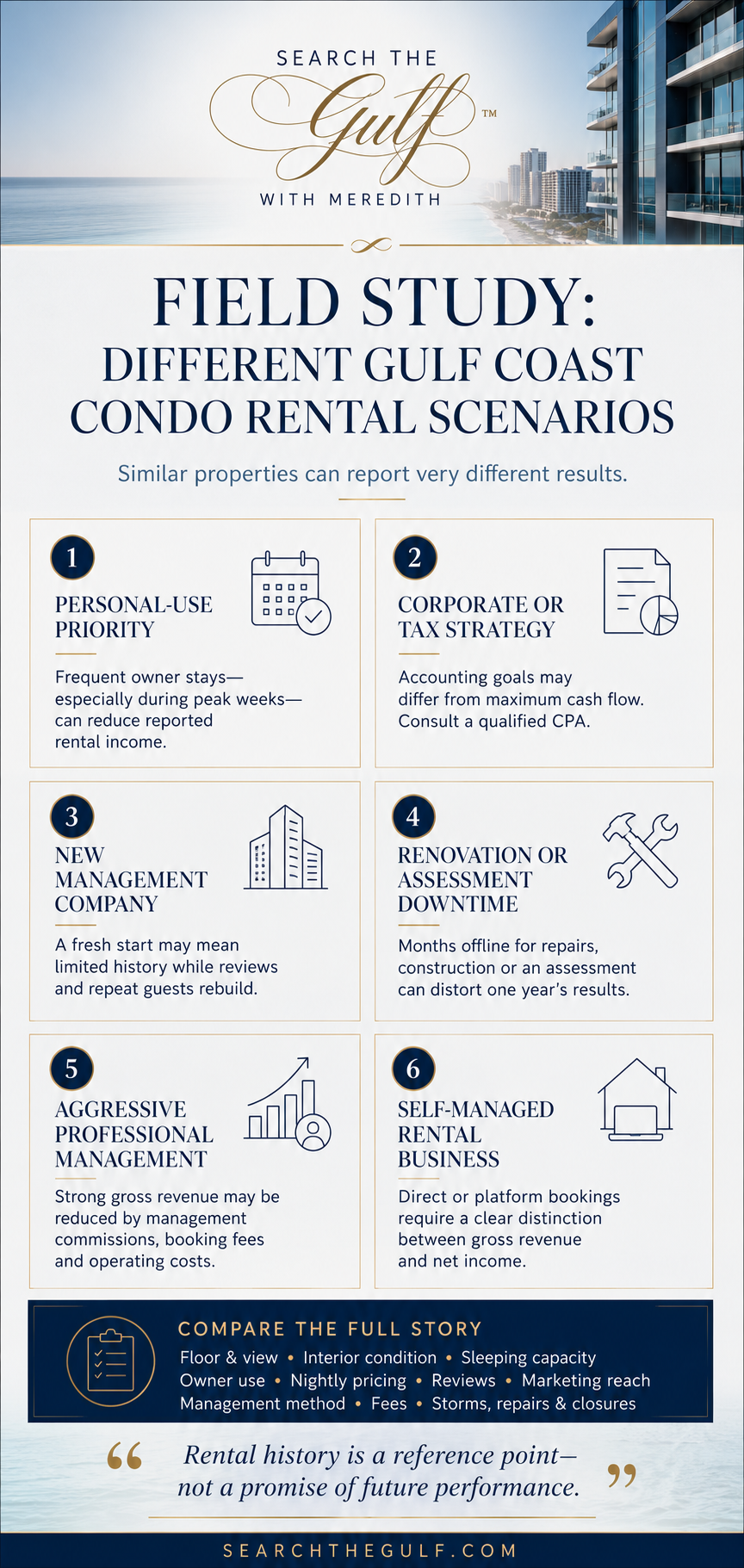
Two nearly identical condos in the same building can produce very different results because of:
- Floor, view and location within the building
- Interior condition, furnishings, photography and guest appeal
- Number and configuration of sleeping spaces
- Owner occupancy during high-demand periods
- Nightly pricing and minimum-stay requirements
- Reviews, repeat guests and marketing reach
- Self-management versus professional management
- Management commissions, cleaning arrangements and booking fees
- Temporary repairs, renovations, storms or building interruptions
Past rental numbers are part of the compass, but they are not the destination. The next owner’s strategy will have an enormous influence on the outcome.
This is also why a condo with no rental history should not automatically be dismissed. New construction begins without a prior rental record, yet professional management companies routinely prepare projections based on comparable properties, expected demand, sleeping capacity, amenities and location.
The Most Useful Next Step: Ask Several Rental Managers
My company does not manage vacation rentals, and I do not prepare or guarantee rental projections. My role is to help you identify and evaluate real estate that may fit your goals, explain the available property information, help you structure appropriate contract terms and guide you through the purchase process.
Once you have narrowed your search to a few serious possibilities, I strongly recommend contacting three or four established property-management companies that work in that location or building. Give each company the same information and ask for its opinion of the property’s rental potential.
Questions to Ask a Rental-Management Company
- What gross annual rental range might be reasonable for this specific unit?
- Which assumptions are included in that estimate?
- How would owner use during peak weeks change the projection?
- What management commission and other fees would apply?
- How are cleaning, linens, maintenance calls and guest communication handled?
- What updates, furnishings or sleeping arrangements could improve marketability?
- Which booking channels and marketing methods would be used?
- Are there building-specific rules that could affect rentals?
Comparing multiple opinions is important. Projections are estimates, and different companies may use different pricing strategies, occupancy assumptions, fee structures and marketing systems.
Gross Rental Income Is Not the Same as Net Income
A large gross-rental figure can sound impressive, but it does not tell you what remains after ownership and operating expenses. Buyers should build their own working budget and revise it as property-specific information becomes available.
Depending on the property and the way it is operated, expenses may include:
- Mortgage principal and interest
- Monthly or quarterly HOA dues
- Property taxes
- Condo-owner, wind, flood or other applicable insurance
- Rental-management commissions
- Cleaning, linens and supplies
- Utilities, internet and streaming services
- Repairs, maintenance and replacement reserves
- Furnishings, décor and periodic updates
- Licenses, registrations or taxes applicable to the rental operation
- Special assessments or insurance assessments, when applicable
- Accounting, legal or other professional services
For more guidance, read my article, How to Look at Rental Numbers for Orange Beach Condos, and explore the Search The Gulf rental-property collection.

The Due-Diligence Period Is When Property-Specific Questions Are Investigated
Before a property is under contract, some information may be available in the MLS, attached documents, seller-provided records or public sources. Other information may be incomplete, outdated, subject to change or unavailable until the buyer has an accepted contract and begins formal due diligence.
Subject to the language and deadlines of the negotiated contract, this is the period when the buyer and the buyer’s advisors may investigate items such as:
- Current HOA dues and what they include
- Pending, approved or recently discussed special assessments
- Insurance-related assessments or changes
- Association financial documents, budgets, minutes and available reports
- Rental rules, minimum stays and management requirements
- Insurance availability and property-specific estimates
- Utility expenses and seller-provided operating information
- Condition, inspections, repairs and maintenance history
- Documents or answers the seller has agreed in the contract to provide
An assessment can also be proposed or approved after an early inquiry, which is another reason current information should be reviewed during the contractual due-diligence window. The purchase agreement should address how applicable assessments are allocated between buyer and seller. That allocation may be negotiable and depends on the contract.
If the contract includes an applicable due-diligence or document-review contingency, the buyer generally has a defined period to evaluate the information and decide how to proceed according to the agreement. Specific questions or seller-document requests can also be written into an offer when appropriate and negotiated with the seller.
This is why I do not encourage buyers to spend weeks trying to obtain perfect certainty before making an offer. The better approach is to identify a property worth pursuing, negotiate suitable protections and deadlines, and then conduct focused due diligence.
A More Efficient Way to Search for a Rental Condo
I believe the search works best when the buyer and advisor each handle the part of the process they are best positioned to manage.
Define your intended use
Decide how often you want to use the property, whether you want occasional cost-offsetting income or aggressive rental performance, and whether you intend to self-manage or hire a professional company.
Establish a comfortable purchase and carrying-cost range
Look beyond the list price. Think about financing, HOA dues, insurance, taxes, reserves and the amount you are comfortable contributing when rental income fluctuates.
Review a focused group of possibilities
I can help identify a manageable collection of properties with promising features. Buyers should also search SearchTheGulf.com and send me the listings that genuinely interest them.
Narrow the field before requesting projections
Choose a few properties that fit your lifestyle, location, price and amenity preferences. Detailed rental research on every listing is rarely productive.
Request several professional rental opinions
Ask three or four management companies to evaluate the same finalists. Compare their assumptions, estimated revenue, commissions, services and recommendations.
Use an offer to create a due-diligence framework
When you find a property worth pursuing, we can discuss contract terms, requested information, contingencies and review periods appropriate to that transaction.
Make the final decision with your advisors
Review financing with your lender, insurance with a qualified agent, rental projections with management companies, and tax or entity questions with your CPA and attorney.
Speak With a Gulf Coast Condo Lender Early
If you plan to finance the purchase, speaking with a lender at the preliminary stage can clarify your purchasing range, likely payment structure and the loan opportunities available for different types of properties.
Coastal condo financing can be property-specific. I work with trusted lenders who understand Gulf Coast condominium financing and can help buyers explore conventional programs as well as investment-property options.
It is also worth asking whether a DSCR loan may fit your strategy. These programs may evaluate an investment property in part through its anticipated rental income and ability to support the proposed debt obligation. Program requirements vary, and the lender should explain qualification, documentation, down payment, rate, reserves and property eligibility.
Learn more in my guide to DSCR Loans in Orange Beach and Gulf Coast Investment Financing. I can also connect you with lenders who specialize in this type of financing.
What I Can Help You Do
I do not want buyers to feel overwhelmed by spreadsheets—or falsely reassured by a single rental number. My goal is to help you make a better real estate decision with the information that is available, then create a path for investigating what is not yet known.
I can help you:
- Identify condos and vacation properties that may fit your budget and lifestyle
- Review MLS information and available listing documents
- Compare locations, buildings, amenities, views and ownership considerations
- Recognize questions that should be directed to lenders, insurers, rental managers, CPAs or attorneys
- Prepare an offer with appropriate requests and negotiated terms
- Navigate the property-specific due-diligence process after contract acceptance
The strongest buyers do not ask someone else to define the perfect investment for them. They define their goals, study a focused group of properties and assemble the right local professionals to test the opportunity.
A Gulf Coast condo can be a place for morning coffee above the water, family weekends, sandy-footed afternoons and years of memories. Rental income may help support that ownership experience—but the property should be evaluated through the lens of your goals, your planned use and your tolerance for changing expenses and income.
Understanding Gulf Coast Real Estate
Start With the Properties That Interest You
Explore the Gulf Coast’s premier website for searching real estate listings, save your favorites and send me the properties you would like to investigate further.
Search Gulf Coast Listings Contact MeredithMeredith Folger Amon
Gulf Coast Real Estate Advisor
meredith@searchthegulf.com
This article is for general informational purposes and is not a rental projection, guarantee of income, lending advice, insurance advice, tax advice or legal advice. Rental income, expenses, financing, association matters and property performance can change. Buyers should independently verify material information and consult qualified rental-management, lending, insurance, tax and legal professionals. Contract rights, contingencies, deadlines and assessment allocations depend on the final negotiated agreement.
Through Meredith’s Lens · Fort Morgan, Alabama
When it comes to finding the home of your dreams in a fast-paced market, knowing about new listings as soon as they are available is part of our competitive advantage.Sign up to see new listings in an area or specific community. Contact Meredith with any questions you may have.
#searchthegulf #meredithamon #becausewelivehere
Search Coastal Alabama Homes and Real Estate For Sale

.gif)


Fort Morgan Sunset: A Peaceful October Evening | Meredith
An October Sunset at the End of Fort Morgan Road
By Meredith · October 13, 2026
Tonight, I stood at the end of Fort Morgan Road and watched a perfect October sky settle over the Gulf. Pale blue gave way to apricot and rose, with a ribbon of gold…


Long Bayou Preserve Orange Beach: New Site Plan & Update
Ask A Question or Sign Up To See New Real Estate Listings Before Your Competition




Leave A Comment