
Orange Beach & Gulf Shores Condos: What Should Buyers Know About Insurance?
Understanding the master policy, HO-6 coverage, flood insurance, named-storm deductibles and loss-assessment exposure before closing.
_(800_x_150_px)_(2).gif)
The Gulf views may capture your attention first, but insurance is one of the most important parts of purchasing a condominium in Orange Beach or Gulf Shores, Alabama. When I help buyers compare coastal condominiums, I do not look only at the residence, amenities, rental potential and association dues. I also want to understand how the building is insured, what the association’s master policy covers and where the individual owner’s responsibilities begin.
Does the condominium association insure everything?
Not necessarily. A condominium association generally maintains a master insurance policy covering certain common elements and association-owned property. Depending on the policy and condominium documents, that may include portions of the structure, roof, exterior walls, elevators, hallways, lobby, pools, parking areas and shared amenities.
The existence of a master policy does not mean the individual owner has no additional insurance responsibilities. The owner generally needs an individual condominium policy—commonly called an HO-6 policy—for property and risks that are not fully insured by the association.
- Interior finishes and fixtures
- Flooring, cabinets and countertops
- Furniture and personal belongings
- Owner-installed improvements
- Personal liability
- Additional living expenses
- Rental-income exposure
- Loss-assessment coverage
Where does the association’s coverage end—and where does mine begin?
The answer comes from reading the master policy together with the condominium declaration, bylaws, amendments and any association resolution addressing insurance deductibles. A one-page certificate showing that insurance exists is helpful, but it does not tell the entire story.
What should buyers request from the association?
Master policies may be described with terms such as bare walls, single entity, original specifications or all in. Those labels can be confusing, and similarly named policies do not always provide identical protection.
A bare-walls policy may primarily insure the structure and common elements, leaving much of the interior to the owner. A broader policy may cover some original interior components while still excluding upgrades, furnishings and personal property.
- Master-policy declarations
- Property coverage summary
- Wind and hail coverage
- Hurricane and named-storm deductibles
- Flood-policy declarations
- Policy exclusions and endorsements
- Current insurance appraisal
- Available claims information
Who is responsible for windows, sliding doors and exterior doors?
This is one of the most important—and frequently misunderstood—questions in coastal condominium ownership. Buyers sometimes assume these components belong to the association because they contribute to the building’s exterior appearance. That is not always the case.
Responsibility may depend on how the declaration defines the unit boundaries, whether the windows and doors are classified as common or limited common elements, what the master policy insures, and whether the owner must maintain or replace them.
- Who handles ordinary maintenance?
- Who pays for replacement?
- Who pays following storm damage?
- Are the windows and doors impact-rated?
- Were replacements approved and permitted?
- Does the owner’s HO-6 policy need to insure them?
A beautiful wall of Gulf-front glass deserves an equally clear understanding of who is responsible for it.
What is an HO-6 condominium policy?
An HO-6 policy is designed for an individual condominium owner. It generally complements the master policy rather than replacing it. Depending on the insurer, limits and endorsements selected, it may address building property inside the residence, personal belongings, liability, additional living expenses, loss of rental income, water backup and qualifying loss assessments.
The Insurance Information Institute explains that condominium owners may need coverage for their belongings, structural portions assigned to them and their share of certain covered assessments.
The master policy may address:
Association property, common elements, portions of the structure and shared liability—subject to the policy and governing documents.
An HO-6 policy may address:
Owner-responsible interiors, contents, improvements, personal liability, loss of use and certain loss assessments—subject to the owner’s policy.
How much HO-6 coverage is recommended?
There is no responsible one-size-fits-all amount. The appropriate limit may depend on the master policy, residence size, interior replacement cost, quality of finishes, furnishings, improvements, rental use, deductibles and lender requirements. A renovated luxury residence may need very different coverage from an original-condition condominium in the same building.
What are wind and named-storm deductibles?
Coastal master policies frequently have separate deductibles for wind, hail, hurricanes or named storms. These can be considerably larger than the deductible for an ordinary property claim.
A deductible may be a fixed dollar amount or a percentage of the insured value. It may apply by building, by occurrence or across the entire condominium property. In a large coastal complex, even a seemingly modest percentage can represent a substantial amount.
- What is the current wind deductible?
- Is there a separate hurricane or named-storm deductible?
- How is the deductible calculated?
- How could it be allocated among the owners?
- Are reserves designated for insurance deductibles?
- Could HO-6 loss-assessment coverage respond?
How much loss-assessment coverage should an owner carry?
Loss-assessment coverage may help an owner pay certain assessments imposed following a covered loss—for example, when an association must satisfy a large deductible or insurance proceeds are insufficient for an insured event.
It is not a blanket promise to pay every special assessment. Ordinary maintenance, wear and tear, reserve shortages and capital-improvement projects should not be assumed to qualify simply because the association calls the charge an assessment.
The appropriate limit should be discussed with a knowledgeable insurance professional after reviewing the master-policy limits, storm deductibles, flood-insurance structure, association reserves, unit count, assessment provisions and any wind or flood sublimits in the owner’s policy.
How is flood insurance handled for a condominium?
Flood requires its own careful review because standard homeowners and HO-6 policies generally exclude flood. A residential association may carry a Residential Condominium Building Association Policy, commonly called an RCBAP, through the National Flood Insurance Program or obtain private flood coverage.
FEMA’s condominium flood resources describe the RCBAP as a building policy issued to a residential condominium association on behalf of the association and its unit owners.
The building’s policy does not necessarily eliminate the need for an owner’s contents coverage, additional limits or other flood protection.
- Does the building have NFIP or private flood insurance?
- What is the building coverage limit?
- What deductible applies?
- Is every residential building insured?
- Is separate contents coverage appropriate?
- Have previous flood claims occurred?
Does short-term rental activity require different coverage?
It may. A condominium used solely as a second home presents a different insurance profile from one offered to vacation guests throughout the year. The insurer should understand the owner’s intended use, rental frequency and management arrangement.
- Does the policy permit short-term rentals?
- Are guest-caused damages covered?
- Is loss of rental income included?
- Are furnishings insured at replacement cost?
- Is the personal-liability limit adequate?
- Are special endorsements required?
Protection offered by a rental manager or booking platform should not automatically be treated as a substitute for the owner’s insurance policy.
Have previous claims affected the building or residence?
A previous claim does not automatically make a condominium a poor choice. The better questions are what caused the loss, how the association responded, whether repairs were professionally completed and how the event affected deductibles, premiums, reserves or assessments.
- Are any claims still open?
- Was an engineering review completed?
- Were repairs permitted and documented?
- Were the insurance proceeds sufficient?
- Were owners assessed?
- Was the underlying condition corrected?
Can insurance affect financing?
Yes. Depending on the loan program, a lender may review the master-policy limits, deductibles, replacement-cost coverage, flood insurance, building valuation, exclusions, claims and assessments. An attractive residence can still encounter a financing delay if the association’s insurance documentation does not satisfy the lender’s requirements.
Why I prefer to address insurance early
Insurance should not be treated as a last-minute closing requirement. Beginning early gives a buyer time to obtain quotes, coordinate HO-6 coverage with the master policy, review flood protection, confirm rental eligibility, satisfy the lender and understand the condominium’s true carrying costs.
Is coastal condominium insurance complicated?
It can be, but buyers do not have to feel overwhelmed. I approach insurance the same way I approach condominium documents, reserves, assessments and rental rules: one thoughtful question at a time.
As an Orange Beach homeowner and Gulf Coast real estate advisor licensed in Alabama and Florida, I enjoy helping buyers look beyond the balcony and understand what they are actually purchasing. Every building has its own history, governing documents, financial structure and insurance responsibilities.
Discover Gulf-Front Condos in Orange Beach, Gulf Shores and Perdido Key | Search The Gulf
- All Listings
Compare Listings
Select one or more listings to compare
No listings were found matching your search criteria.
Considering an Orange Beach or Gulf Shores condominium?
I can help you identify the documents and questions that deserve attention and coordinate with your lender, insurance professional, closing attorney and other qualified advisors.
Search Orange Beach Condos Explore Search The Gulf
About Meredith
Meredith has been a successful, full-time real estate advisor specializing in resort and coastal properties for more than 25 years. Licensed in both Alabama and Florida, she is proud to call the Gulf Coast—and beautiful Ono Island—home. Her local knowledge, extensive experience and genuine love for the coastal lifestyle shape the thoughtful guidance she provides to every buyer and seller.

#searchthegulf #meredithamon #becausewelivehere

.gif)

Storm Prep on Ono Island — Watching Tropical Weather for Friday | Search The Gulf
Ono Island
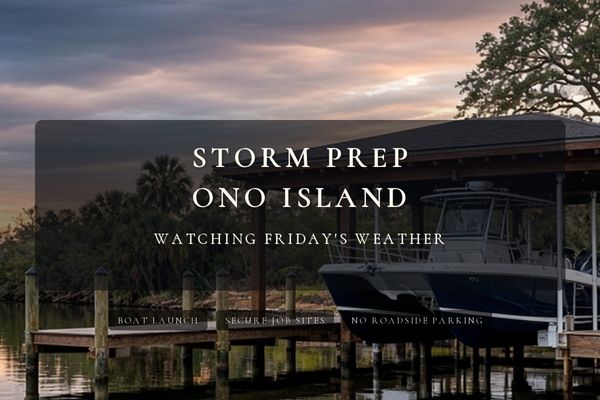
Storm Prep on Ono Island — Watching Tropical Weather for Friday
A tropical system could reach the coast this Friday. Nothing is locked in yet—and on Ono, we do not wait for a last-minute scramble.
Ono Landing Launch vs Dock
On this page
Watching Friday’s weather
Boat launch…

Long Bayou Preserve Orange Beach: New Site Plan & Update
Ask A Question or Sign Up To See New Real Estate Listings Before Your Competition
When it comes to finding the home of your dreams in a fast-paced market, knowing about new listings as soon as they are available is part of our competitive advantage.Sign up to see new listings in an area or specific community. Contact Meredith with any questions you may have.
Enjoy this blog post? Click here to subscribe for updates
Leave A Comment