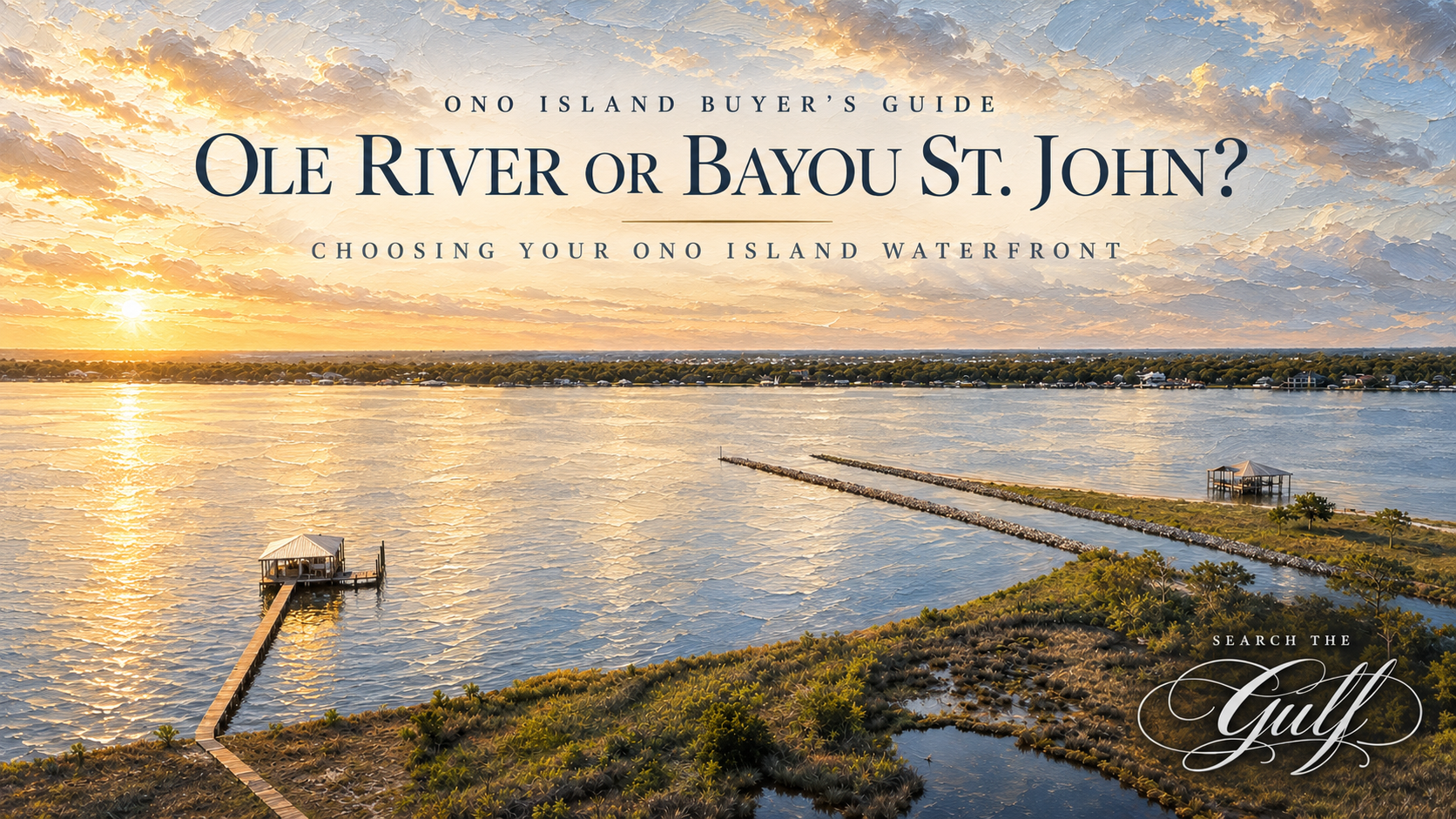
Ole River or Bayou St. John? Choosing Your Ono Island Waterfront
A warm, practical walk through privacy, wake, storm feel, beaches vs marsh, boathouses, boat lifestyle, and views—so you buy the water you will live with every day.
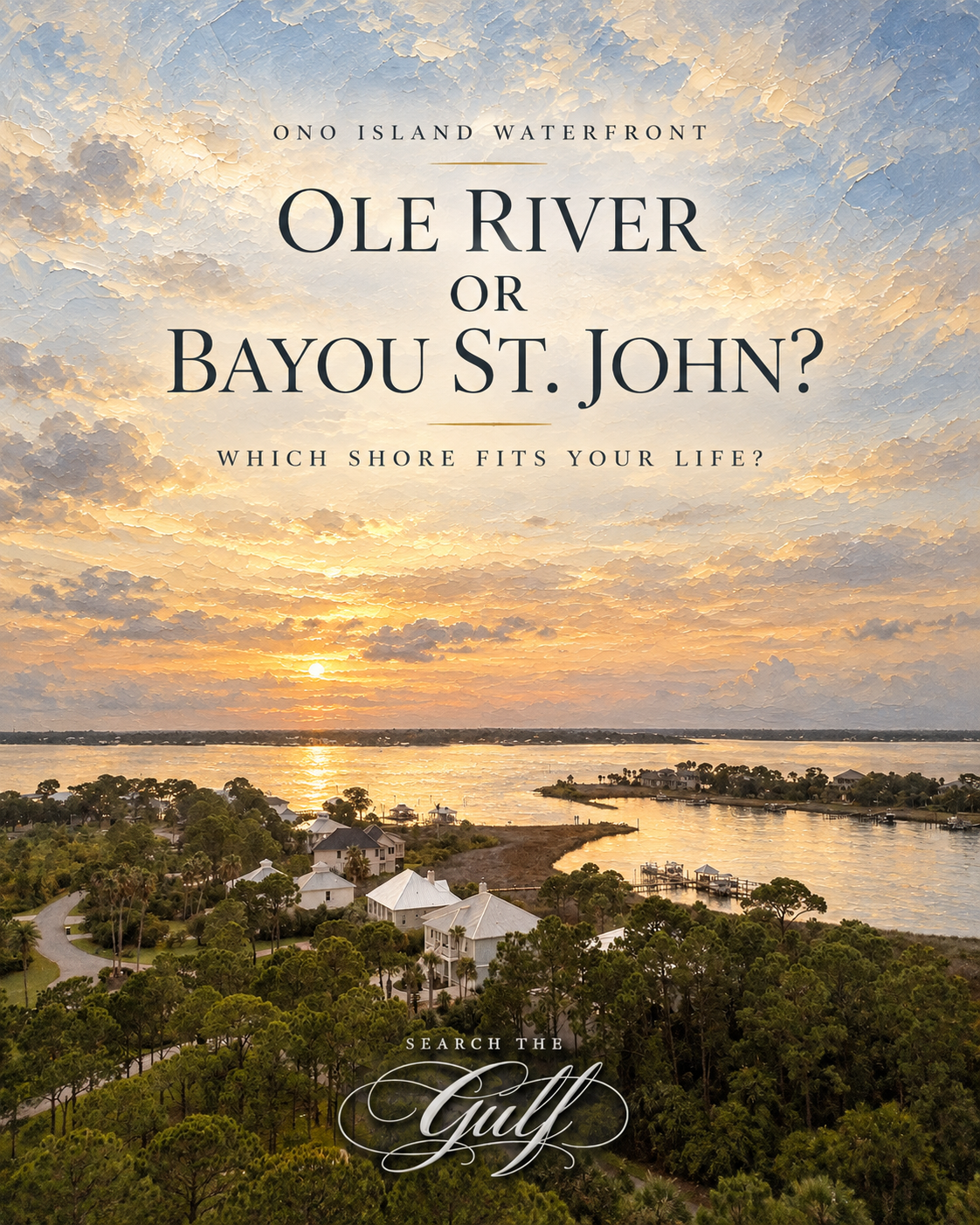
When buyers call me about Ono Island homes, the kitchen and square footage come later. First comes a quieter question: Should we buy on Ole River—also called Old River—or on Bayou St. John?
Both shores deliver private docks, covered boathouses, and that island rhythm where the water is part of the floor plan. They do not deliver the same day. Ole River often feels like sandy beach strips, long piers, and a closer pulse to Gulf-side energy. Bayou St. John often feels like marsh buffers, calmer protected water, and a far shore that stays natural or residential rather than condo-lined.
This guide is how I walk that choice with you—privacy, wake, storm feel, beach vs marsh, boat scale, and the view you will look at every morning. For the wider search, keep the Ono Island hub open, and if you are still deciding whether a boat belongs in the plan at all, start with Do you need a boat to live on Ono Island?
Ono Island Homes and Properties on Bayou St. John and Ole River


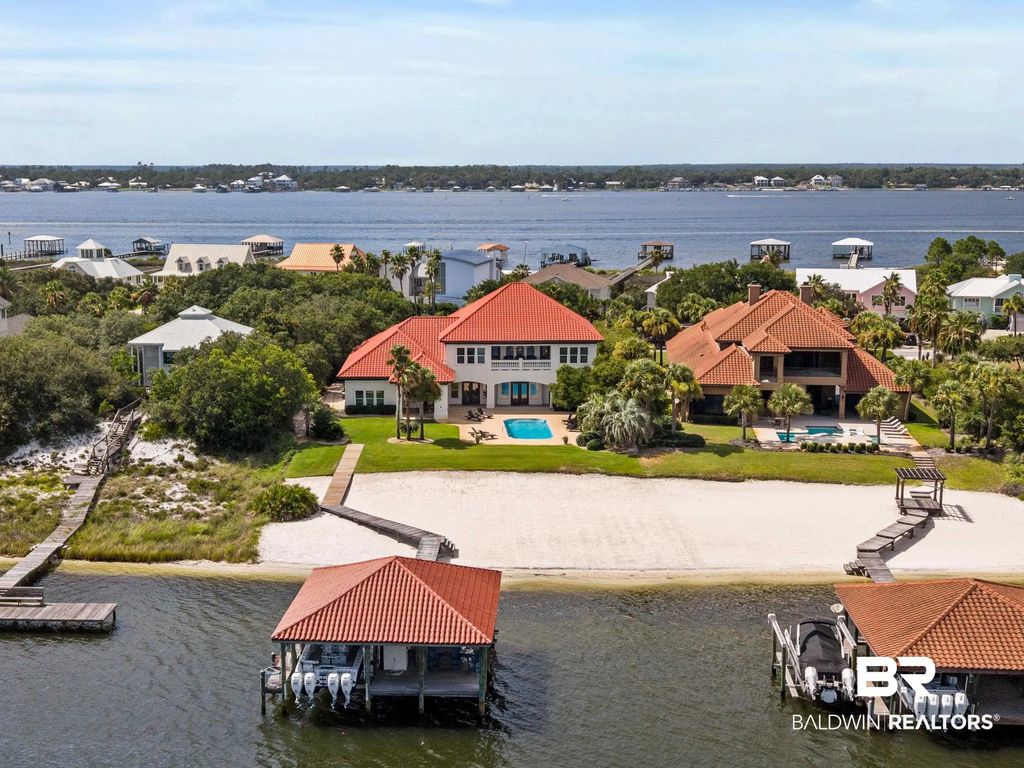


Choose the water you will live with daily—then fall in love with the house.
A gorgeous great room will not fix a far shore you tire of, a wake pattern that wears you out, or a dock that does not match the boat you actually run.
Ole River / Old River: sandy beach strips, pier culture, and Gulf-side energy
Ole River lines the south side of Ono Island with a waterfront personality many buyers recognize instantly: white sand beach strips, long piers walking you out to large covered pavilion boathouses, and a sense that you are close to the Gulf-side energy of the coast.
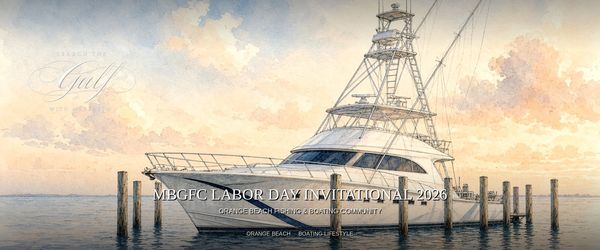
On many stretches you see substantial covered boathouses—often with red clay tile roofs that echo the house—holding yachts or powercats in the roughly 30–40 foot visual range, with WaveRunners or tenders on secondary lifts. The pier becomes its own outdoor room: sand underfoot, water on both sides, and the pavilion as the destination.
Views on Ole River are stretch-dependent. Some homes look across toward condo complexes. Other stretches look toward Florida state park land. That difference is not a footnote—it is daily life. When we tour, I want you standing on the pier at the same hour you would drink coffee after closing, looking at the far shore you will actually own in your line of sight.
Ole River rewards buyers who love sandy private beach edges, a stronger pier culture, and a waterfront that feels connected to the wider coast. Depth at every slip is still lot-specific—verify soundings and low-water behavior for your vessel before you treat any address as a perfect match.
Bayou St. John: marsh privacy, calmer water, and a natural far shore
Bayou St. John typically offers a different daily soundtrack. Homes here more often look toward a natural or residential far shore—not a condo skyline. Marsh buffers and long boardwalks create privacy and a softer approach to the water. The feel is calmer and more protected, with a low-wake sense that many owners treasure for boarding, entertaining under a covered roof, and quiet evenings.
On some Bayou lots you will find a stone jetty or breakwater working with the shoreline. Covered boathouses with lifts are common, often with seating under the roof so the dock becomes a living room over the water. The boats you see here frequently run from mid-size center consoles into larger packages—triple outboards are possible when the lot geometry supports them. Again: match the vessel to verified soundings and low water, not to a photo of someone else’s boat.
Bayou St. John rewards buyers who want marsh as a privacy feature, protected pocket water for daily boat life, and a view that stays green and residential rather than vertical. If privacy and calm are the first words you use when you describe home, we start here.
The right Ono Island home is the one whose water still feels like yours on a Tuesday—not only on listing day.
Meredith · Search The Gulf

Side-by-side: the water you will live with
Neither shore “wins.” They ask different questions. Use this stacked comparison as a conversation guide when we walk docks together.
Privacy
Ole River: Privacy varies with stretch and neighbors. Sandy pier culture can feel open and social; some lots look across toward denser far shores.
Bayou St. John: Marsh buffers and long boardwalks often create a softer, more private approach. Far shores typically read natural or residential rather than condo-lined.
Wake & daily boat life
Ole River: More of an open-river feel on many stretches—wonderful for the buyer who wants movement and coastal energy, and worth walking on a breezy afternoon so you know the boarding rhythm.
Bayou St. John: Calmer, more protected water with a low-wake sense on many lots. Ideal when you want easy boarding, covered seating, and quieter evenings at the lift.
Storm / water protection (qualitative)
Ole River: Often a more open fetch relationship—beautiful and energetic, and a different feel in strong weather than a tucked pocket. Lot orientation and pier design still matter more than the street name alone.
Bayou St. John: More of a protected-pocket personality on many parcels, sometimes with stone jetty or breakwater work. That calmer geometry is part of why owners describe easier daily docking.
Neither description replaces elevation certificates, insurer guidance, or professional storm-hardening advice. I will never invent flood-map conclusions for a lot—we verify with the right documents.
Beach vs marsh
Ole River: Famous for white sand beach strips and long piers that walk you across sand to the pavilion boathouse.
Bayou St. John: Marsh and boardwalk approaches are part of the romance—privacy, wildlife, and a living shoreline that feels intentional rather than “in the way.”
Condo views vs natural views
Ole River: Some homes face condo complexes across the water; other stretches face Florida state park land. Know which stretch you are buying.
Bayou St. John: Typically no condo skyline in the view—more natural or residential far shore.
Boat & boathouse scale
Ole River: Large covered pavilion boathouses are a signature look—often tile-roofed to match the home—with room for substantial powerboats and secondary PWC lifts when the lot allows.
Bayou St. John: Covered lifts with seating under roof are common; mid-size to larger center consoles (including serious multi-outboard packages) fit many open parcels when depth and geometry check out.
Walk both waterfronts with your boat plan in hand—length, beam, draft, and how you want Tuesday mornings to feel—before you pick a kitchen.
Why call or text first: Ole River and Bayou St. John are different daily waters. A listing photo cannot tell you the wake, the far shore, or whether your vessel belongs at that lift at low water.
A Simple Way to Connect
Text or Call Meredith
Have a question or need more information? Texting is often the easiest way to reach me, or you are always welcome to call. I am happy to help.
Gulf Coast real estate guidance | SearchTheGulf.com
Boathouses, slips, and boat size as a lifestyle match
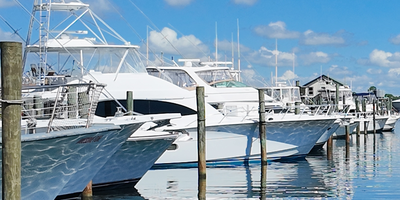
On both shores, the boathouse is more than storage. It is how you leave the house and how you come home. Ole River often showcases those long sandy approaches to pavilion-scale covered structures. Bayou St. John often pairs covered lifts with seating under roof and a calmer boarding feel. Either way, boat size is a lifestyle match—not a number I will promise from a street name.
Verify lift capacity, bunk geometry, permits, and soundings at low water for the vessel you will actually run. Listing photos of a 30–40 foot yacht or a triple-outboard center console are patterns, not certificates. When marina flexibility matters—or when you want a Harbor slip alongside a private dock—read private marinas on Ono Island / Ono Harbor.
For street-level dock patterns across the island, keep Ono Island street by street: waterfront, boats, and docks nearby while we shortlist addresses. Depth notes there are framing only—every offer still needs lot-specific verification.
Condo skyline, Florida state park land, or natural Bayou shore
Views are not decoration on Ono Island. They are the backdrop of coffee, sunset, and every guest who walks the pier.
On Ole River, the far shore changes by stretch. Some south-shore docks look toward condo complexes across the water—a skyline many buyers accept as coastal energy, and others prefer to avoid. Other Ole River stretches look toward Florida state park land, which reads greener and more protected. I will not blur those two into one “Ole River view.”
On Bayou St. John, homes typically do not look at condos. The far shore more often stays natural or residential, which is why buyers who want a quieter visual field start on the bayou side. Stand on both piers before you decide. The photograph that sells the house is not always the view that keeps you happy in year three.
Matching the shore to the buyer—and the dual-water option
You may thrive on Ole River if you love sandy private beach strips, long pier walks to pavilion boathouses, a closer feel to Gulf-side energy, and you have already decided which far-shore story you want—condo skyline or state park land.
You may thrive on Bayou St. John if you want marsh privacy, calmer protected water, covered seating at the lift, mid-size to larger center-console living, and a natural or residential far shore without a condo skyline.
There is also a dual-water conversation on streets like Peninsula Drive and Harbor Drive: harbor frontage on one side and Bayou St. John on the back (big water). That setup can let you keep a bigger boat in back, a little boat in front, and enjoy Ono Harbour marina access when that lifestyle fits. Explore Peninsula Drive on Ono Island when both waters matter.
None of these paths is “better.” The right answer is the water you will still love after the moving trucks leave.


.gif)