
Ono Island Canal-Front Living
A Local Buyer’s Guide to Homes, Boathouses, Boat Lifts and Canal Boat Fit
_(800_x_150_px)_(2).gif)
“Canal-front living is appealing because the water becomes part of the home’s everyday rhythm—not simply a view in the distance.”
— Meredith, Ono Island Homeowner & Gulf Coast Real Estate Advisor
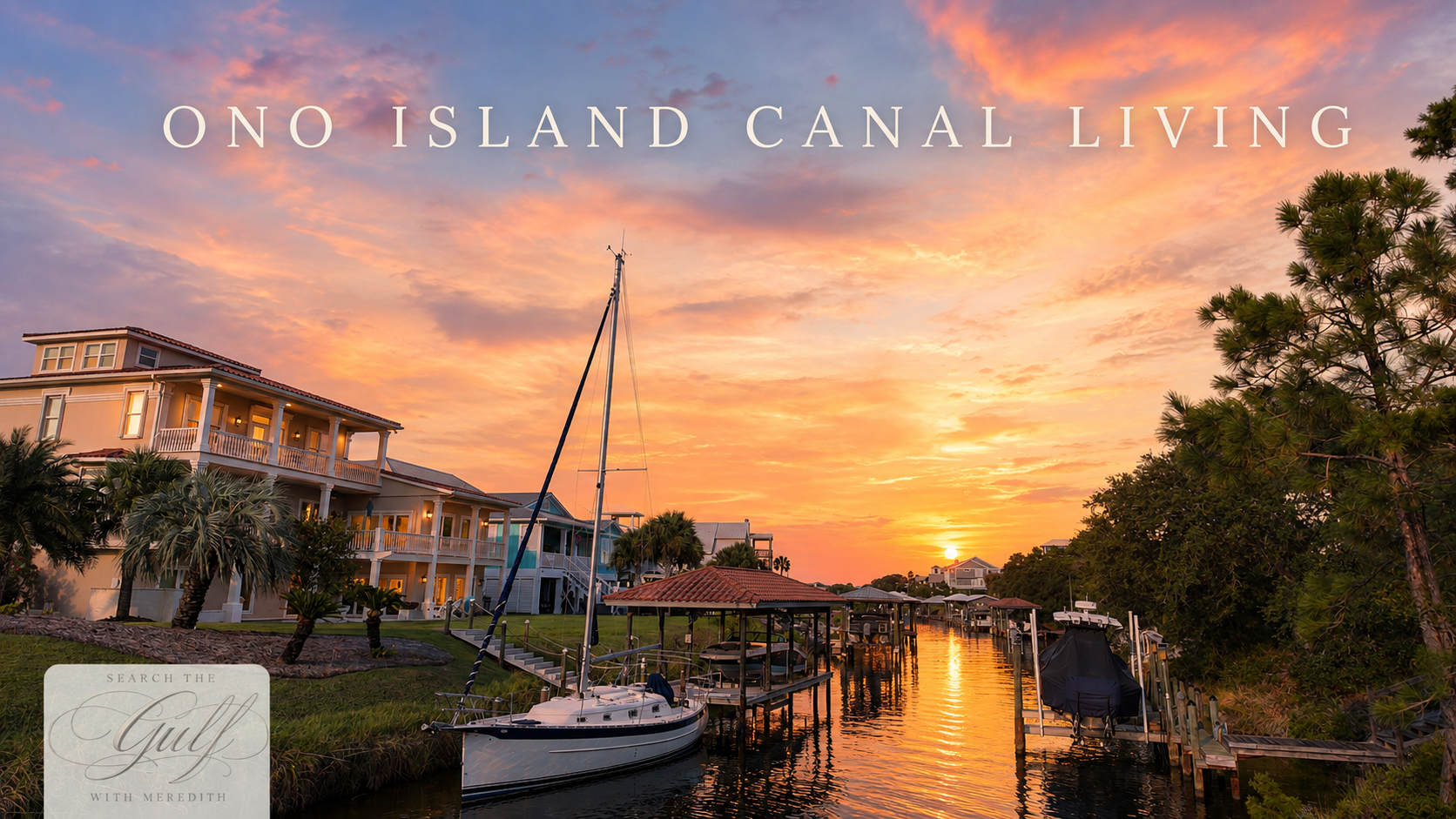
There is something wonderfully inviting about canal-front living on Ono Island. The water feels close and personal. Instead of looking across a broad expanse of open water, you experience a more intimate shoreline framed by docks, boathouses, coastal homes, native vegetation and boats waiting just beyond the back door.
As an Ono Island homeowner and local real estate advisor, I spend a great deal of time studying how individual properties connect to the water. I recently photographed several canals on the eastern side of the island, where the scenery tells the story beautifully: covered boat slips beneath metal roofs, center consoles resting on lifts, pontoons positioned for an afternoon cruise, personal watercraft beside the dock and homes designed around porches, screened outdoor rooms and water views.
Will the home, dock, lift, canal and complete boating route work together for the boat—and the way I want to use it?
Why Ono Island Canal Living Is So Appealing
For many buyers, a canal-front home offers an appealing balance between waterfront access and a more sheltered residential setting. The canals often feel calmer and more protected than properties directly exposed to big water. Although every location and weather condition is different, a canal setting may experience less everyday wave action than a home positioned on the Intracoastal Waterway, Bayou St. John or Old River.
That protected feeling can make it more comfortable to:
- Board and unload a boat
- Secure lines and wash down equipment after returning home
- Launch a kayak, paddleboard or personal watercraft
- Spend time beside the water
- See the boat from a porch or outdoor living area
- Enjoy reflections from neighboring docks and boathouses in the morning or evening
I also love the architectural variety. Some canal-front homes have broad screened porches and traditional coastal details. Others are elevated residences with metal roofs, deep balconies and outdoor stairways leading directly toward the dock. Some properties have a simple open pier. Others include a covered boathouse, one or more lifts, storage, freshwater, power, lighting or a seating area oriented toward the canal.
Look Beyond the House
Home-to-Dock Connection
Evaluate steps, walkways, lighting, outdoor storage and how naturally boating gear moves between the residence and waterfront.
Dock-and-Lift Fit
Measure lift capacity, bunk configuration, piling spacing, roof clearance, water depth and the vessel’s approach angle.
The Complete Route
Study the shallowest point, turns, bridge clearance, canal width and the journey from the lift to larger water—and back home.
Understanding the Reported 3- to 4-Foot Canal Depth
Some Ono Island canals are commonly described as having approximately three to four feet of water, but that figure should be treated as a general observation—not a guaranteed depth for every property, every route or every day.
Actual usable depth can vary according to:
- The specific canal and location within it
- Tide and wind-driven water levels
- Distance from the canal centerline
- Sediment accumulation or shoaling
- The approach to the dock or lift
- Underwater lift components
- Seasonal and storm-related changes
- The boat’s operating draft when fully loaded
Available information from the Ono Island Canal Owners Association may be a helpful part of a buyer’s research into canal depth monitoring and targeted maintenance.
Boats Commonly Considered for Canal Living
Boat type is only the beginning. Buyers should verify actual loaded draft, beam, length, air draft, lift compatibility and the complete navigation route.
| Boat Type | Why Buyers Consider It | What to Verify |
|---|---|---|
| Bay Boat | Often designed for relatively shallow coastal water; useful for inshore fishing and back-bay cruising. | Loaded draft, engine position, beam, hardtop height and turning room. |
| Flats Boat or Skiff | Low-profile, shallow-draft designs may suit shallower or bridge-restricted routes. | Ride and intended use beyond protected water, lift bunks and passenger load. |
| Pontoon or Tritoon | Comfortable seating and an easygoing platform for protected-water cruising. | Beam, lift configuration, deck height, top height and bridge clearance. |
| Smaller Center Console | Can combine coastal cruising and fishing with manageable dimensions. | Do not assume all center consoles fit; verify engines, draft, hardtop, antennas and lift capacity. |
| Personal Watercraft | Requires less dock space and may use a dedicated lift or floating platform. | Launch system, storage position, dock access and responsible low-speed operation. |
| Small Sailboat | A shallow-draft or centerboard design may work in certain locations. | Mast height, fixed bridges, overhead obstructions and the entire route. |
The Boat Lift Is Part of the Property
A boat lift should never be treated as a generic amenity. It is equipment designed around weight, hull shape, beam, bunk placement and the physical dimensions of the slip or boathouse.
- Lift manufacturer and rated capacity
- Age, service history and visible condition
- Cradle and bunk configuration
- Distance between pilings
- Slip width and length
- Water depth beneath the lift
- Electrical components and controls
- Cable, pulley and motor condition
- Roof clearance above the vessel
- Room for antennas, hardtops and outriggers
- Whether the lift can be reconfigured
The fact that a previous owner kept a particular boat on the lift is useful information, but it does not prove that a buyer’s boat will fit safely.
Ono Island Waterfront Homes and Real Estate Listings For Sale on the Canal | Orange Beach Realtors
-
All Listings
-
$400,000 - $500,000
-
$500,000 - $600,000
-
Over $1,000,000
Compare Listings
Select one or more listings to compare
Compare Listings
Select one or more listings to compare


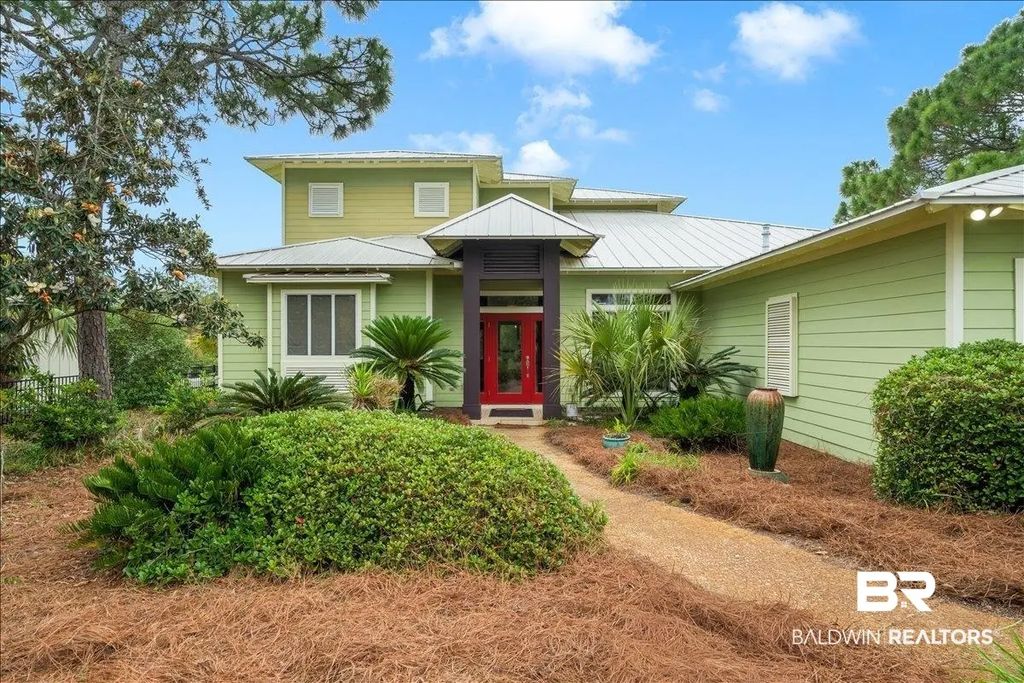


Covered Boathouses, Open Docks and Air Draft
Covered boathouses are a familiar part of the Ono Island canal landscape. Their roofs offer shade and some protection from sun and rain, while the pilings and lift create a defined place for the boat. They can also introduce important dimensional questions.
A buyer needs to consider both water draft and air draft. The boat may have enough water beneath the hull but still be too tall for the boathouse roof. Hardtops, antennas, radar, outriggers, ski arches and fixed towers can affect clearance. An open dock may provide more flexibility for a taller vessel but offers less overhead protection.
My Ono Island Air-Draft Test explains why buyers should measure the boat, boathouse and complete route rather than focusing on water depth alone.
When a Canal Property May Be Bridge-Locked
Some properties on the eastern end of Ono Island may require boats to travel beneath one or more bridges before reaching larger water. This is sometimes described as being “bridge-locked.”
A bridge-locked location may still be highly appealing, especially for a buyer with a low-profile bay boat, flats boat, skiff, pontoon or personal watercraft. A tall center console, sailboat, tower boat or flybridge vessel may not be compatible with the route. Clearance can also change with water level.
Can this specific boat travel from this specific dock beneath every bridge and through every controlling point under realistic water conditions—and return home?
Canal Width, Turning Room and the Approach
Depth receives much of the attention, but maneuvering room can be equally important. Some canal sections feel broad and open, while others become more intimate as docks, lifts and covered structures extend from both shorelines.
I pay particular attention to:
- The width of the navigable channel
- Boats and lifts directly across from the property
- The angle of approach to the slip
- Canal bends and intersections
- Wind exposure near the dock
- Pilings that narrow the usable opening
- The ability to reverse or pivot without entering shallow water
- Whether the regular operator can handle the maneuver comfortably

My Buyer’s Canal-Front Checklist
- Current depth at the dock, lift and centerline
- Depth during lower-water conditions
- The shallowest point along the route
- Canal width and turning room
- The boat’s actual loaded draft
- Beam, length and engine configuration
- Air draft with equipment raised
- Bridge clearance along the route
- Lift capacity and bunk configuration
- Boathouse roof height and piling spacing
- Dock, lift and boathouse permits
- Power, freshwater and dock lighting
- Seawall or shoreline condition
- Recent waterfront maintenance
- Storm preparation and securing procedures
- Available canal-depth and dredging information
I recommend taking the boat’s exact measurements to the property—or consulting an experienced marine contractor—before relying on assumptions.
Canal Living Is About More Than Reaching Open Water
The appeal of canal-front living is not limited to where the boat can go. It is also about what happens at home.
It is the reflection of a metal boathouse roof on still water. It is seeing a center console waiting on the lift from a screened porch. It is carrying supplies down to the dock without driving to a marina. It is returning in the late afternoon, rinsing the boat and watching the canal settle into evening.
There is an intimacy to the canals that is different from big-water ownership. Buyers who value calmer water, direct boating access and a close connection between the home and dock may find that a canal-front property fits beautifully.
Frequently Asked Questions
Are all Ono Island canals three to four feet deep?
No single depth should be assumed for every canal, property or boating route. Depth can vary with location, tide, wind, shoaling and the approach to the lift. Current measurements should be independently verified.
Can a center console fit an Ono Island canal property?
Many smaller or bay-style center consoles may be candidates, but the category ranges widely. Draft, beam, engines, hardtop height, lift capacity, roof clearance, turning room and bridges must all be checked for the specific vessel and property.
What does bridge-locked mean?
It generally describes a location where a boat must travel beneath one or more fixed bridges to reach larger water. A vessel may have sufficient water draft but still be incompatible because of its air draft.
Does an existing boat lift guarantee my boat will fit?
No. The rated capacity, bunks, piling spacing, slip dimensions, electrical condition, water depth and overhead clearance all need to match the buyer’s specific boat.
The right canal property is where the residence, dock, lift, canal and route work together.
If you already own a boat, I begin with its measurements and intended use. If you plan to purchase a boat after buying the home, I help you understand the property’s practical boating envelope before you make that decision.
That local, property-specific analysis can help prevent an expensive mismatch between a beautiful waterfront home and a boat that cannot comfortably use it.
Explore Canal-Front Properties Explore Ono IslandSearch the Gulf Coast with local waterfront insight.
Visit SearchTheGulf.com, the Gulf Coast’s premier website for searching all real estate listings along the Gulf Coast.
Contact Meredith
.gif)
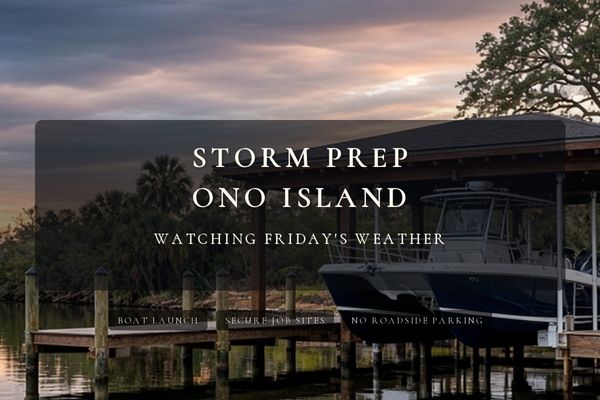

Storm Prep on Ono Island — Watching Tropical Weather for Friday | Search The Gulf
Ono Island
Storm Prep on Ono Island — Watching Tropical Weather for Friday
A tropical system could reach the coast this Friday. Nothing is locked in yet—and on Ono, we do not wait for a last-minute scramble.
Ono Landing Launch vs Dock
On this page
Watching Friday’s weather
Boat launch…

Long Bayou Preserve Orange Beach: New Site Plan & Update
Ask A Question or Sign Up To See New Real Estate Listings Before Your Competition
When it comes to finding the home of your dreams in a fast-paced market, knowing about new listings as soon as they are available is part of our competitive advantage.Sign up to see new listings in an area or specific community. Contact Meredith with any questions you may have.
Enjoy this blog post? Click here to subscribe for updates
Leave A Comment